
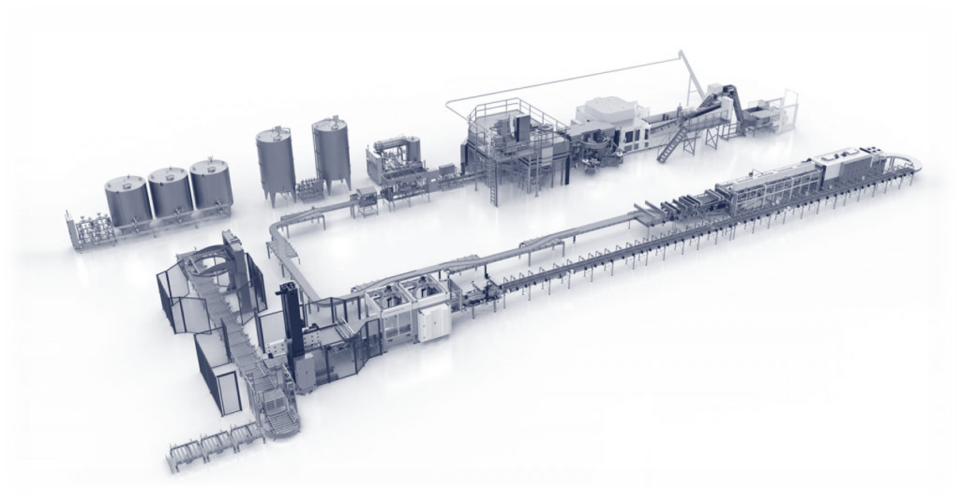
An In-Depth Analysis of Growth, M&A, and Valuation Trends in the Global Processing & Packaging Machinery Landscape
Executive Summary
The global Processing and Packaging Machinery market is entering a sustained growth phase, projected to reach USD 174 billion by 2030 at a CAGR of ~4.3%. Accelerating automation adoption, tightening food safety and GMP regulations, and the structural shift toward flexible, modular production lines are creating compelling investment and M&A opportunities for strategic acquirers and financial sponsors alike.
The sector spans a wide range of technologies — from mechanical and thermal processing to primary, secondary, and end-of-line packaging — serving non-discretionary end-markets including food & beverage, pharmaceutical, and consumer goods. The competitive landscape is fragmented, with four strategic archetypes: End-to-End Providers (Syntegon, IMA, Krones, GEA, Coesia), Industry Specialists (Multivac, Marchesini, Marel, Sidel), Packaging Integrators (Cama, Barry Wehmiller, Rovema), and Process Specialists (Bühler, Fette Compacting, Coperion, Hiperbaric). EBITDA margins range from below 5% to above 25%, confirming that significant value creation potential exists across all groups.
M&A activity has been robust and accelerating. Landmark transactions include, among others, JBT Corporation’s acquisition of Marel for EUR 3.4 billion (Jan-25). Financial sponsors have been particularly active consolidators in Packaging Machinery, executing multiple platform- and bolt-on-strategies across Europe and North America.
Processing Machinery peers currently trade at 10.7x EV/2026E EBITDA; Packaging Machinery peers at 6.2x EV/2026E EBITDA — approaching five-year medians of 11.0x and 7.9x respectively. Companies with differentiated aftermarket revenues, digital capabilities, and modular platform architectures command premium multiples.
What is Driving Growth in Processing & Packaging Machinery?
The market reached approximately USD 147 billion in 2024, with sustained expansion supported by both macro and structural drivers:
- Population growth & urbanization: Rising global populations and an expanding middle class drive capacity additions and packaged goods consumption
- Consumption preferences: Premiumization, health-oriented formulations, and shorter product cycles accelerate demand for flexible, multi-format machinery
- Automation & integration: Labor constraints and productivity imperatives drive adoption of robotics, AI-assisted controls, and IT/OT-integrated platforms
- Standards & regulations: Tightening GMP, food safety, and sustainability mandates reshape equipment specifications across all major end-markets
How Is M&A Activity Transforming the Sector?
The sector has seen strong and accelerating deal flow since 2022, driven by both strategic consolidators and financial sponsor-backed platforms. Key transaction themes include:
- Buy-and-build: Private equity sponsors are actively aggregating niche players across process stages and end-markets, with financial investors being particularly prolific in Packaging Machinery
- Digitalization premiums: Targets with embedded software, remote service platforms, or proprietary connectivity command meaningful valuation premiums
- Pharma tailwinds: Equipment serving regulated end-markets attracts premium multiples due to high switching costs, compliance moats, and pricing power
Key Takeaways for Investors and Owners
- Structural growth: A ~4.3% market CAGR through 2030, underpinned by automation, regulatory tailwinds, and non-discretionary end-market demand
- M&A momentum: Sustained deal flow across both Processing and Packaging Machinery, with financial sponsors particularly active in platform consolidation
- Value creation levers: Aftermarket professionalization, digitalization, integration capability, and modular platform engineering consistently distinguish outperformers
- Valuation resilience: Processing Machinery peers at 10.7x EV/2026E EBITDA and Packaging Machinery at 6.2x EV/2026E EBITDA; top performers with digital and service revenue capabilities command significant premiums
- European opportunity: Dense concentration of owner-managed OEMs at ownership transition points — creating an attractive and sustained pipeline of cross-border M&A mandates
Munich Strategy is an international management consultancy focused on upper medium-sized companies in the construction, mechanical engineering, motor vehicle and private equity sectors. Together with Ducker Carlisle, the firm supports clients worldwide in driving growth and transformation.