
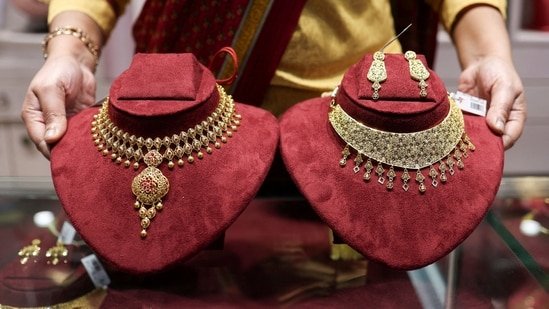
The Narendra Modi-led government increased customs duties on imports of precious metals, including gold and silver, from six per cent to 15 per cent, a move that comes after the Prime Minister’s austerity push.

A government official said the measure is aimed at protecting macroeconomic stability, saving foreign exchange, and moderating non-essential imports amid the global uncertainty in the wake of the ongoing West Asia crisis, HT reported earlier.
Import duty on gold and silver has been raised from 6 per cent to 15 per cent, while the tariff on platinum has been increased from 6.4 per cent to 15.4 per cent. He further said that consequential changes have been made to other items, including gold and silver doré, coins, and findings.
ALSO READ | PM Modi asks SPG to reduce convoy size as austerity step amid West Asia conflict
India’s measure also aims to defend its currency — the Indian rupee — which took hard hits against the US dollar amid the West Asia war. On Tuesday, the rupee fell 40 paise to near a new all-time low of 95.68 against the US dollar.
The government official said the increase in customs duty on precious metals is intended to moderate avoidable import demand and ease pressure on the external account.
‘Prudent management of external sector essential’
The current geopolitical situation has created significant volatility in global crude oil markets and international shipping routes, said the government official, cited in an earlier HT report. “As a large importer of crude oil, India remains vulnerable to elevated energy prices and supply-side disruptions, which can increase the import bill, exert pressure on inflation, and the current account deficit (CAD). In such circumstances, prudent management of the country’s external sector becomes essential,” the official said.
The official also said that the country’s foreign exchange resources must be prioritised for essential imports like crude oil, fertilisers, industrial raw materials, defence requirements, critical technologies, and capital goods. Why? These items directly support economic activity, food and national security, among other factors.
ALSO READ | Why PM Modi asked Indians to avoid buying gold for a year
However, precious metals are consumption and investment-driven, and involve a heavy outflow of foreign exchange.
“In periods of heightened geopolitical and commodity market volatility, policymakers often seek to prioritise external resources towards areas with higher strategic and economic multiplier effects. Therefore, during periods of external stress, measured moderation of discretionary imports may contribute significantly to overall macroeconomic stability and prudent external sector management,” he said.
‘India proactively responding to external risks’
Moves like a hike in customs duty send a clear message of prudent economic governance. It shows that India is proactively responding to emerging external risks through timely, measured and targeted interventions, thus reducing the need for more disruptive corrective measures later, the official added.
Historically, customs duty on precious metals have been calibrated in response to prevailing macroeconomic and external sector conditions.
The current hike is part of a broader strategy to strengthen India’s economic resilience, prioritise essential imports, save foreign exchange and protecting the current account.
Rupee recovers after customs duty hike
The Indian rupee recovered by 16 paise from its all-time low to 95.52 against the US dollar early on Wednesday. Forex traders reportedly said that market participants are expecting some resilience in the dollar-rupee duo as gold importers curb their demand, news agency PTI reported.
ALSO READ | State CMs reduce convoy size following PM Modi’s appeal for saving fuel
Anil Kumar Bhansali, Head of Treasury and Executive Director, Finrex Treasury Advisors LLP, said the move will “also help in curbing the CAD and help the rupee to some extent.”
Gold, silver prices rally
Gold prices surged by ₹9.723 to ₹1.63 lakh per 10 grams in the future in future trades on Wednesday, while silver climbed 7 per cent to near the ₹3 lakh per kilogram mark after the government hiked import duties on precious metals.
On the Multi Commodity Exchange (MCX), gold futures for the June delivery rose by ₹9,723 (6.34 per cent) to ₹1,63,165 per 10 grams.
Silver also took a sharp rally, with the most-traded July contract shipping by ₹19,439 (6.97 per cent) to ₹2,98,501 per kilogram on the MCX.
WFH, no gold, no foreign trips: Modi’s austerity push
Prime Minister Narendra Modi has been emphasising austerity measures amid global economic upheaval in the face of the ongoing West Asia war.
Modi called for reducing the use of petrol and diesel, increasing car-pooling, promoting work-from-home and virtual meetings, and avoiding non-essential foreign spending such as gold purchases and travel abroad.
Regarding foreign exchange outflow, the PM also urged citizens to avoid some expenditures. “The country spends a lot of foreign currency on gold. I would like to request all the citizens of the country that until the situation is normal, we should avoid buying gold,” PM Modi said.
He also said that people should avoid foreign trips and destination weddings, as a lot of foreign currency is spent on these. The PM called for strengthening the consumption of domestic goods and also hailed natural farming.
(with inputs from Rajeev Jayaswal)