
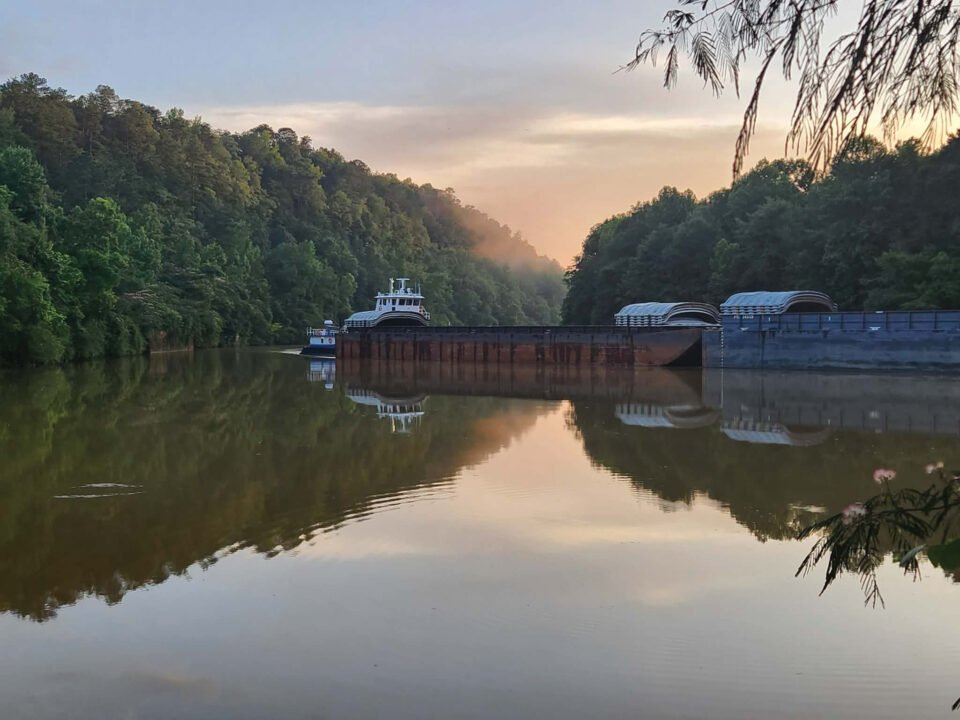
For David Russell, executive director of the Birmingham-Jefferson County Port Authority (BJCPA), the work of growing Alabama’s largest inland port that connects commercial barge freight with the Gulf begins with a basic challenge: making sure people know it exists.
That may sound simple, but Russell said the port’s low public profile has long limited its ability to serve as a broader economic development tool for the Birmingham region and the state. The port, located on the Black Warrior River system, has historically played a significant role in moving coal and other bulk commodities, yet much of its activity has remained tied to private, legacy industrial users rather than a wider base of manufacturers, exporters and logistics companies.
Russell sees that as both a challenge and an opportunity.
“When we got to the organization, there were a couple of things that were glaring,” Russell said. “The first insight was clear: with utilization at just 5 percent, there is a notable awareness gap, but even more importantly, a significant opportunity for growth.”
That realization was later reinforced through a supply chain study conducted with Auburn University. The study identified several priorities for the port, including the need to diversify cargo, expand maritime-related certifications and workforce development and, perhaps most urgently, raise awareness among business leaders. Russell said the study found that only about 20 percent of executives surveyed knew Birmingham had access to an inland port.
For a region built on steel, coal, rail and heavy industry, Russell said that lack of awareness represents an incredible opportunity. Birmingham sits at the intersection of major highways and rail networks, with access to three Class I railroads and connections to markets across the country. The port adds another mode to that system, giving companies a route to move bulk and breakbulk cargo by barge through the inland waterway system and on to the Port of Mobile and global markets.
Russell said the port’s mission now is to make that multimodal story clear to businesses, site selectors, elected officials and economic development partners. Additionally, BJCPA’s public-private partnership with Watco, a full-service supply chain solutions company specializing in rail, terminal, port and logistics services, is redefining the role of Port Birmingham as a key economic engine for the region. Through strategic investments in infrastructure, including a new state-of-the-art warehouse facility, the collaboration is enhancing multimodal connectivity and positioning Birmingham and Jefferson County as a competitive hub for manufacturing and logistics.
“From Birmingham, you can reach 35 percent of the country within a one-day drive,” he said. “You’ve got BNSF, Norfolk Southern and CSX. Then you have the river system. It’s really a system of logistical assets.”
That approach is central to the port authority’s partnership with Export Alabama, an initiative aimed at better aligning public and private resources to help Alabama companies reach international markets. For Russell, the port’s role in that effort is clear: Birmingham’s inland waterway access can give importers and exporters another option for moving goods efficiently, especially heavy raw materials, steel products, scrap, bulk commodities and other cargoes that benefit from barge transportation.
The port’s existing infrastructure is a major part of that pitch.
Much of the Birmingham port facility grew out of the region’s steelmaking past. Russell said the port was built around the internal supply chain needs of U.S. Steel and the broader industrial footprint that once dominated the area. Nearby, the former Ensley Works site employed as many as 25,000 people at its peak, feeding the movement of raw materials into the region and finished products out.
“That site was a huge job producer,” Russell said. “They used the port to bring in raw materials to produce steel in that footprint. Now we’re trying to revisit that but sell it to other companies and other communities and let them know this part of the water can enhance and expedite their supply chain.”
Rather than viewing the port’s legacy infrastructure as outdated, Russell said BJCPA, with the support of Watco, is leveraging its legacy infrastructure and modernizing its assets to adapt to changing business needs. The infrastructure is already in place. The task now is to upgrade equipment, diversify cargo and align the port with the state’s and the region’s broader economic development strategies.
BJCPA has pursued grant funding to support that work. Russell said one early boost came through Alabama’s Inland Port Infrastructure Program, administered through the state. Receiving that funding helped BJCPA leverage additional support from the city of Birmingham, Jefferson County and other appointed partners.
The port also has applied for federal funding through the U.S. Department of Transportation’s Maritime Administration (MarAd) to upgrade cranes dating to the 1940s. Russell shared that the cranes have been in operation for years, and replacing or modernizing them would enable new attachments, enhance cargo handling, increase efficiency and throughput and support a wider range of commodities.
That matters because diversification is one of the port’s most important goals.
Russell said the port currently handles significant volumes of coal, much of which moves downriver to Mobile. He said the Birmingham port accounts for a meaningful share of revenue tied to Mobile because of the coal moving through the system. With the Mobile harbor deepening project strengthening Alabama’s global gateway, Russell said the connection between Birmingham and Mobile becomes even more important.
The inland port gives cargo owners a way to move freight from north-central Alabama to tidewater by barge and vice versa, reducing truck miles and adding flexibility to supply chains. That flexibility became more important during the COVID-19 pandemic, when companies reconsidered just-in-time logistics and began looking for more redundancy, storage capacity and nearshoring options.
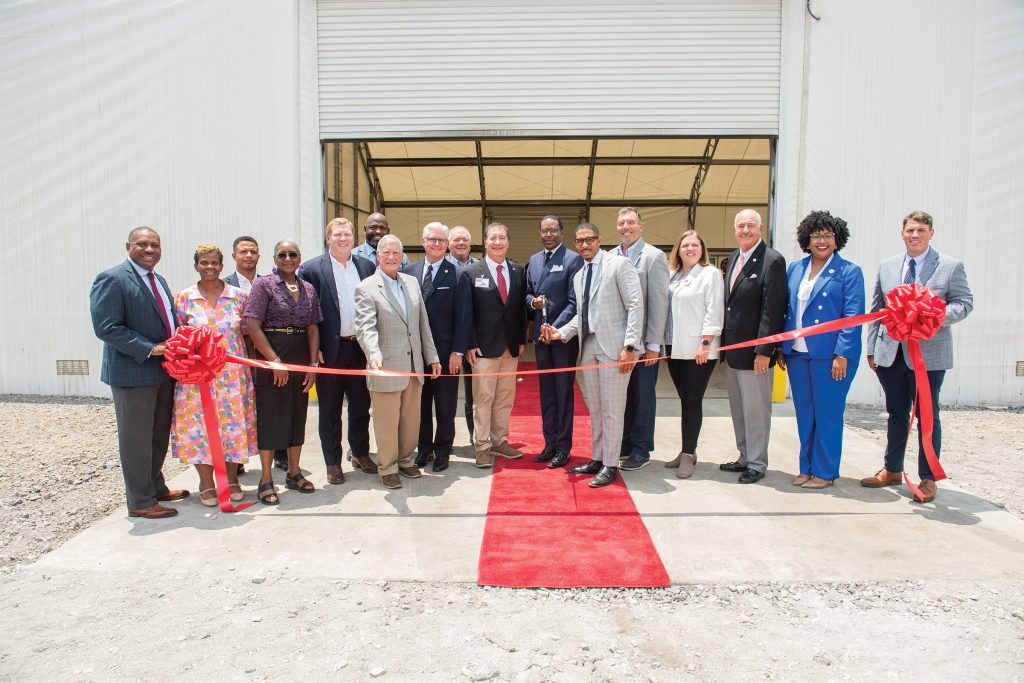
Russell said the port can help companies stockpile raw materials close to production facilities and reduce exposure to disruptions elsewhere in the supply chain. “For businesses that depend on close access to significant freight volumes, the Port of Birmingham offers a highly efficient and strategic option,” he said.
Potential growth cargoes include scrap metal, steel coils, rod coils and other steel-related materials. Russell said some companies in the region may not realize that scrap can move by barge into Birmingham, be processed or reused and support finished steel products made by local manufacturers.
He emphasized that increased barge traffic does not have to come at the expense of trucking. Instead, the port can create new opportunities for truckers by concentrating freight at the terminal and creating shorter, more efficient drayage moves.
Based on the port’s most recent economic impact study, Russell said the facility helps consolidate the equivalent of about 87,000 tractor-trailer movements annually, or roughly 230 trucks per day. At the same time, the port is operating at only about 5 percent capacity, he said.
Even at that level, Russell said the port supports about $128 million in economic impact, directly employs roughly 150 people and generates an annual payroll of about $8 million. He said the jobs supported by the port are strong-paying jobs, with average wages at the port higher than the regional average.
“For every dollar invested, the port gives $4 back,” Russell said. “The infrastructure is already there.”
That return-on-investment argument is one Russell is making to elected officials and economic development leaders. He said the port can help recruit new companies, retain existing ones and expand the tax base without starting from scratch. The key is getting transportation modes and public agencies to work in alignment.
That is where the Export Alabama partnership becomes especially important. Russell said the port is not trying to compete with Mobile, railroads or trucking companies. Instead, he sees Birmingham as a complementary inland asset that can operationalize Alabama’s full logistics capabilities.
“If a company is thinking about coming to Alabama, Birmingham and Mobile are often attractive for very different reasons. They are not competing with each other, but leveraging one another’s synergies to achieve better outcomes,” he said. “Those are not competitive places. You’re looking for different things. We need to be able to bring everybody to the table and say, ‘This is what we can provide.’”
Workforce development is another piece of the strategy. Russell said many people in Birmingham and Jefferson County are unaware of career opportunities tied to ports, terminals, rail, trucking, coal and maritime transportation. Some of those jobs are available to workers coming directly out of high school and offer strong wages. Together with Watco, BJCPA is focused on improving operational efficiencies and creating jobs that will impact economic growth across central Alabama.
The city of Birmingham’s recent reinvestment efforts have created an opportunity to restart conversations around the port, Russell said. Because the facility was annexed into Birmingham in the 1980s, it is city property despite being located about 30 minutes outside the urban core. Russell said BJCPA is working to better explain that history while also serving as a government voice for the terminal operators and port users.
Featured photo caption: A tow pushes covered hopper barges on the Black Warrior River system. The Birmingham-Jefferson County Port Authority (BJCPA) says the port handles significant coal volumes and sees growth potential in other bulk cargoes moving to and from the terminal, including scrap metal and other steel-related raw materials. (Photos courtesy of Rebirth Marketing & Consulting)
