
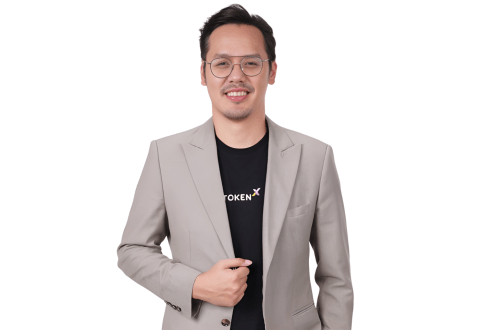
As digital assets move further into the regulated financial mainstream, the centre of gravity is shifting from speculative crypto projects towards real-world asset tokenisation, institutional use cases, and capital market infrastructure. For Wanrob Boontham, CFA, FRM, Chief Investment Officer at Token X, the next phase of the industry will be defined not by hype, but by governance, investor adoption, use-case expansion, and the ability to bring blockchain-based efficiency into real financial markets, he explained in an interview with Hubbis.
Key Takeaways
- Real-world asset tokenisation is becoming the central digital asset theme: Wanrob sees the industry moving beyond the earlier crypto cycle, where many projects lacked governance, controls, fundamentals, or real asset backing. The next phase is being driven by tokenised securities, tokenised assets, and regulated structures linked to real economic value.
- Institutional adoption is changing the character of the market: Financial institutions and regulators are now engaging more seriously with blockchain and tokenisation. This marks a shift from crypto-native experimentation towards applications that can sit within established capital market and investment frameworks.
- Investor education remains essential: Token X has spent the past several years helping investors understand what tokens are, why blockchain is being used, how cash flows are structured, and whether a project has legitimate backing. Wanrob sees that education process as central to wider adoption.
- Thailand is at the starting point of tokenised securities: Wanrob sees significant room to expand use cases in Thailand, including investment tokens, tokenised securities, tokenised assets, conducting through public offerings, private placements, and transaction-specific structures.
- The wider SCBX ecosystem can support market depth: Token X’s primary market role can be complemented by group capabilities across investment, digital assets, venture investment, blockchain, and AI. Wanrob sees this as important for improving liquidity, investor adoption, and aftermarket activity.
- Tokenisation could become part of capital market infrastructure: The longer-term case rests on operational savings, faster settlement, and atomic settlement. Wanrob believes the efficiency benefits of blockchain have already been tested sufficiently to support wider capital market adoption.
- Token X’s ambition is regional: Wanrob wants Token X to become not only a leading tokenizer in Thailand, but a meaningful APAC platform as tokenisation expands across markets, asset classes, and investor segments.
Token X operates at the intersection of traditional finance, digital assets, and capital market innovation. As tokenisation becomes more widely understood by institutions, regulators, issuers, and investors, the company is positioning itself around a market that is moving from experimentation towards execution.
For Wanrob, the evolution of digital assets over the past five years is best understood as a shift in substance. The earlier phase of the market was dominated by crypto projects, decentralised finance, NFTs, and blockchain-native applications. Some of that activity was innovative, but much of it lacked the governance, controls, fundamentals, or asset backing that institutional investors expect.
The current phase looks different. Financial institutions are engaging more actively. Regulators have developed a stronger understanding of tokenisation. Investors are asking sharper questions. The result is a market in which real-world asset tokenisation is becoming one of the most important themes in digital assets.
From Crypto Projects to Real-World Assets
Wanrob describes the earlier crypto market as one shaped by decentralised finance, distrust of centralised entities, and the creation of blockchain-based projects that often sat outside real-world economic activity. In that environment, many projects emerged quickly, attracted investor attention, and then disappeared just as quickly.
“If you look back five years ago, people were talking about crypto projects, NFTs, and decentralised applications,” he says. “But many projects disappeared because there was not enough governance, not enough control, and sometimes no fundamental asset behind them.”
NFTs, in his view, became one visible example of how speculative behaviour could build around assets that many investors did not fully understand. Prices could rise sharply and fall sharply, with limited clarity around the underlying value or economic basis.
That experience has shaped how the industry is now developing. Wanrob sees the market moving away from purely crypto-native narratives and towards structures that are linked to real-world assets, cash flows, and regulated issuance.
“The theme now is institutional adoption of blockchain and tokenisation,” he says. “The first major theme will be real-world asset tokenisation. In the past, many digital assets did not focus on real-world things. Now, real assets are becoming the centre of the market.”
This changes the role of tokenisation. It is no longer only about creating a digital token. It is about using blockchain to represent assets with clearer economic substance, whether securities, private credit, commodities, real estate, carbon credits, tokenised gold, or other alternative assets.
The Shift Towards Institutional Adoption
Wanrob sees institutional adoption as one of the clearest signs that the digital asset market has entered a new stage. The launch of crypto ETFs by major global financial institutions is one example of the broader shift, but he sees the more important development as the adoption of blockchain and tokenisation as infrastructure.
The distinction matters. Institutional adoption is not simply about allowing investors to buy crypto exposure. It is about understanding how blockchain can be used in regulated markets, how tokenised instruments can be structured, and how digital assets can support issuance, distribution, settlement, and ownership records.
That process has required a significant change in perception. Five years ago, many investors did not know what a token was. Some associated tokens with scams, speculative projects, or unclear structures. Others wanted to know what asset sat behind the token, how the cash flow worked, and why blockchain was necessary.
“Five years ago, when we tried to sell investment tokens, there were many challenges,” Wanrob says. “People asked whether it was a scam, what project was behind it, how much cash flow there was, and why blockchain should be used.”
For Token X, this meant education became part of the business. The firm had to explain not only the technology, but the investment logic, regulatory structure, asset backing, and practical reason for using blockchain.
“We spent around five years on education and creating more use cases for adoption,” he says. “Investors now understand tokenisation more, and regulators understand tokenisation a lot more as well.”
Regulation and Investor Confidence
Regulatory development is central to Wanrob’s view of the market. Tokenisation cannot scale on investor enthusiasm alone. It needs frameworks that issuers, institutions, and investors can trust.
Wanrob says regulators have become more familiar with the concept of real-world asset tokenisation over the past several years. That does not remove the need for discipline, but it does create a more constructive environment for properly structured use cases.
“The regulators understand tokenisation much more now,” he says. “They are trying to facilitate regulation for real-world asset tokenisation, and that will support more adoption across investor types, especially institutions.”
This is important because the next stage of adoption is likely to depend on confidence. Investors need to know what they own, how the instrument is governed, what claims they have, how cash flows are handled, and whether there is a credible route to liquidity or exit.
For Wanrob, the industry’s earlier weaknesses make this discipline even more necessary. The speculative crypto cycle showed what happens when projects grow without sufficient governance or substance. The tokenisation cycle, by contrast, needs to be built around stronger controls, clearer structures, and practical use cases.
Expanding Tokenisation Use Cases
Over the next six to 12 months, Token X’s priority is to expand the number and quality of tokenisation use cases. Wanrob sees this as the immediate task for the business and for the broader market.
“Our priority is expanding the use cases of tokenisation,” he says. “We need to create more real-world asset tokenisation use cases with qualities, not only investment tokens in Thailand, but also tokenised securities and other types of assets which are becoming a global trend.”
Thailand, he says, is still at the starting point of tokenised securities. That creates room for development across different structures, depending on the asset, issuer, investor base, and regulatory requirements.
“Thailand is just at the starting point of tokenised securities,” he says. “Whether it is tokenised securities, tokenised assets, or tokenised things, we need to expand the use cases as much as possible.”
Those use cases may include public offerings, private placements, or deal-specific structures. The right approach will depend on the transaction and the requirements of the parties involved.
Wanrob’s emphasis is practical. Tokenisation must show where it adds value. It must improve access, distribution, transparency, operational efficiency, mobility, or settlement. Otherwise, it risks becoming a technology label rather than a market solution.
Leveraging the SCBX Ecosystem
Investor adoption remains a second major priority. For Wanrob, adoption is closely connected to market activity after issuance. Tokenisation needs investors, but it also needs liquidity, aftermarket activity, and a broader ecosystem that can support long-term participation.
This is where he sees the SCBX Group as important. Token X focuses on primary market activity and tokenisation. InnovestX brings additional investment and digital asset capabilities. SCB 10X has been investing in blockchain, AI, and related technology companies. Together, these capabilities can help support broader adoption.
“We need to leverage the resources in the SCBX Group,” Wanrob says. “Token X works on the primary market, InnovestX has licences and capabilities around the secondary market, and SCB 10X has been investing in blockchain and AI companies.”
That ecosystem matters because one of the major pain points over the past five years has been liquidity. Tokenisation can create an instrument, but a sustainable market requires investors to understand it, trade it, hold it, and use it as part of a wider investment framework.
“We have to create more adoption among investors,” he says. “That will bring liquidity and aftermarket activity to tokenisation. This has been a pain point over the past five years. It is better now, but there is still more work to do.”
Tokenisation as Capital Market Infrastructure
Looking into the future, Wanrob prefers to think in five-year terms. In digital assets, he says, a 10-year view is difficult because the market changes too quickly. A five-year horizon or less than that is more practical.
Over that period, he expects real-world asset tokenisation to take a larger share of financial markets. The direction of travel is already visible across tokenised money, stablecoins, tokenised deposits, tokenised gold, tokenised private credit, tokenised securities, tokenised bonds, real estate, luxury assets, and carbon credits.
“The global use cases are now discussed on tokenised money, stablecoins and tokenised deposits,” he says. “Also we are seeing tokenised gold, tokenised private credit, and alternative assets such as real estate, luxury wines, and carbon credits.”
The case for wider adoption rests on efficiency. Wanrob points first to operational savings. Blockchain-based settlement and record-keeping can reduce the need for manual processes and multiple intermediaries, particularly in parts of the market where post-trade infrastructure remains fragmented.
“The first benefit is operational savings,” he says. “Many sandboxes have already shown that blockchain can create savings when used for settlement.”
The second benefit is atomic settlement. In traditional securities markets, settlement can take days. Wanrob uses the example of selling shares and receiving cash on a T+2 basis. With blockchain, the asset and payment legs can theoretically settle immediately, provided both sides of the transaction are represented on-chain.
“Atomic settlement means you can get the money back immediately,” he explains. “But for that to work, the security and the cash side need to be on blockchain.”
This is why tokenisation, in his view, should be understood as more than a product trend. It has the potential to become part of the underlying infrastructure of capital markets.
Building Towards APAC Scale
Wanrob’s ambition for Token X extends beyond Thailand. As tokenisation develops across APAC, he wants the firm to help create the use cases that will support broader regional adoption.
The market is not developing at the same speed everywhere. Some jurisdictions are moving faster in tokenised funds, bonds, deposits, or securities. Others are still building the regulatory and market infrastructure needed for adoption. But Wanrob sees the overall direction as clear.
“The use cases will expand,” he says. “You can see tokenised money market funds in the US, tokenised money, tokenised bonds, and examples in APAC countries.”
For Token X, Thailand remains the immediate base, but APAC is the wider opportunity. The company’s role, as Wanrob frames it, is to continue creating use cases, supporting adoption, and participating in the regional shift towards tokenised market infrastructure.
“Our vision for Token X is to be not only the leading tokenizer in Thailand, but also in APAC,” he says. “We will work to create more use cases and be part of expanding the market trend in the future.”
Key Priorities
Token X’s agenda over the next six to 12 months is shaped by three major priorities:
Expanding Real-World Asset Tokenisation Use Cases: Token X is focused on developing more practical applications of tokenisation, including investment tokens, tokenised securities, tokenised assets, and transaction-specific structures. Thailand remains at an early stage in tokenised securities, creating room for public offerings, private placements, and bespoke deal formats.
Building Investor Adoption: Token X will continue working to improve investor understanding of tokenised assets. Investors need to know what a token represents, what asset or cash flow sits behind it, why blockchain is being used, and how the structure fits within a regulated investment framework.
Supporting Liquidity and Aftermarket Activity: Wanrob sees liquidity as one of the key pain points from the past five years. Token X aims to leverage the wider SCBX ecosystem, including InnovestX and SCB 10X, to support investor access, secondary market development, and broader aftermarket engagement.
Into The Future
Wanrob sees the next five years as a critical period for real-world asset tokenisation. He does not frame the opportunity as another speculative crypto cycle. Instead, he sees tokenisation becoming part of the infrastructure of financial markets.
The market is already moving from blockchain-native assets towards tokenised money, stablecoins, tokenised deposits, tokenised gold, tokenised private credit, tokenised securities, tokenised bonds, real estate, luxury assets, and carbon credits. As more asset types move on-chain, the value of tokenisation will depend on whether regulated ecosystems can connect issuance, cash settlement, custody, trading, and investor access.
The most important benefits are likely to be operational efficiency and settlement speed. Blockchain-based infrastructure can reduce manual processing and support atomic settlement, where asset and payment exchange occur almost immediately. But that requires both the security leg and the cash leg to be on-chain.
For Token X, the opportunity is regional as well as domestic. Wanrob wants the firm to become not only a leading tokenizer in Thailand, but a meaningful APAC player. That will require more use cases, stronger investor participation, greater regulatory familiarity, and deeper liquidity across tokenised markets.
Getting Personal with Wanrob Boontham
Wanrob Boontham, CFA, FRM, is Chief Investment Officer at Token X, where he focuses on real-world asset tokenisation, security token offerings, IPOs, M&A, and capital markets. His current role brings together two sides of his professional background: traditional investment banking discipline and digital asset innovation.
He began his career in conventional finance, spending around eight to 10 years in investment banking and financial advisory roles before moving into digital assets. His early work involved helping companies access the capital markets, supporting IPOs, advising real estate companies, working on REIT-related transactions, M&A, financial due diligence, and broader advisory services.
“I started my career as a traditional investment banker,” he says. “I helped companies enter capital market activities, worked on IPOs, REITs, M&A, and financial advisory services.”
The move into digital assets came around five years ago. Wanrob had already developed some personal exposure to Bitcoin and crypto, but the larger trigger was the development of Thailand’s licensed digital asset market. As the SEC created pathways for companies to apply for digital asset licences, he saw an opportunity to apply investment banking expertise to a new form of capital market activity.
“Five years ago was the trigger point,” he says. “Digital assets in Thailand were taking shape, and the SEC allowed companies to apply for licences legally. I was among the first group to move from investment banking into investment banking in digital asset terms.”
Before joining Token X, Wanrob worked across institutions such as, Maybank Kim Eng, and Finansa Securities. He studied accounting at Thammasat University before completing a master’s degree in finance at Thammasat University, with an international exchange programme at Aalto University. His professional credentials include the CFA charter and FRM certification.
Outside work, Wanrob keeps his interests simple. He plays football with friends, enjoys coffee, runs, and reads when time allows. His reading has evolved with his career. During his investment banking years, he focused heavily on finance and investment banking books. More recently, he has spent more time reading about digital assets, including Bitcoin and Ethereum-related material.
“I used to be addicted to investment banking books,” he says. “In the past five years, I started reading more about digital assets. It is quite nerdy, but that is part of the space.”
He is also interested in psychology. And when asked about his average Bitcoin price, he gives the only answer a market professional could reasonably give: confidential.
The combination of traditional finance training and digital asset experience shapes how he views Token X’s role today. For Wanrob, tokenisation is not about leaving capital markets behind. It is about rebuilding parts of the capital market process with better infrastructure, clearer use cases, stronger investor education, and broader access to real-world assets.