
12:01 AM, 26th June 2026, 1 minute ago
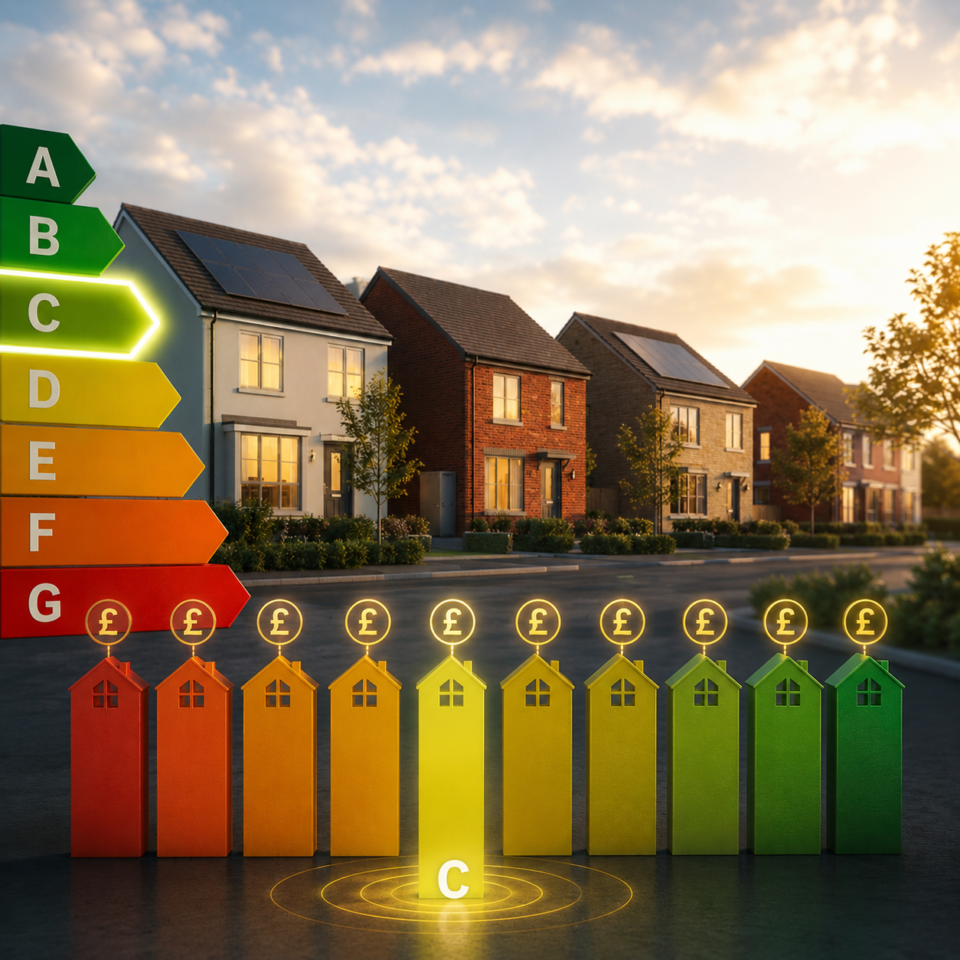
High EPC ratings have a limited impact on house prices, according to new data.
Data from Nationwide reveals that a more energy-efficient property rated A or B attracts a modest 1.6% premium compared to a similar property rated D.
The news comes as the government have proposed all private rented sector properties must meet EPC C targets by 2030.
Market response to EPC ratings remains subdued
Despite the government pushing for greener homes, particularly within the private rented sector (PRS), data from Nationwide suggests the market response to EPC ratings remains relatively subdued.
The bank analysed the extent to which buyers pay a premium (or discount) depending on a property’s Energy Performance Certificate (EPC) rating.
According to the findings, more energy-efficient owner-occupied properties rated A or B attract a modest premium of around 1.6% compared with otherwise similar homes rated D. This is equivalent to roughly £4,500 based on the average house price in England. There is little noticeable price difference for properties rated C or E when compared with D.
At the lower end of the scale, there is a small discount for the least energy-efficient homes, with F or G rated properties valued about 1.4% lower than comparable D-rated homes, equating to around £4,000.
The effect is more pronounced in the buy-to-let market, where A or B rated properties attract a significantly higher premium of around 12.2%.
Upfront cost barrier
Younger buyers were more likely to rate energy efficiency as “very important” when choosing a property to buy.
Installing solar panels was the most popular improvement among homeowners who have made green upgrades.
However, upfront cost remains the biggest barrier for those who have not carried out any improvements, with many also saying they do not plan to improve EPC ratings before selling.
Commenting on the figures, Andrew Harvey, Nationwide’s senior economist, said: “Only around one in five (22%) said the main reason for the improvements was to ‘increase the property’s value’, with less than one in ten (7%) doing so as part of preparations for a sale.
“This suggests that most homeowners are mainly focused on their own benefit from the work. Indeed, 77% said they were more likely to remain in their current property longer as a result of the improvements they had made.”
“Of those who have not made green improvements, the most commonly cited reason is they cannot afford the upfront cost (54%).
More support for homeowners to improve EPC ratings
Ian Harris, NAEA Propertymark President, said the government must provide more support to homeowners to fund energy efficiency improvements.
He said: “There is a growing interest from buyers in a property’s energy efficiency, particularly where improvements such as solar panels, battery storage and other green upgrades are already in place. These features are increasingly viewed as a practical way to reduce household running costs.
“However, while a strong EPC rating and green improvements can help a property stand out, they are typically one factor among many in the homebuying decision. Location, affordability and property condition remain the key drivers of value.
“The findings also reinforce the need for practical support to help homeowners improve the energy performance of their properties, especially where upfront costs remain a significant barrier.”