
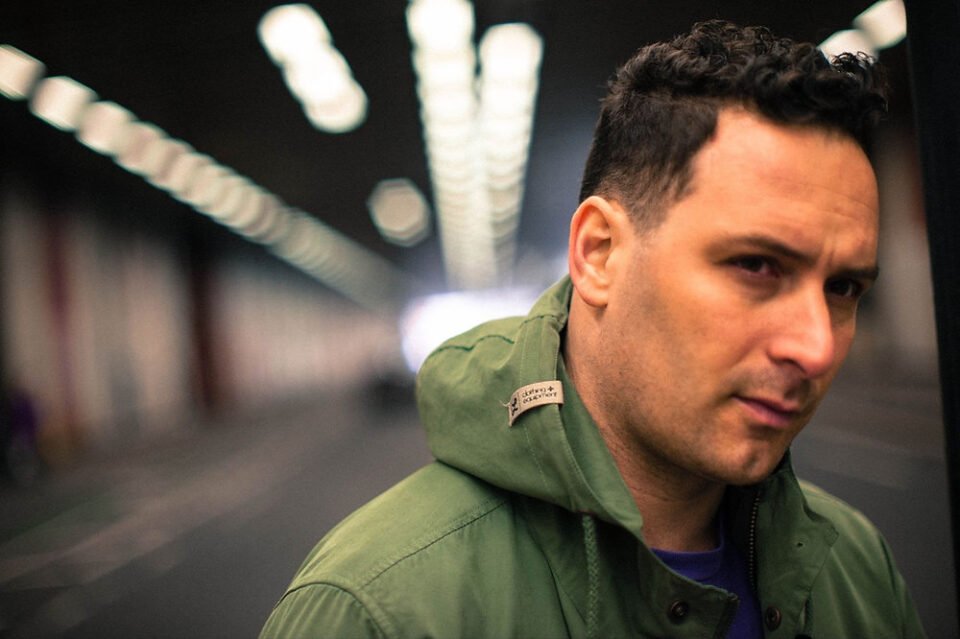
After decades shaping the careers of some of electronic music’s biggest names through his work in PR, Manchester-born David Silverman has stepped fully into the spotlight as Silver Man. His latest single, Paint Me In Gold, is a cinematic blend of breakbeat rhythms, spoken-word poetry and immersive electronic production, built around the chance discovery of recordings from an anonymous Scottish poet found on Reddit.
Drawing on the musical heritage of Manchester’s late-’80s cultural explosion while taking cues from artists such as Burial, Bonobo and Fred again.., Silver Man creates music that feels both deeply nostalgic and strikingly contemporary. Ahead of the release of Paint Me In Gold, we caught up with David to discuss finding inspiration in unexpected places, his years working alongside some of dance music’s most influential artists, and how those experiences continue to shape his own creative journey.
Paint Me In Gold is built around spoken-word recordings from a mysterious Scottish poet known only as “Cass.” How did discovering those vocals on Reddit shape the direction of the track, and what was it about her words that resonated with you creatively?
I actually came across Cass’ vocals while searching for material for a completely different track. At the same time, I was working on the instrumental for Paint Me In Gold, and something about her voice immediately felt like it belonged there. I often write instrumentals first and only later think about adding vocals, so there was never any intention for this to become a spoken-word piece—it just evolved naturally.
The recordings themselves were made up of individual, disconnected sentences. I started piecing them together one by one, and gradually a narrative began to emerge. It felt like uncovering a story rather than writing one, which made the whole process really exciting.
Growing up in Manchester during the city’s cultural explosion of the 1980s, you were surrounded by the influence of The Haçienda, The Stone Roses and The Smiths. How did that era shape your relationship with music?
We used to record the 808 State radio show every week just to hear the latest tracks, and records like Strings of Life and Hardcore Uproar became hugely significant to me. We were at The Haçienda most weekends, and sometimes during the week too if there was something on. Eventually the atmosphere changed when the gangs took over security, so we started going elsewhere, like Konspiracy and No.1 Club.
The Smiths were slightly before my time, but I knew all the songs and Morrissey’s melancholy lyrics really connected with me as a teenager. The Stone Roses were massive too—I wore out my cassette copies of both their debut album and Second Coming. It was an incredible time to grow up around music.
You’ve spent decades working behind the scenes with influential artists and labels including Warp, Sony, Diplo, Mr Scruff and Skream. How has that experience influenced your own work as Silver Man?
I was always working for the labels rather than the artists directly. I worked on Diplo’s first album, Florida, through Big Dada, and my work with Def Jux became the launchpad for my own PR agency, Outpost. At the time I deliberately separated my career in music PR from making music—I wasn’t secretly trying to become a producer while working with these artists. I just wanted to build the best agency I could.
Working with labels like Warp, Stones Throw, Ghostly, Because, !K7 and Kitsuné gave me an instinct for what connects with people. After more than 20 years in music PR, you develop an ear for recognising when something has potential. Applying that same instinct to your own music is more difficult because it’s personal, but those experiences definitely help me know when a track feels right.
The biggest lessons weren’t necessarily musical—they were about how artists build sustainable careers, how labels develop campaigns, and how successful musicians think long-term. Watching people like Nightmares on Wax, Goldie and Diplo navigate their careers has been incredibly valuable.
Your music blends cinematic electronic production with themes of resilience, transformation and hope. Which artists have had the biggest influence on that sound?
Looking back, artists like Portishead, Massive Attack, The Orb, Future Sound of London and Nightmares on Wax have probably had the biggest impact on me. I’ve naturally found myself somewhere in that trip-hop and downtempo space.
Bonobo and Quantic were also huge influences, particularly the way they combine live instrumentation with electronic production. That’s something I always try to achieve in my own work—bringing together brass and string samples, live bass and guitar, organic drums and electronic textures. I love music that feels both human and cinematic, and that’s always the balance I’m aiming for.