
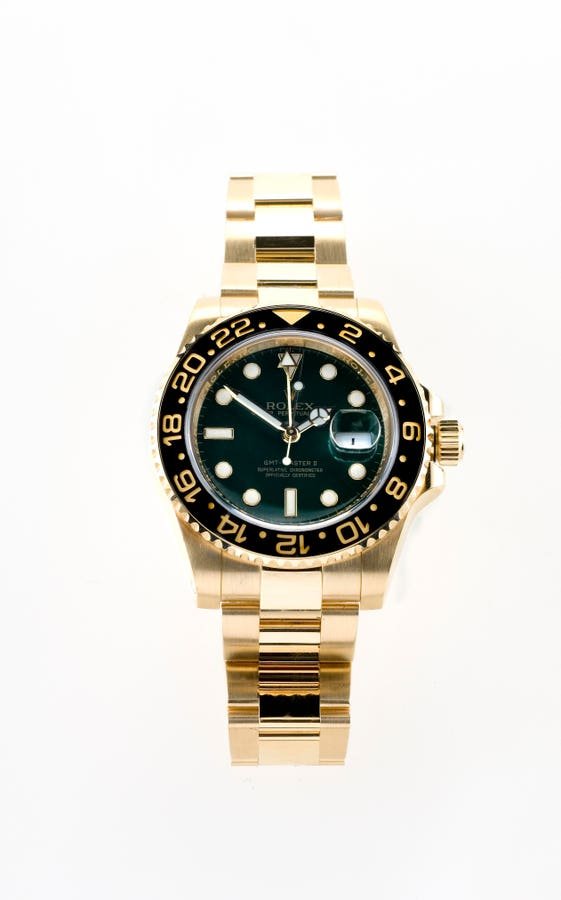

Gold Rolex GMT Master 2 wristwatch.
getty
A solid-gold Rolex Submariner retails for $50,900. Yet only a fraction of that price reflects the value of the gold itself. The majority of the sales price goes toward precision engineering, meticulous finishing, Swiss craftsmanship and one of the world’s strongest luxury brands.
That raises an obvious question: How much gold are you actually getting when you buy a solid-gold luxury watch? Surprisingly, almost none of the major watchmakers will tell you.
Horological purists often dismiss the question entirely, arguing that the movement, design and heritage are what truly matter. They are not wrong. Those factors account for much of what makes a luxury watch desirable. But the average buyer spending tens of thousands of dollars on a timepiece is also likely to wonder how much of the purchase price reflects intrinsic value, especially one advertised as solid gold.
What “Solid Gold” Really Means
Many buyers assume solid gold means pure gold. Not in the watchmaking world. Pure gold is 24-karat, but almost every modern luxury gold watch is made from 18-karat gold. The term solid gold refers to the construction of the case and bracelet (and some other parts), not to 100% gold purity.
Play Puzzles & Games on Forbes
To create 18-karat gold, manufacturers combine 75% pure gold with 25% alloying metals such as copper, silver or palladium. Pure gold is too soft for everyday wear. The added alloys improve durability, increase scratch resistance and allow manufacturers to create different colors.
Yellow, white and rose gold are all typically 18-karat. The difference lies in the alloy. Higher copper content creates rose gold, while palladium and other metals produce white gold.
How Much Gold Is Actually Inside A Watch?
One approach is to start with the watch’s total weight and subtract the estimated weight of components not made of gold, including the movement, crystal and other mechanical parts.
A second approach is to compare an 18-karat gold model with an otherwise identical stainless steel version. Since gold is substantially denser than steel, much of the additional weight is attributable to the gold case and bracelet.
Using these methods, most flagship gold sports watches from brands such as Rolex, Audemars Piguet, Vacheron Constantin and Patek Philippe appear to contain approximately 130 to 170 grams of 18-karat gold.
With today’s gold price of approximately $4,150 per ounce, that translates to roughly $13,500 to $17,200 in pure gold, depending on the brand and model. That is a significant amount of precious metal, but still only a fraction of what buyers ultimately pay.
Gold weights are estimated from published specs and comparisons to steel equivalents; not manufacturer-confirmed. Gold values use a ~$4,150/oz spot price (July 2026) and 18k (75%) purity. Market prices sourced from WatchCharts on June 30, 2026.
Garth Friesen
What A Luxury Gold Watch Actually Costs
The cost of materials is only one component of manufacturing a luxury watch. The movement, machining, bracelet construction, finishing, quality control, assembly, distribution, warranty support, retailer margins, and brand equity all contribute to the final retail price.
Consider Rolex’s iconic Submariner. The current stainless steel model 126610LN retails for $11,350, while the otherwise similar 18-karat yellow gold version sells for $50,900. That is a premium of nearly $40,000.
As per the table above, there is approximately $15,000 of gold in the watch. Therefore, the intrinsic value of the gold accounts for roughly 30% of the watch’s retail price.
Buyers should also look at the secondary market for price discovery. According to WatchCharts, the same gold Submariner currently sells for approximately $37,000, nearly $14,000 below retail. At that price, the gold accounts for 40% of the acquisition cost.
This helps explain why many collectors view pre-owned gold watches as compelling values. While the initial brand premium declines after purchase, the gold’s intrinsic value remains.
Of course, every manufacturer has a different cost structure, production volume, and pricing power. The Patek Philippe Nautilus 5811/1G is a good example of this.
The watch is estimated to contain approximately 166 grams of 18-karat white gold, valued at roughly $16,800. Yet the retail price is $82,000, meaning the gold itself accounts for only about 20% of the purchase price.
But unlike the Rolex Submariner, the secondary market for the Nautilus is much higher than retail. According to WatchCharts, the Nautilus trades for more than $170,000. At that level, the gold represents less than 10% of what the buyer pays. Nearly all of the premium reflects scarcity, collector demand, and the extraordinary strength of the Patek Philippe brand.
What To Know Before Buying A Gold Watch
When you buy a solid gold watch, you are clearly paying for much more than the value of the precious metal. Across most luxury brands, the precious metal typically represents only 20% to 40% of what you pay.
Ironically, despite the allure of precious metals, steel sports watches often command a larger premium than gold models. Scarcity, wearability, and collector demand frequently matter more than intrinsic material value, and there are fewer buyers of gold watches.
The rapid depreciation of many gold watches creates an opportunity for buyers willing to purchase pre-owned. If you are looking to maximize the intrinsic value of your purchase, look to the Rolex Submariner or the Cartier Santos. If bought at the right price in the secondary market, the value of the gold itself it a relatively high proportion of the overall cost.
Even if you don’t care about maximizing gold value, the reality is that a watch like the Patek Philippe Nautilus in white gold is not available to 99% of buyers. There is such limited supply and high demand that Patek Philippe reserves those models for their very best existing customers. That is why the secondary market value is more than twice the retail value. If you want to buy a gold Nautilus — or any watch — at a huge premium, it should not be for the gold value. It should be because you love the watch.
Still, when paying tens of thousands of dollars for a luxury watch, many buyers would like to know how much they are paying for materials and brand premium, and the watch’s potential to hold its value over time. The amount of gold in a timepiece will help to determine that. The value of the gold in the watch should not drive the decision, but it helps to know.