
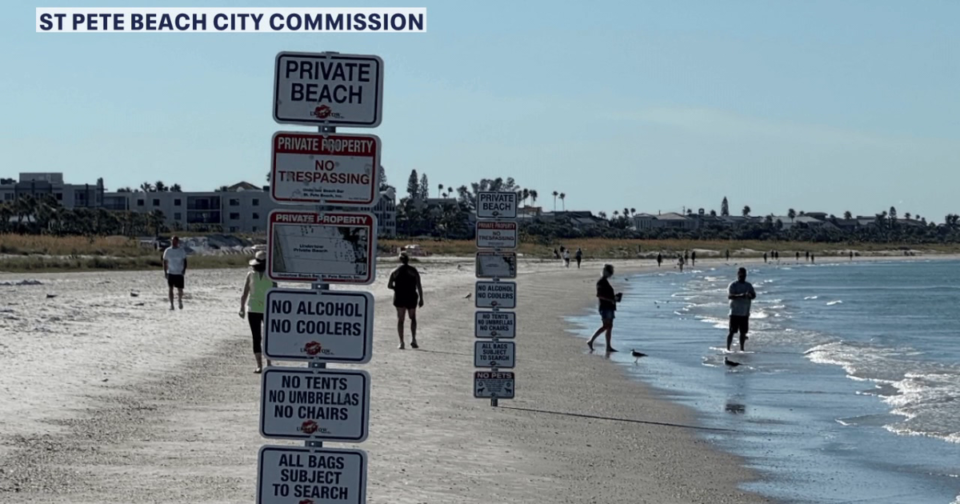
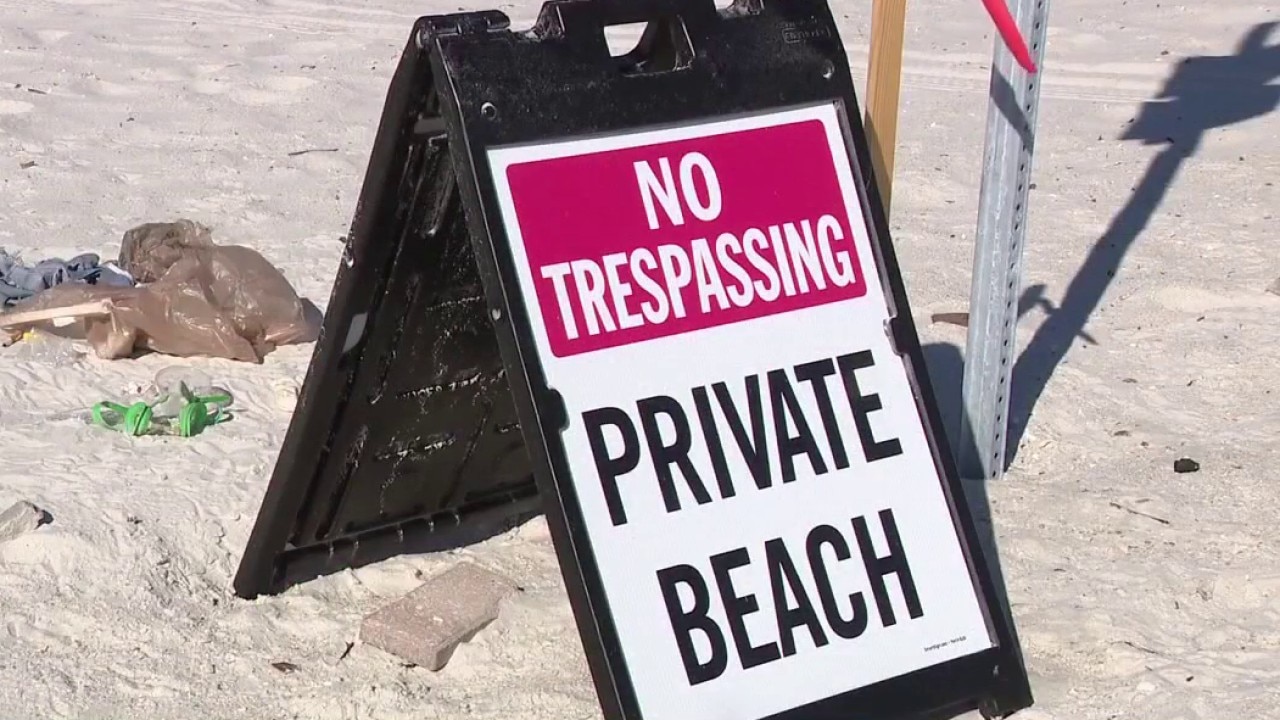
Battle over beach access
If you’ve ever wondered where the public beach ends and private property begins, St. Pete Beach officials hope to answer that question. Fox 13’s Kellie Cowan reports.
ST. PETE BEACH, Fla. – If you’ve ever wondered where the public beach ends and private property begins, St. Pete Beach officials hope to answer that question.
St. Pete Beach seminar
The backstory:
The city is hosting a public educational seminar on Florida’s customary use doctrine after months of controversy over private property signs along the shoreline.
The issue gained attention after a waterfront business posted 14 “No Trespassing” signs on the sand at the water line. Although the signs were later removed because they were found to violate city rules, neighboring businesses and homeowners soon installed their own markers identifying private property and numerous attorneys were hired to challenge the city on behalf of private property owners.
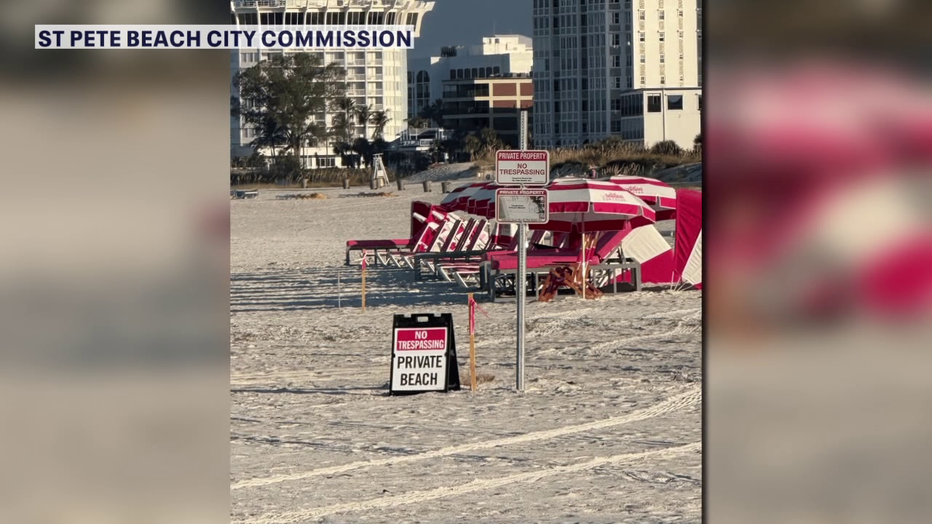
Courtesy: St. Pete Beach City Commission
In response, St. Pete Beach commissioners approved an ordinance prohibiting permanent private property signs within 50 feet of the mean high-water line.
Supporters say the ordinance protects the beach’s appearance while maintaining public access.
“It’s really concerning that we could literally have a really ugly-looking beach,” longtime resident Dana Richardson said. “Coming off the hurricanes, don’t we want to get back to enjoying life and have a beautiful beach?”
The other side:
Some property owners disagree, saying visible signs help deter trespassing and make enforcement easier.
“Is the sheriff going to be able to enforce it when there’s no sign out there at night?” Island’s End Motel’s Melanie Vandegrift said. “If no one knows that it’s private property, how are we even going to enforce it?”
Florida public beach access law
What we know:
Florida law generally divides beaches into two sections.
The wet sand, located below the mean high-water line, is owned by the state of Florida and is open to the public.
The dry sand above that line is often privately owned by beachfront homeowners, hotels and condominiums.
However, private ownership does not always mean the public can be excluded.
Under Florida’s customary use doctrine, courts can recognize the public’s right to continue using privately owned dry sand if that stretch of beach has historically been used by the public in a way that is ancient, reasonable, uninterrupted and undisputed.
Because customary use must generally be established on a location-by-location basis, public access rights can vary from one stretch of beach to another.
Beach sign ordinance disputes
What we don’t know:
It remains unclear whether additional property owners will challenge the city’s new sign ordinance or whether future legal disputes over beach access could arise.
What’s next:
The upcoming seminar is intended to help residents better understand what rights both the public and beachfront property owners have under current Florida law.
Dig deeper:
Disputes over customary use have played out across Florida for years, particularly after lawmakers approved legislation in 2018, making it more difficult for local governments to establish customary use without going through the courts.
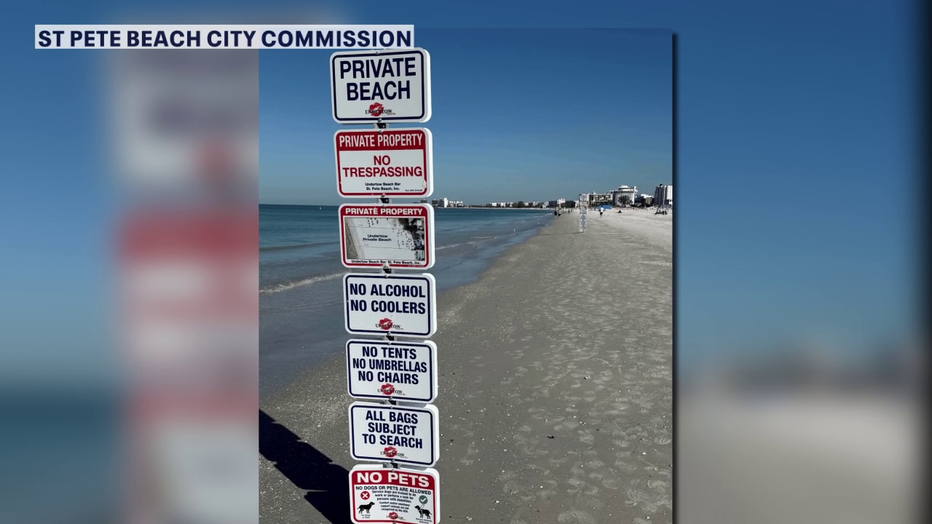
Courtesy: St. Pete Beach City Commission
The law was repealed last year, but some private owners have taken it as a sign to assert their rights to dry sand.
Pinellas County beach access
Why you should care:
Millions of people visit Pinellas County beaches each year. Understanding where public access ends and private property begins can help beachgoers avoid conflicts while giving property owners a clearer understanding of their rights.
The Source: Information for this story comes from public comment and discussion during St. Pete Beach City Commission meetings and previous coverage by FOX 13 News.