
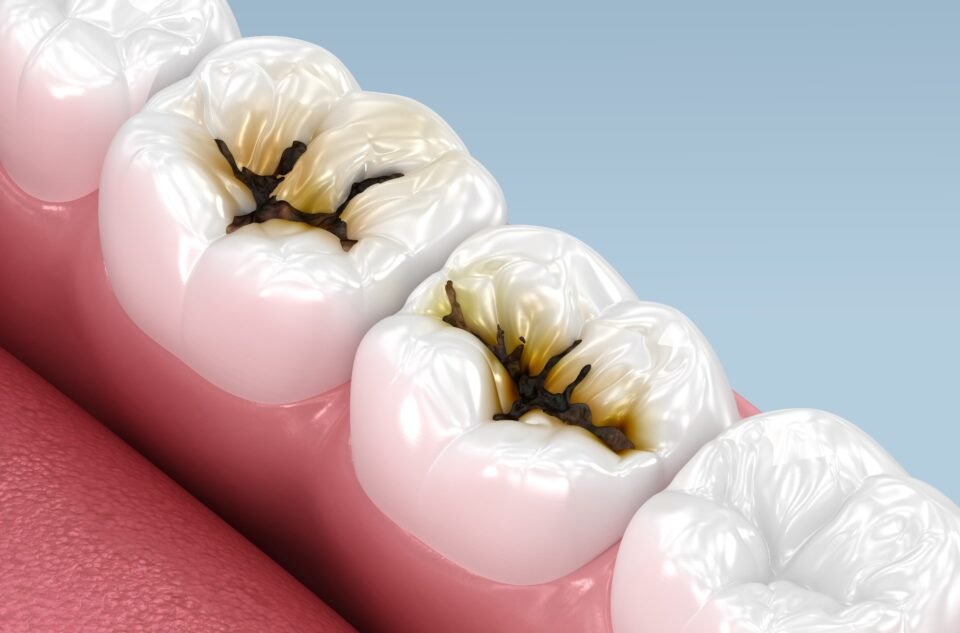
A large US trial reveals how a quick, noninvasive dental treatment could help manage aggressive tooth decay in young children while reducing reliance on more complex procedures.
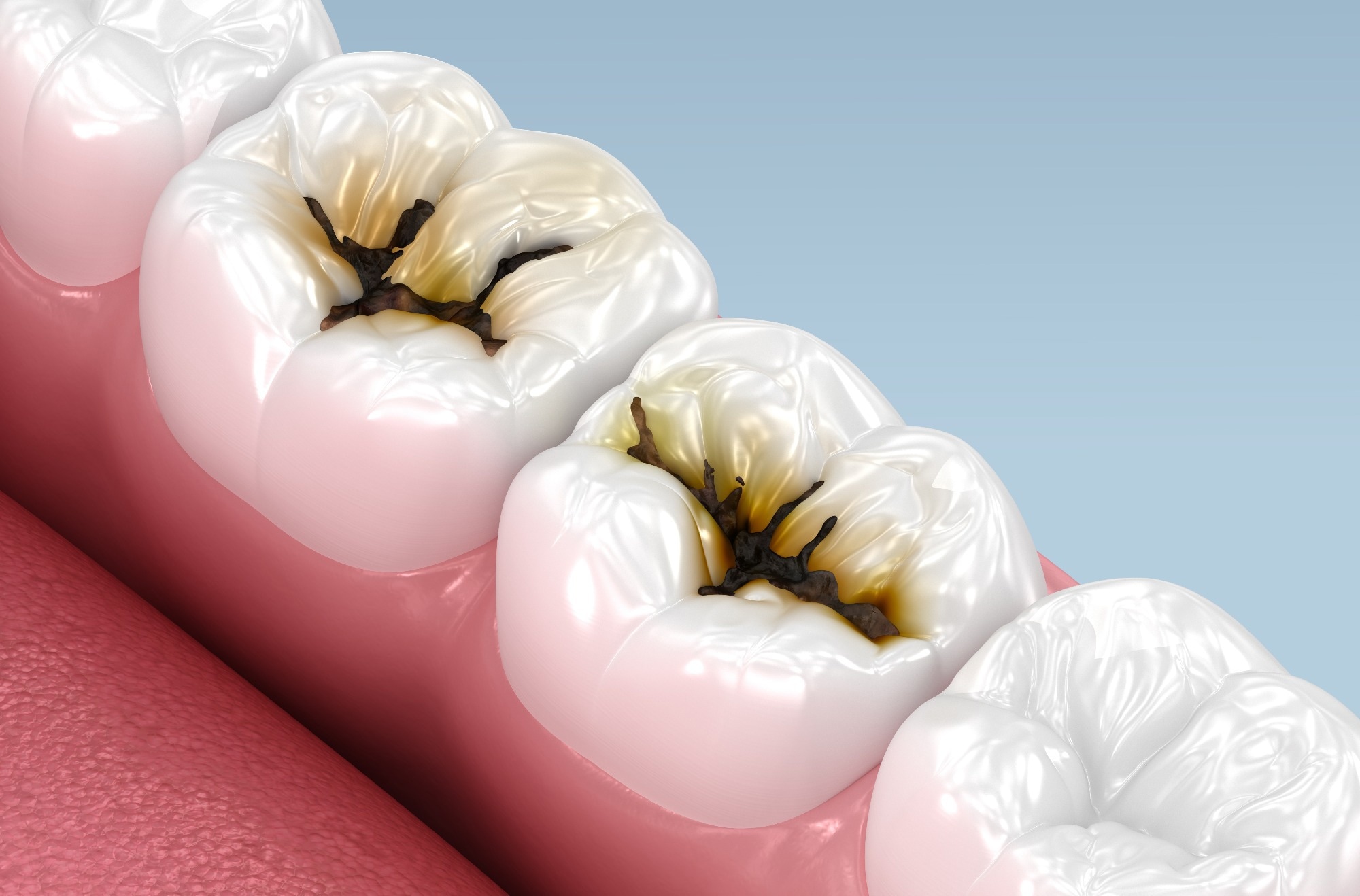
Study: Efficacy of Silver Diamine Fluoride on Young Children With Severe Early Childhood Caries. Image Credit: Alex Mit / Shutterstock
Silver diamine fluoride showed clinically meaningful efficacy in arresting active cavitated dentin caries lesions in primary teeth among young children with severe early childhood caries, according to a new study published in JAMA Pediatrics.
Background
Dental caries is a highly prevalent oral health problem among children and adolescents. It affects nearly 50% of preschool children worldwide, and 40% of US children ages 2 to 19. If left untreated, caries can cause pain, infection, tooth loss, and other complications, affecting nutrition, growth, development, and children’s quality of life.
Severe early childhood caries is particularly aggressive and often requires repeated treatment under general anesthesia, which is expensive and carries added risks and possible neurological effects. In recent years, silver diamine fluoride (SDF) has emerged as a promising, affordable, easily applied agent for arresting caries. Such an affordable, non-invasive treatment may be particularly valuable for children in underserved communities who have limited access to dental care.
Existing evidence indicates that repeated application of SDF can arrest 60-90% of dental caries, highlighting its substantial therapeutic efficacy. However, there remains uncertainty about the efficacy of SDF in primary dentition, especially in children younger than 3 years with severe early childhood caries. A 2024 Cochrane review rated the supporting evidence as low certainty, and evidence from US populations was lacking.
In 2016, the US Food and Drug Administration (FDA) granted SDF Breakthrough Therapy designation for caries arrest, motivating trials in children with severe early childhood caries. Although 38% SDF is FDA-cleared for managing adult dentin hypersensitivity, its use for caries arrest, including in children, remains off-label. To inform FDA regulatory evaluation, the current randomized, placebo-controlled trial investigated the therapeutic efficacy of SDF in children with severe early childhood caries.
Trial Design
The phase 3, multisite, blinded trial was conducted on 830 generally healthy children aged 12 to 71 months with severe early childhood caries. They were randomized to receive either 38% SDF or a placebo, applied at the beginning of the trial, baseline, and after six months. Eligible children had at least one accessible, soft, cavitated dentin lesion suitable for SDF treatment. Children with caries-related pain, pulpal exposure, or signs of infection were excluded.
The primary objective was to investigate the efficacy of 38% SDF in arresting cavitated dentin caries lesions in the primary dentition at six months after one application. The arresting efficacy was also assessed at 8 months after two applications: one at baseline and the other at 6 months. The final assessment, therefore, occurred two months after the second application.
Key Findings
The trial randomized 414 children to the SDF group and 416 to the placebo (control) group. The groups contributed 976 and 1,011 trial lesions, respectively.
The intent-to-treat lesion-level analyses revealed that 38% SDF arrested an estimated 57.5%, 54.0%, and 50.2% of lesions at three, six, and eight months, respectively. In the control group, 18.8%, 22.5%, and 17.4% of lesions met the arrest criteria at 3, 6, and 8 months, respectively. Differences in arrest rates between the groups were 38.7, 31.5, and 32.8 percentage points. The analyses accounted for multiple lesions within each child and used multiple imputation to address missing data.
No significant difference in pain was observed between the groups at six or eight months. Adverse events were reported in 47.3% of participants in the SDF group and 43.3% in the control group. However, treatment-related adverse events occurred at similar rates between the groups, 22.9% and 22.2%, respectively. Most adverse events were mild to moderate, although four participants in the SDF group and none in the placebo group experienced severe events. The paper does not state that these severe events were caused by SDF. No formal statistical comparisons were conducted for adverse-event outcomes.
Significance
The trial highlights the efficacy of 38% SDF in arresting eligible cavitated dentin lesions in primary teeth among children with severe early childhood caries. The SDF product used in the trial was the only 38% formulation available in the US at the time of the study. A single application of the product exhibited clinically meaningful effectiveness in arresting dentin caries lesions in primary teeth in study participants.
The trial did not find any further improvement in arrest rates at the eight-month assessment following a second application of 38% SDF at six months. However, because the trial did not include a one-application comparison group at eight months, it cannot establish that the second application provided no benefit. Similarly, SDF did not reduce the occurrence of lesion-related pain during follow-up compared with placebo, possibly because not all lesions were arrested in this high-risk population. The researchers proposed this explanation, but children with caries-related pain at baseline were excluded.
The three-month findings indicated that lesion arrest occurred early after SDF application. However, more frequent application schedules may be beneficial in this high-risk population. In this context, recent evidence indicates that SDF reapplication at one-month and four-month intervals was associated with nearly complete arrest of dentin caries lesions. In contrast, SDF application at a 6-month interval was associated with the lowest arrest rate.
The trial found that about 20% of lesions in the control group met the arrest criteria despite placebo treatment. These findings are consistent with previous evidence showing spontaneous arrest without active treatment. The paper also cited separate evidence for nonrestorative caries control, wherein lesions are mechanically opened to support self-cleaning, although this procedure was not used as the trial’s control intervention.
Notably, exploratory analyses across the trial population identified higher arrest rates for lesions in the front teeth, which may be due to easier access to hygiene. These exploratory findings suggest that dental anatomy and ease of access for hygiene may influence caries arrest. At eight months, more advanced lesions also had higher arrest rates than less advanced lesions, and rates differed among study sites.
Overall, the trial findings, according to the researchers, support the FDA’s Breakthrough Therapy designation and provide essential data for the FDA’s evaluation of SDF’s drug claim for caries arrest in children aged 12 to 71 months with severe early childhood caries.
The eight-month follow-up limits interpretation, results in approximately 30% attrition, may lead to loss of blinding due to SDF-related dark staining, and excludes children with painful or complicated lesions. Although the sample was diverse, it was not representative of all US pediatric populations. Enrollment also ended early for efficacy following a prespecified interim analysis.
Given the high rate of unarrested lesions in the study population, the researchers suggest that the 38% SDF formulation should be used alongside other preventive strategies rather than relied on alone.