
Gold or silver?
Silver has historically played a supporting role to gold in Nepal, where the yellow metal is deeply intertwined with Hindu and Buddhist traditions, centuries-old trans-Himalayan trade and the culture of holding tangible wealth.
From the gilded roofs of sacred temples to the heavy gold ornaments worn by brides, gold has long symbolised purity, status and financial security.
But the notion of precious metals as an investment appears to be changing.
Nepal’s silver import bill surpassed the value of gold imports in the last fiscal year ended mid-July for the first time on record, reflecting an unprecedented surge in demand for the precious white metal.
Traders say the boom was fuelled by soaring silver prices, with Nepalis increasingly viewing the metal as a safe investment amid falling stock market prices and gold prices that have moved beyond the reach of many.
“It’s basically about profit. A profit in a short span of time attracted investors,” said Diyesh Ratna Shakya, senior vice-president of the Federation of Nepal Gold and Silver Dealers’ Association.
He, however, said that the silver being imported is not in the form of bars or biscuits.
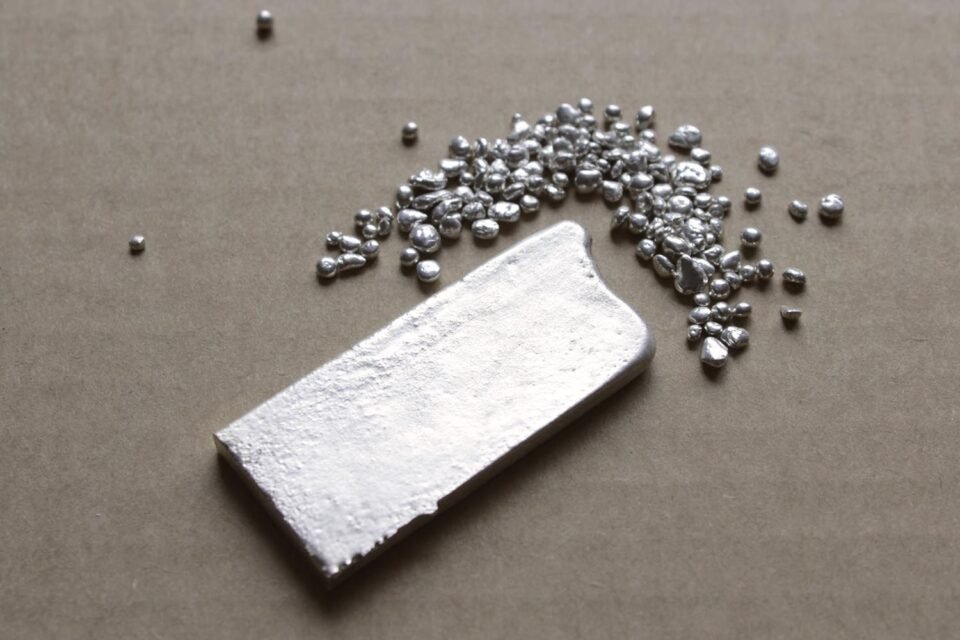
“It’s coming as granules, a small, hard or compact particle resembling a grain,” he said.
The price of silver granules peaked at Rs7,500 per tola (11.66 grams) in January 2026, up from Rs3,300 per tola in October 2025. In 2024, the price of silver in Nepal ranged from Rs1,350 to Rs 1,950 per tola.
“Most of the silver granules imported last fiscal year were bought by customers for investment purposes,” Shakya said.
According to the Department of Customs, Nepal’s silver imports surged 366 percent to Rs32.74 billion in the last fiscal year. In volume terms, imports more than doubled, rising 108.37 percent to 104.29 tonnes.
By comparison, Nepal imported 1.52 tonnes of gold worth Rs29.15 billion during the review period. Although the value of gold imports increased by 46.18 percent because of higher prices, the volume declined by 6.17 percent in the last fiscal year.
Imports classified as “powder of silver” also climbed sharply, increasing 176.64 percent to Rs10.90 billion in the last fiscal year from the previous year.
A significant portion of the surge in silver imports came under the customs category “powder of silver”, which saw sharp increases in both value and quantity.
Silver powder is a fine form of the precious metal consisting of microscopic particles. It is commonly used in electronics, solar cells and metal refining and typically has a purity between 99.9 and 99.99 percent.
But customs officials, bullion traders, analysts and the central bank told the Post that the product being imported is actually silver granules rather than silver powder.
Silver granules, also known as silver shot or silver grain, are small, irregular pellets of high-purity silver, generally measuring around 1 to 6 mm. They are widely used as raw materials in jewellery, silverware and other industries because they can be melted easily.
Nepal imported around 32 tonnes of silver granules worth Rs9 billion from Dubai, the largest source, followed by 4.34 tonnes worth Rs1.43 billion from China during the last fiscal year.
The price of silver more than tripled over a few months and attracted consumers and investors as the precious metal repeatedly set new records.
Traders say investors increasingly turned towards silver amid economic uncertainty, particularly after the September 2025 Gen Z unrest, when the stock market faltered and transactions in the real estate market nearly collapsed.
On Thursday, silver was priced at Rs4,570 per tola.
In the international market, silver reached a record nominal high of $121.67 per ounce on January 29, 2026, driven by a multi-year supply deficit, strong retail and safe-haven buying, and growing industrial demand from sectors such as artificial intelligence and green energy, Reuters reported. A record nominal high means the highest price ever recorded in current dollar terms, without adjusting for inflation.
The international price, however, fell to $57.41 per ounce on Wednesday.
Globally, silver’s industrial importance has also grown with the expansion of artificial intelligence and green technologies.
As AI data centres and high-performance microchips process billions of calculations, they generate extreme electrical loads and heat. According to reports, silver is used in physical hardware—including semiconductor packaging, circuit boards, high-speed connectors and power switchgear—to help ensure rapid data transmission while reducing the risk of overheating or signal degradation.
Guru Prasad Paudel, spokesperson for the Nepal Rastra Bank, confirmed that imports of silver grains had jumped sharply, as reflected in the letters of credit issued by banks.
The dramatic growth in silver grain imports, however, has raised eyebrows among some insiders, who say the actual reason for such massive imports remains unclear. Some have raised concerns that the metal could potentially be diverted for smuggling or other purposes.
Arjun Rasaili, president of the Federation of Nepal Gold and Silver Dealers’ Association, said the government’s use of the term “silver powder” was misleading.
“It is actually silver granules being imported,” he said. “Silver granules are used to make jewellery, utensils and to polish statues.”
“This is most likely a customs classification issue. We believe that the majority of these imports are silver granules that have been classified under the Harmonised System (HS) code for silver powder,” Adarsh Diwe, a Mumbai-based consultant at Metals Focus who tracks South Asian bullion markets, told the Post over the phone.
With silver prices hitting record highs in the first quarter of 2026, investment demand for physical silver surged, Diwe said.
“A heavy rush was seen outside shops as consumers flocked to purchase the metal. Silver granules are typically converted locally into bars for investment purposes or used in the manufacture of silverware and jewellery,” he said.
Silver bars are not entirely illegal to own in Nepal. However, the government strictly prohibits individuals from importing raw precious-metal bullion, including gold and silver bars, through ports of entry.
Local residents can legally buy and hold physical silver within Nepal, but bringing raw bars across the border or independently importing them is prohibited.
Bullion traders said silver is mostly traded in granule form, typically packed in 25-kg bags.
As prices soared to record levels, many people withdrew their savings to invest in gold and silver when prices reached an all-time high in January.
The rally strengthened silver’s appeal as an alternative store of value.
But the bet has turned sour for some investors following the sharp correction in prices.
“Many people invested in silver without understanding the price cycle. With prices falling sharply and showing no sign of recovering anytime soon, it has become difficult for those investors to continue holding the metal,” Shakya said.
“Some customers sold their holdings when the price hovered around Rs5,700 per tola. Others have brought their granules to be converted into silver jewellery,” he said.