

A Sydney real estate forum revealed widespread buyer confusion over tax policy shifts and market uncertainty, with a cross-disciplinary panel of finance, legal, tax, and construction experts answering questions an hour past schedule. Agents should recognise when clients need specialist advice across finance, tax, law, and construction – and have trusted professionals lined up to refer to, rather than attempting to answer outside their expertise.

The warning follows a public property forum in Sydney, hosted by First National Daystar co-owner Michael Sleiman, where an audience of prospective buyers and vendors kept a cross-disciplinary panel of finance, tax, legal, and construction experts answering questions an hour past its scheduled two-and-a-half-hour finish time.
Addressing the event, Mr Sleiman said widespread uncertainty over tax shifts and broader market conditions is pushing consumers toward either premature decisions or outright paralysis.
“The questions showed there is considerable confusion about what the government’s taxation changes mean for property investors, first-home buyers and homeowners,” Mr Sleiman said.
“People are hearing different opinions and trying to decide whether they should buy, sell or hold. The danger is that they make a major financial decision based on fear, general commentary or advice that was never intended for their circumstances.”
High-risk strategy blunders exposed
Specialists across four core disciplines outlined the most common errors currently tripping up buyers and developers.
Finance specialist Dr Tony Nguyen identified an excessive focus on interest rates as a primary borrowing mistake.
He said that securing the lowest advertised headline rate is often a flawed strategy if the lender fails to deliver the required borrowing capacity, appropriate loan structure, or operational flexibility.
Dr Nguyen also urged borrowers to review existing loans, warning that legacy mortgages established years ago rarely align with updated family incomes, taxation realities, or portfolio objectives.
White Oaks Advisory Practice Director Daniel Vucetic cautioned against acting on “second-hand” financial advice sourced from relatives, podcasts, social media, or general seminars.
Advice that proves sound for one individual’s financial profile can carry severe consequences when applied to another, Mr Vucetic said, warning that seeking professional advice after signing a contract is frequently too late to adjust ownership structures or prevent unnecessary tax exposure.
He added that property strategies should prioritise underlying financial viability rather than tax minimisation alone, noting that an investment must be capable of surviving higher interest rates, vacancies, income fluctuations, and changes to expected tax concessions.
From a legal perspective, solicitor Jon-Pierre Elias reported that purchasers routinely fail to align their legal and accounting advisers before deciding on a purchasing entity or person and he stressed that legal counsel and accountants should collaborate prior to exchanging contracts, particularly when trusts, corporate entities, or development sites are involved.
Mr Elias also warned buyers against relying on unwritten verbal agreements, overlooking potential GST liabilities, or entering litigation on principle without weighing the practical and financial alternatives.
In the construction and development sector, Dyna Constructions Director Tony Ayoub highlighted incomplete feasibility assessments as one of the largest risks facing investors.
Mr Ayoub said purchase prices and construction quotes represent only a portion of true project costs, emphasising that comprehensive feasibility models must incorporate stamp duty, professional fees, approvals, developer contributions, holding interest, insurance, rates, marketing, and selling expenses.
He further cautioned against launching projects with a single exit strategy, advising developers to structure debt so they retain the option to hold and lease a completed build if market conditions favour waiting over an immediate sale.
Despite prevailing uncertainty, Mr Sleiman rejected the notion that prospective buyers should remain entirely on the sidelines waiting for clear indicators of a market bottom.
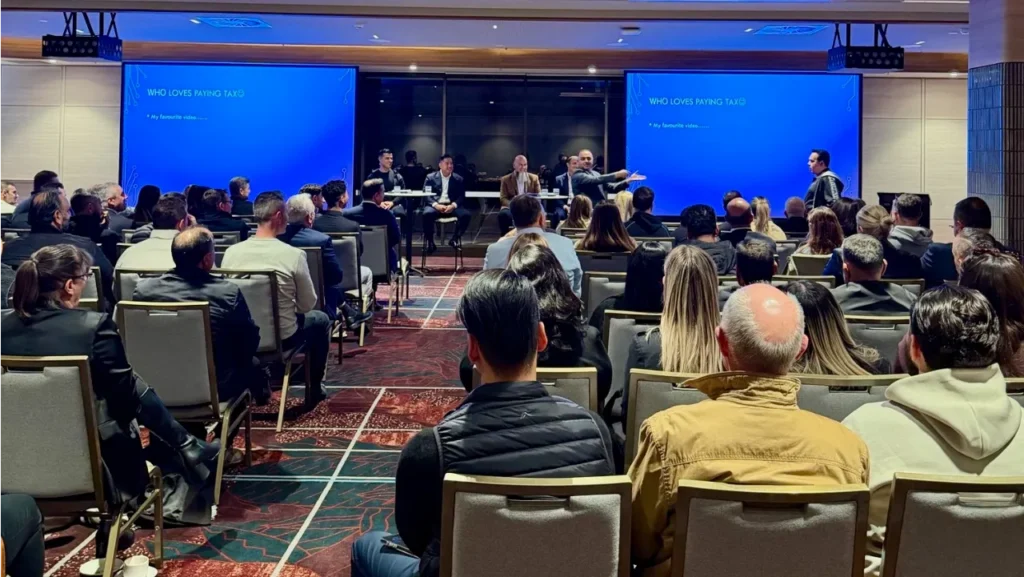
“There are brilliant opportunities in the market right now for people who have done their homework, understand their financial position and obtain the right professional advice,” Mr Sleiman said.
“If you wait until every market signal confirms we have reached the bottom of the curve, those opportunities will be gone. That does not mean rushing into the market. It means being prepared, getting professional answers and understanding what represents a sound opportunity for you.”
He added that real estate agencies need to recognise the boundaries of their own expertise and focus on bridging the gap between buyers and credentialed advisory professionals.
“Our responsibility is not to pretend we have every answer,” Mr Sleiman said. “It is to recognise when someone needs specialist advice and introduce them to professionals we trust. Property decisions often involve finance, taxation, law and construction. People are more likely to make a sound decision when those experts work together.”
Reflecting on the outcome of the event, Mr Sleiman noted that structured expert collaboration provided attendees with clarity rather than prescriptive sales pitches.
“Our role was not to tell people what decision to make,” he said. “It was to help them understand the questions they should ask and connect them with the experts qualified to provide the answers.”