
And I don’t mean from the Girls Grammar School just up the road or the Alice Ottley the other side of the tennis court wall. Although gender does play a part in this story.
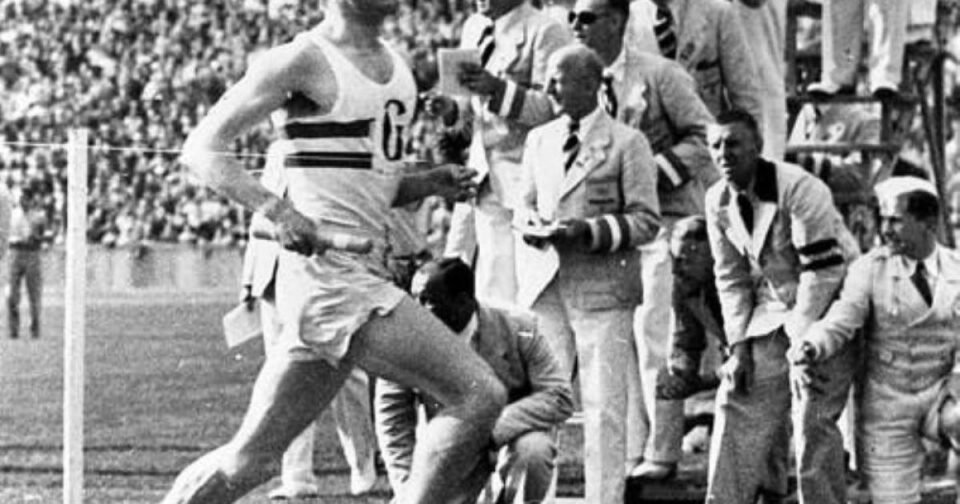
It was probably at break on your first day someone told you the headmaster, Mr AGK Brown, was an Olympic gold medal-winning athlete.
He didn’t really fit the image of a sporting god. Slim, thick glasses, never too smartly dressed and with a mop of unruly hair, I came to realise later he was also a very modest man.
He had won a 400 metres individual silver medal in the 1936 Olympics before Adolf Hitler in Berlin and then anchored the British relay quartet to 400 metres gold. At 21, he was its youngest member.
But his diffidence about this achievement hid a quite remarkable record because there were two of them.
AGK had an older sister Audrey, who was also an athlete, also competed at the same Berlin Olympics and also won a medal, a silver as part of the women’s 4×100 metres relay team.
However, this goes largely unrecorded. Google “brother/sister Olympic medal winners in same Games” and the Browns are not mentioned.
So let’s put that right now. Take a posthumous bow Audrey Kathleen Kilner Brown and Arthur Godfrey Kilner Brown.
The pair – along with their brother Ralph who was also a talented athlete, winning the British AAA 400 yard hurdles title – were born in Bengal, India, where their father ran a missionary college before the family came to England in 1920s.
The siblings soon made their mark on the athletics scene as members of their university clubs, Godfrey at Cambridge and Audrey at Birmingham, and then both joined the famous Birchfield Harriers.
AGK, as he was popularly known, always declined to comment on the antics of Adolph Hitler, who famously walked out of the Berlin stadium after black American Jesse Owens won the 100 metres.
Keeping politics out of sport was at the heart of his amateur creed and he also never bragged which is possibly why the Brown family achievement is not more widely known.
But August 2026 marks 90 years since the event so hats off to Audrey and AGK now, at last.
Here are a few more August happenings according to Worcester’s History and Heritage calendar.
August 13, 1575: Historian Valentine Green was there and wrote: “On Saturday 13th August in the 17th year of the reign, our most victorious sovereign Lady Elizabeth came towards this City riding upon her palfrey. Mr Bellu an orator began his oration at the end of which people cried with loud voice unto whom she said often times I thank you all. She passed towards the Cathedral where she diligently viewed the tomb of King John together with the Chapel and tomb of her dear uncle Prince Arthur.” Royal reporting as it was.
August 25, 1964: Worcestershire became County Cricket Champions for the first time when Gloucestershire were defeated by an innings and two runs at New Road. Roy Booth, the best wicketkeeper never to play for England, clinching victory with the stumping of Ken Graveney off the bowling of Norman Gifford. There was still a nervous wait until news came through from Southampton that Warwickshire, the Pears’ closest rivals, had been beaten by Hampshire.
On August 31 the following year, Worcestershire retained the County Championship with only seven minutes of the match against Sussex at Hove remaining. Needing 132 to win in the final session, six wickets were lost before Dick Richardson hit the winning runs. It was the County’s seventh consecutive win to cap a remarkable end to the season.
August 26, 2004: The Pump House Environment Centre project in Waterworks Road, backed by Duckworth Worcester Trust, was opened. The building was converted in two phases with renewable energy technologies used, including ground source energy, wind turbines and solar panels. Displays on environmental issues were installed for the public opening. Since those early days DWT has remained dedicated to conservation and protection of the environment with many projects involving volunteers, while founder Cecil Duckworth, who died in 2020, remains one of Worcester’s greatest benefactors.
August 1818: William Handy sold the land that became Brittannia Square. Worcester remained little changed for much of its history, the city having mostly stuck to within its walls and the outside areas were, and always had been, country wilderness or farmland. One such area was the land beyond Foregate, Barbourne and heading towards the Ombersley Road.
At the turn of the 19th century, however, things were changing, the population was swelling with industralisation and the up-and-coming middle class looked to escape the city centre.
It was then William, of Pound Farm in Barbourne, saw his opportunity. Beginning in 1818 he sold parts of his land to perspective developers and by 1840 Britannia Square as we know it today was complete. Built in the classic Georgian style, the properties were to the taste of the wealthy who would live in them and the Square is now important to Worcester both historically and culturally.