
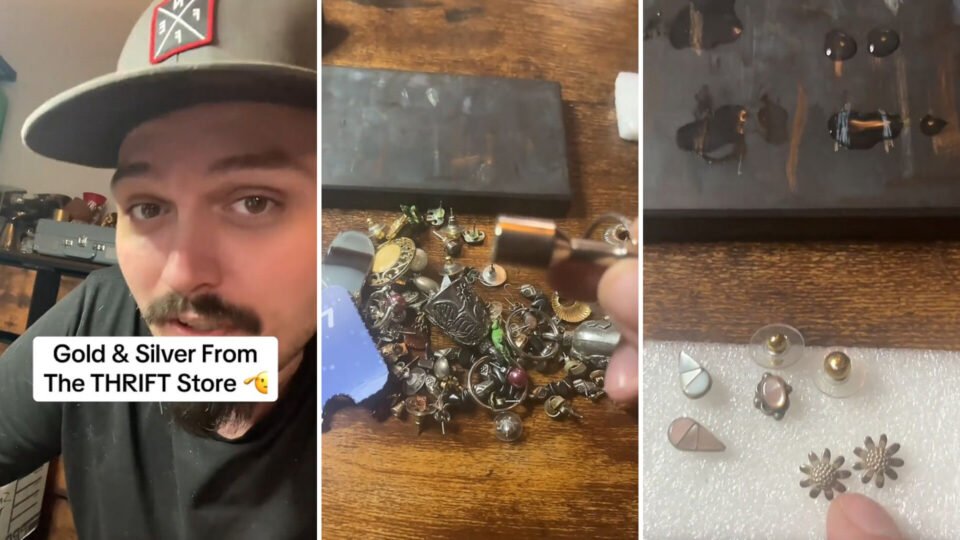
A $1 jewelry bag from a thrift store went viral after a man sorted through its contents and said some pieces appeared to be sterling silver and 14-karat gold.
What happened?
In a TikTok video, H_Media_ (@h_media_) showed how they evaluated a thrifted bundle of jewelry they said cost just $1.
“This is how you test your jewelry at home to see if you actually found gold or silver,” he said. “Now, we only paid $1 for this bag right here. Let’s see if we got anything good.”
@h_media_ This is how we process mystery jewelry bags from the thrift store 🫡 #thrift #resellercommunity #thriftstorefinds ♬ original sound – H_Media_
A magnet test started off the process, sorting the items into two piles. As the poster explained, “remove anything that’s magnetic because gold and silver are not magnetic.”
Once the items passed the magnet test, they made it to the acid-testing stage. During this process, he took the pieces and rubbed them onto a touchstone before adding acid solutions to see if the streaks dissolved or not. If they dissolved, then the jewelry wasn’t silver or gold.
Alongside what they described as “some cool rocks,” the creator’s final pile included several sterling silver pieces and two items he said tested as 14-karat gold.
One commenter jokingly asked, “Where are we buying these $1 bags?!”
Why does it matter?
Secondhand stores often sell everyday basics at far lower prices than new retail, but the occasional rare find only adds to the appeal.
There is an environmental upside, too. Buying used jewelry, clothing, and household goods helps extend the life of products that already exist, which can reduce waste and lower demand for newly manufactured items.
Still, not every thrift-store score is guaranteed. Most mystery bags will not contain precious metals, but they can still be an inexpensive way to explore resale, repair, and reuse.
Yet a little background knowledge can make the process easier. Knowing how to spot hallmarks, use a magnet as an initial filter, and separate costume pieces can help you identify which items may be worth a closer look.
It is also smart to be cautious with at-home testing methods. If you think you found real gold or sterling silver, a professional jeweler or appraiser can help confirm whether an item is solid metal, plated, or filled.
Get TCD’s free newsletters for easy tips, smart advice, and a chance to earn $5,000 toward home upgrades. To see more stories like this one, change your Google preferences here.
