
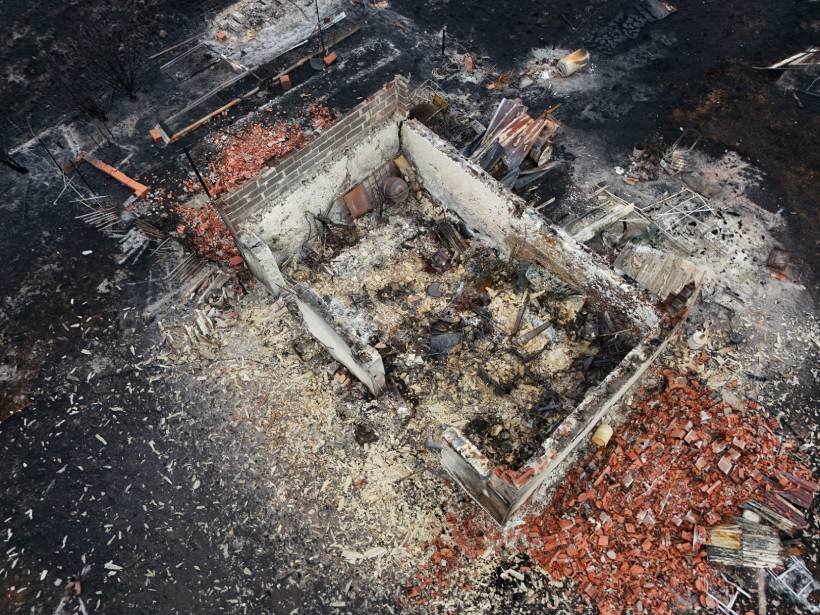
Europe’s increasingly extreme weather is creating a fiscal problem that governments can no longer treat as a series of isolated emergencies. As wildfires, floods and other climate related disasters become more frequent, the cost of rebuilding damaged infrastructure, supporting affected households and restoring economic activity is increasingly falling on governments.
The problem is particularly serious because most climate related losses remain uninsured. That means Europe’s taxpayers and public budgets could ultimately absorb a growing share of the costs at a time when governments are already under pressure from higher defence spending, ageing populations and elevated public debt.
Climate Disasters Are Becoming a Recurring Fiscal Cost
Europe has already experienced the financial consequences of extreme weather. Wildfires across southwestern Europe and severe flooding in Spain, Germany and neighbouring countries demonstrate how climate events can rapidly create large reconstruction bills.
The European Environment Agency estimates that weather and climate related extremes caused around €822 billion in economic losses across the European Union between 1980 and 2024, with approximately one quarter of those losses occurring in just the last four years.
Stay ahead of the geopolitical week.
MD Briefing delivers expert analysis across five global fronts — the Indo-Pacific, energy, geoeconomics, European security, and the Middle East — every Monday morning. Free.
The significance of this trend is not simply the size of individual disasters. It is their increasing frequency.
Federico Barriga-Salazar, head of Western Europe sovereign ratings at Fitch, told Reuters that governments have historically treated catastrophes as expensive but exceptional events. Their increasing recurrence, however, means governments may have to begin treating climate damage as a regular fiscal obligation.
That represents a fundamental shift in how European governments need to think about public finances.
The Insurance Gap Leaves Governments Exposed
Europe’s biggest vulnerability is the limited level of insurance coverage.
Only around one quarter of climate related catastrophe losses in the EU are insured, according to the EU, while coverage in some countries is below 5%.
This leaves governments facing the difficult task of financing losses that private insurers have not covered.
The experience of Germany after the 2021 floods illustrates the problem. Bruegel estimates that Germany had to draw around €30 billion in public funds because of its relatively low insurance coverage, while much of the damage in Belgium was insured.
This creates a dangerous fiscal mechanism: when extreme weather becomes more frequent, uninsured losses increase, governments spend more on reconstruction and public debt comes under additional pressure.
David Zahn of Franklin Templeton warned that the impact could reach 1% to 2% of GDP in some countries.
For heavily indebted governments, that could be significant.
Europe’s Fiscal Pressures Are Already Mounting
Climate damage is arriving at an inconvenient time for European governments.
Public deficits across the euro zone already average around 3% of GDP. At the same time, European states are being pushed to increase defence expenditure, while ageing populations are increasing pressure on pensions and healthcare systems.
Climate disasters therefore compete for the same limited fiscal resources.
Spain provides an example. Fitch estimates that reconstruction following the country’s devastating 2024 floods could amount to around 0.7 percentage points of GDP between 2024 and 2026.
Individually, such expenditure may appear manageable. But repeated disasters could gradually transform emergency reconstruction into a structural component of government spending.
That is where the real danger lies.
Climate Risk Could Become a Sovereign Debt Problem
The central economic issue is no longer simply how much damage climate change causes.
It is who pays for that damage.
If households and businesses are adequately insured, much of the cost can remain within private markets. If insurance coverage is inadequate, governments become the insurer of last resort.
That creates what could become a vicious cycle.
A major climate disaster forces governments to borrow or redirect existing spending. Higher debt leaves less fiscal space for investment in climate adaptation. Insufficient adaptation then leaves infrastructure and communities more vulnerable to the next disaster.
The cycle can repeat itself.
This is particularly concerning for countries already operating with limited fiscal space. Climate change could therefore widen existing economic differences within Europe, with financially stronger states better able to absorb disasters while highly indebted economies face progressively greater pressure.
Adaptation Is Becoming a Fiscal Strategy
The most important implication is that climate adaptation should no longer be viewed primarily as an environmental policy.
It is increasingly a public finance strategy.
Investing in flood defences, wildfire prevention, water infrastructure, resilient electricity networks and heat resistant cities requires money upfront. But failing to make those investments could generate substantially larger costs later.
Spanish Prime Minister Pedro Sanchez has argued that green investments equivalent to 0.1% of GDP could prevent economic losses eight times larger while avoiding tax revenue losses three times the original investment.
The logic is straightforward: governments can either pay before disasters occur to reduce vulnerability or pay considerably more afterwards to repair the damage.
Europe Is Exploring New Ways to Share the Risk
Several European governments are already looking for ways to reduce their exposure.
Greece is examining measures to increase insurance coverage while strengthening water and energy infrastructure in areas particularly exposed to tourism related climate risks.
Portugal has announced plans for mandatory home insurance supported by a natural disaster and earthquake fund following major floods.
Another potential mechanism is catastrophe bonds, which allow governments or other entities to transfer disaster risks to investors. Investors receive returns but can lose some or all of their principal if a predefined disaster occurs.
However, catastrophe bonds are not a simple solution. They can be expensive and depend on accurately pricing increasingly unpredictable risks.
As Zahn told Reuters, a government could pay substantial premiums for years without a triggering event, only to receive protection when a disaster eventually occurs.
The EU Needs a Collective Solution
The fragmented nature of Europe’s insurance systems creates another problem.
Climate disasters do not respect national borders, while the financial capacity to absorb them differs considerably between countries.
The European Central Bank has proposed a joint EU public private reinsurance mechanism that would pool private natural catastrophe risks alongside an EU fund for public disaster financing.
Such mechanisms could spread risks across a larger economic area and prevent individual countries from being overwhelmed by exceptionally expensive disasters.
The European Commission is also examining measures to address Europe’s climate insurance protection gap.
The challenge, however, is political.
Governments must persuade taxpayers to spend money today on risks whose full economic consequences may only become visible years later.
Analysis: Europe Is Facing an “Adaptation Investment Trap”
The most important lesson from Europe’s growing climate losses is that inaction is becoming fiscally more expensive than adaptation.
For years, climate policy was often framed around reducing future emissions. That remains important, but the economic reality has changed. Extreme weather is already generating losses, and governments are already paying for them.
This creates an adaptation investment trap.
A government facing immediate fiscal constraints may postpone spending on flood defences, resilient infrastructure or wildfire prevention. When a disaster occurs, however, it must spend far more on emergency relief and reconstruction. That additional spending increases debt and reduces the fiscal capacity available for future adaptation.
The result is a cycle in which every disaster makes the next disaster more expensive.
Europe therefore needs to move from disaster response to systematic risk management.
That means governments should identify their exposure, require or incentivise greater private insurance coverage, invest in resilient infrastructure and develop mechanisms for pooling risks across countries.
The Bigger Political Question
The political difficulty is that adaptation produces benefits that are often invisible.
A flood defence that prevents a city from being destroyed does not generate the same political attention as a reconstruction programme after a flood. Preventive spending can therefore be difficult to justify politically even when its economic return is significantly higher.
This creates an incentive for governments to respond after disasters rather than invest before them.
But repeated climate shocks are gradually changing that calculation.
If climate damage becomes a predictable and recurring expenditure, governments can no longer rely on emergency budgets as their primary response. They need permanent financial mechanisms capable of absorbing climate related losses without destabilising public finances.
What Happens Next?
The immediate question is whether Europe’s current wave of extreme weather will generate sufficient political pressure for governments to accept the upfront cost of adaptation.
The choices are becoming clearer.
Europe can continue relying heavily on emergency public spending, leaving taxpayers increasingly exposed to uninsured losses. It can attempt to expand private insurance, although insurers themselves face difficulties pricing increasingly frequent climate risks. Or it can develop a broader European system combining insurance, public reinsurance, catastrophe financing and large scale adaptation investment.
The most sustainable option is likely to require all four.
Europe’s climate challenge is therefore becoming a sovereign finance challenge. As extreme weather becomes more frequent, the question is no longer whether climate change will cost European governments money. It is whether Europe will spend strategically to prevent those costs from becoming a permanent burden on already stretched public finances.
With information from Reuters.