
PI Global Investments
Finance

When he dies, Warren Buffett wants 90% of wife’s inheritance put into 1 investment. Here’s what it is, and how to get it


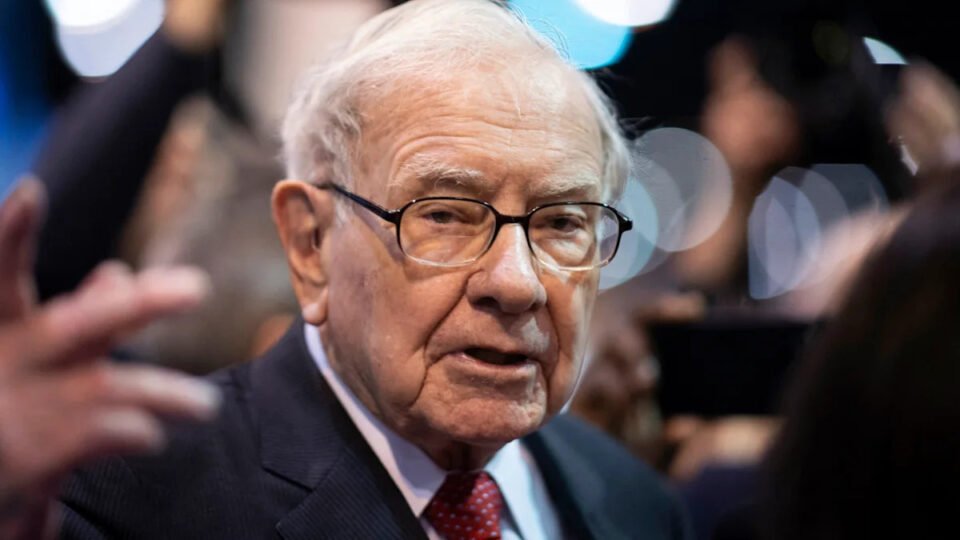
Warren Buffett looks over one shoulder in a busy room, looking visibly exhausted.
Johannes Eisele / Getty Images

Moneywise and Yahoo Finance LLC may earn commission or revenue through links in the content below.

Legendary investor Warren Buffett has generated substantial returns for the shareholders of his company, Berkshire Hathaway. From 1964 to 2025, Berkshire delivered an overall gain of 6,099,294% (1). That’s over six million percent.

Given that astonishing track record, you might assume that Buffett would want this successful trajectory to continue through his estate after his passing. However, the Oracle of Omaha has a different plan in mind.

Must Read

In his 2013 letter to Berkshire shareholders, Buffett shed light on the directives he has included in his will.

“One bequest provides that cash will be delivered to a trustee for my wife’s benefit,” he wrote (2). “My advice to the trustee could not be more simple: Put 10% of the cash in short-term government bonds and 90% in a very low-cost S&P 500 index fund.”

And now, over 10 years later, the S&P 500 is continuing to weather storm after storm — including the war in Iran.

While Buffett’s strategy is straightforward and doesn’t require constant monitoring or active trading, Buffett expressed a significant amount of confidence in it.

Here are a few ways you can take Buffett’s advice and apply it to your own portfolio.

Don’t pick stocks, do this instead

Buffett’s preference for recommending index funds stems from his belief that stock picking is not an optimal strategy for average investors.

At the 2021 annual shareholders meeting, he stated frankly, “I do not think the average person can pick stocks (3).”

This is where index funds come into play. They can be used as a more passive investment strategy that gives investors exposure to many companies across various industries. Although this strategy spreads the risk, the rewards can still be very rich.

In fact, the S&P 500, Buffett’s preferred index for low-cost investing, surged 16.39% in 2025, or 17.88% with dividends (4).

The beauty of ETF investing is also its accessibility — anyone, regardless of wealth, can take advantage of it. Even small amounts can grow over time with tools like Acorns, an app that automatically invests your spare change.

Signing up for Acorns takes just minutes: All you have to do is link your cards, and Acorns will round up each purchase to the nearest dollar, investing the difference — your spare change — into a diversified portfolio of ETFs managed by experts at leading investment firms like Vanguard and BlackRock.

With Acorns, you can invest in a dividend ETF with as little as $5 — and, if you sign up today, Acorns will add a $20 bonus to help you begin your investment journey.

Read More: Millionaires under 43 hold only 25% of their wealth in stocks. Here’s where their money is actually going

The last 10%?

Remember, Buffett didn’t advise going all-in on the S&P 500. He also recommended allocating 10% of the cash to short-term government bonds.

Investing in short-term government bonds can be appealing for those seeking lower-risk investments or a stable, relatively predictable source of income. Furthermore, these bonds are more liquid than long-term bonds, making it easier for investors to access their funds without significant penalties or loss in value.

The optimal allocation hinges on your personal financial situation and the current stage of your investment journey.

But bonds and safe bets are only one part of the typical 60/40 portfolio split. Investing in companies directly rather than an index is, for many, a natural part of growing their wealth — and cultivating their nest egg.

Knowing which companies to invest in, though, isn’t always easy. That’s why Moby offers expert research and recommendations to help you identify strong, long-term investments backed by advice from former hedge fund analysts.

In four years, and across almost 400 stock picks, their recommendations have beaten the S&P 500 by almost 12% on average. They also offer a 30-day money-back guarantee.

Moby’s team spends hundreds of hours sifting through financial news and data to provide you with stock and crypto reports delivered straight to you. Their research keeps you up-to-the-minute on market shifts and can help you reduce the guesswork behind choosing stocks and ETFs.

Plus, their reports are easy to understand for beginners, so you can become a smarter investor in just five minutes.

Finding the right platform to trade

Once you’ve got the right investments in mind, you’ll also want to find a platform where you can start trading.

You could shop around for brokerages, or you could try SoFi’s easy-to-use DIY investing platform, which lets you buy ETFs, stock and more with no commission fees and no account minimums.

SoFi is designed for both beginners and seasoned investors, with real-time investing news, curated content and the data you need to make smart decisions about the stocks that matter most to you.

What’s more, for a limited time, you can get up to $1,000 in stock when you fund a new account.

Always have a plan

Ultimately, everyone’s financial situation is unique, characterized by different obligations, goals and risk tolerance. While the dream of growing our savings alongside the S&P 500 is common, many Americans also face other financial responsibilities.

For investors with portfolios of $250,000 or more, for example, financial decisions often become increasingly nuanced. Managing withdrawals, minimizing tax exposure and ensuring long-term sustainability often requires greater coordination and strategic planning.

In these cases, working with a financial advisor can help reduce costly mistakes.

So, if you have a portfolio of $250,000 or more, platforms like WiserAdvisor can connect you with vetted professionals who specialize in this kind of planning.

Simply answer a few questions about your savings, retirement timeline and overall investment portfolio. From there, WiserAdvisor reviews its network to match you — for free — with up to three vetted, reputable advisors aligned with your specific needs.

You can then schedule no-obligation consultations with your matches to determine who is the best fit for your long-term goals.

WiserAdvisor is a matching service and does not provide financial advice directly. All matched advisors are third parties, and specific financial results are not guaranteed.

You May Also Like

Join 250,000+ readers and get Moneywise’s best stories and exclusive interviews first — clear insights curated and delivered weekly. Subscribe now.

Article Sources

We rely only on vetted sources and credible third-party reporting. For details, see our editorial ethics and guidelines.

Berkshire Hathaway (1), (2); CNBC (3); S&P Global (4)

This article provides information only and should not be construed as advice. It is provided without warranty of any kind.


Source link

Related posts

Is everything a splurge now? The new math of spending big – NBC News

D.William

New UK Critical Third Party regime: why this is only the beginning for financial institutions

D.William

Freepoint Commodities Renews Its Revolving Credit Facility at USD 2.3 Billion, with Capacity to Grow to USD 3.2 Billion

D.William

Leave a Comment