
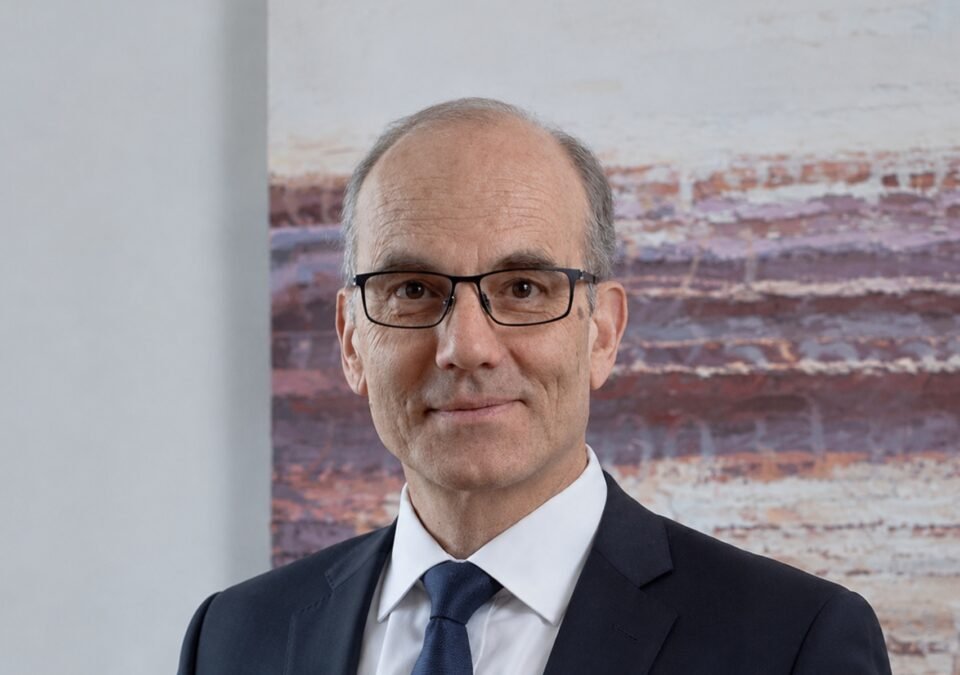
Timo Löyttyniemi, the former chief executive officer spent more than two decades running Finland’s state pension fund, Valtion Eläkerahasto (State Pension Fund of Finland), and in his account, the biggest constraint on his strategy in the final stretch wasn’t markets at all — it was future negative cash flows.
The government will pull an extra €1B out of the €25B fund next year, part of a broader pattern of tapping VER to help cover rising pension costs from an aging population. Löyttyniemi, who retired in February, said the fund ran extensive return simulations in response but left the harder structural decisions to his successor. “These extra outflows to the government made us postpone the plans somewhat during my time. But, of course, it’s now up to the new management to consider what the risk and sufficient and comfortable risk level is.”
“That will be also determined by future returns,” he added.
That caution shows up most clearly in a single number: 20%. That’s roughly where Löyttyniemi held VER’s private markets exposure — private equity, private credit, infrastructure and real estate combined — through nearly his entire tenure, even as other Finnish pension funds pushed allocations north of 40%, some blending in hedge funds to get there. He never reversed the strategy. He simply wouldn’t let it grow once outflows started climbing.
“When there’s uncertainty in terms of the cash flows . . . the size of the private portfolio cannot be increased aggressively,” he said, pointing to a forward return expectation near 5.5%, against outflows already running four to five percentage points a year.
Löyttyniemi is more assertive discussing the one strategic reversal he did make. VER lifted its prohibition on defense investment in spring 2022, rewriting its sustainability framework within weeks of Russia’s invasion of Ukraine. The policy shift itself was fast; getting the market to believe it was another matter. He says he spent few years afterward correcting consultants, banks and even VER’s own private equity managers who assumed the old restrictions still applied.
“I realized going forward that people still thought that there were some restrictions, and I really wanted everyone to understand,” he said. VER’s direct exposure ran mainly through Nordic — largely Swedish — defense-adjacent equities, layered on indirect exposure through index products that had been quietly compounding the theme all along. Now, he sees huge demand in physical products, such as Information and Communication Technology security and drones.
He’s just as direct in dismissing geopolitics as a filter for developed market decisions. Europe, the Nordics, the U.S. and developed Asia, he said, were never debated internally on political grounds during his tenure — the closest exception came in 2025, when U.S. tax-policy uncertainty pushed VER toward more conservative commitment sizing on U.S.-linked private market products. China is the one market where he pushes back hardest against the geopolitical framing altogether. During his tenure, VER kept its exposure to Chinese equities and fixed income deliberately low throughout his tenure, noting the real driver isn’t politics.
“It seems to boil down to the low profitability of these companies,” he said, pointing to high-volume, low-margin businesses with weak earnings growth.
“So this is more an economical than geopolitical issue but both play a role.”
On manager selection, Löyttyniemi credits VER’s edge to accumulated diligence rather than any single call. Re-upping with an existing manager was, in his words, “an easier decision” than backing a new one, since years of prior scrutiny had already resolved most of the uncertainty a first-time relationship carries. What his team weighed most heavily wasn’t short-term performance but succession — whether younger partners were stepping up as a manager’s founders aged out.
He is similarly unequivocal about Silicon Valley Bank’s collapse in March 2023, which he called an idiosyncratic failure of specific banks rather than a systemic event, though he pointed out that three years later, the fallout has been contained. Still, he cautioned that every crisis has its own features and today’s playbook won’t necessarily transfer cleanly to the next one.