

On September 11, 2026, JPMorgan Chase & Co JPM reportedly ceased lending to the hedge fund Situational Awareness, founded by Leopold Aschenbrenner, as reported by the Financial Times. This decision marks a significant shift in JPMorgan’s lending strategy, particularly as it was a key lender to the hedge fund through its prime brokerage services. The termination of this relationship comes on the heels of substantial losses experienced by Situational Awareness.
- JPMorgan’s current Price-to-Sales (P/S) ratio is significantly above its historical median of ~3.5x, indicating that earnings-based valuation metrics like P/E are not applicable due to the fund’s cash-flow-negative status.
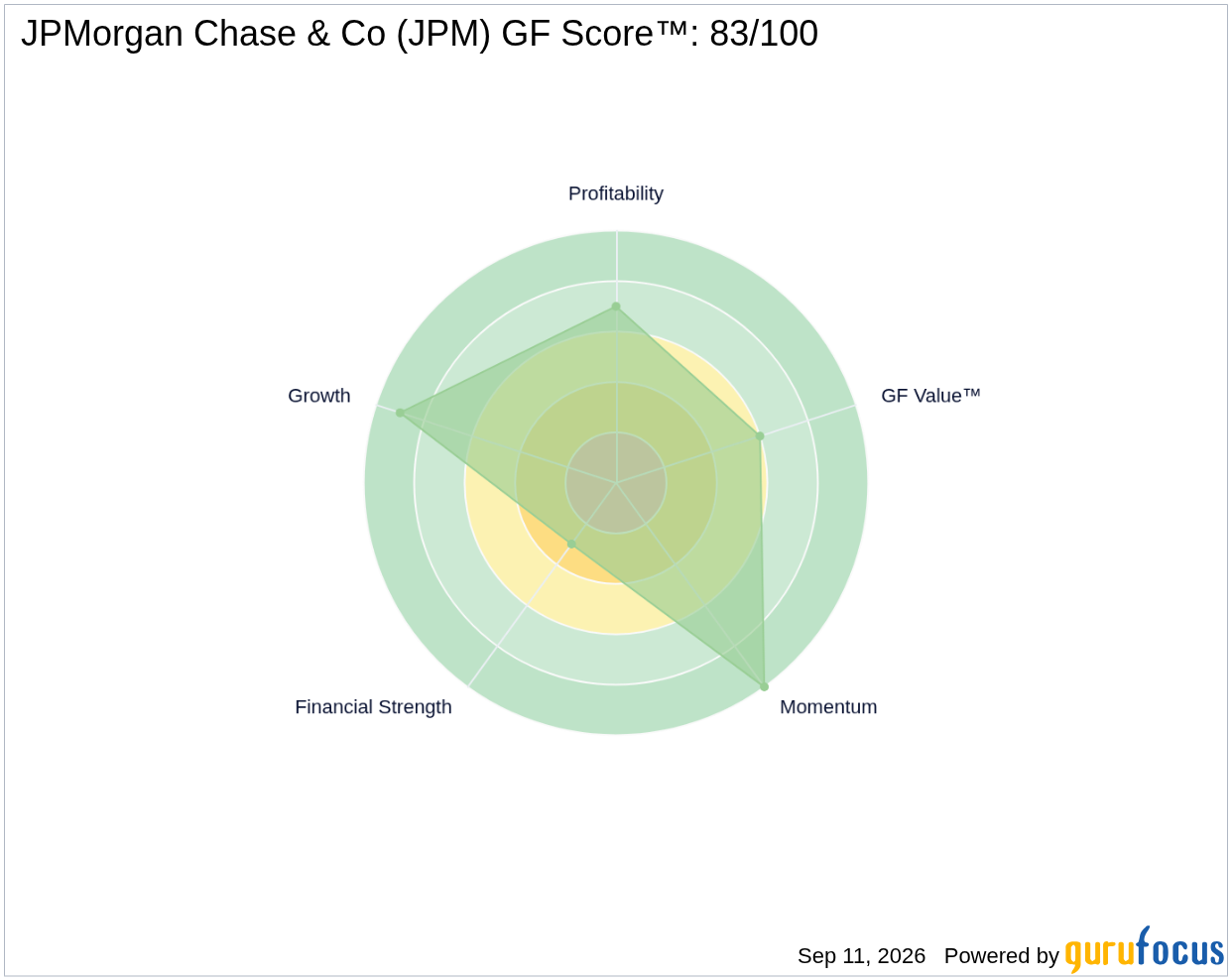
- JPM has a GF Score™ of 83/100, indicating strong fundamentals relative to its peers.
- In the last three months, insiders have sold shares worth approximately $3.6 million, signaling potential concerns regarding the company’s future performance.
What’s Behind the News?
The decision by JPMorgan to halt lending to Situational Awareness is significant, as it reflects the bank’s cautious approach in light of the hedge fund’s recent performance issues. This move may indicate broader concerns about the hedge fund’s viability and the potential risks associated with lending to it. Given JPMorgan’s stature as a leading global financial services firm, the termination of this relationship could have implications for other hedge funds and financial institutions that rely on similar lending arrangements.
JPMorgan Chase & Co operates in the financial services sector, with a market capitalization of approximately $946.93 billion. The firm is engaged in various banking services, including investment banking, commercial banking, and asset management. With a balance sheet totaling $4.9 trillion and managing over $7.1 trillion in client assets, JPMorgan is a dominant player in the industry, holding the top global ranking in investment banking fees.
Is JPM Overvalued on a Price-to-Sales Basis?
Currently, JPMorgan’s Price-to-Sales (P/S) ratio stands at approximately 3.52, which is notably higher than its historical median of around 3.5x. This suggests that the market is pricing in significant future growth, which may not be justified given the company’s recent struggles with profitability. The traditional Price-to-Earnings (P/E) ratio, which currently sits at 15.26x, is less relevant here as JPMorgan is facing cash-flow challenges, making earnings-based valuation metrics less applicable.
As a directional warning, JPMorgan’s GF Value™ is calculated at $316.44, indicating that the stock is currently about 12.6% overvalued compared to its market price of $356.23. This figure should be interpreted cautiously, especially considering the company’s current financial performance. For more details, visit GF Value™.
What Does JPM’s GF Score™ Tell Us?
The GF Score™ is a proprietary metric that evaluates a company’s financial strength, profitability, growth potential, valuation, and momentum. JPMorgan’s GF Score™ of 83/100 reflects its solid fundamentals, particularly in profitability and growth. However, the company’s financial strength is rated lower, indicating potential vulnerabilities.
| Metric | Rating |
|---|---|
| GF Score™ | 83 |
| Financial Strength | 3/10 |
| Profitability | 7/10 |
| Growth | 9/10 |
| Valuation | 6/10 |
| Momentum | 10/10 |
JPMorgan’s strengths lie in its growth and momentum rankings, indicating robust performance in these areas. However, the low financial strength rating suggests that the company may face challenges in maintaining its current valuation levels. For further insights, visit the JPM stock page.
What Are Gurus and Insiders Doing with JPM?
Currently, 32 gurus hold shares of JPMorgan, with 10 adding to their positions and 18 trimming their holdings in recent quarters. This activity indicates a mixed sentiment among institutional investors. Additionally, insider selling has totaled approximately $3.6 million in the last three months, which may raise concerns about the company’s future prospects.
What This Means for Investors
In summary, JPMorgan Chase’s current valuation appears to be stretched, particularly when assessed through the lens of its Price-to-Sales ratio. The ongoing insider selling and the recent cessation of lending to Situational Awareness further complicate the investment landscape for JPM. Investors should consider these factors carefully when evaluating their positions in the company. For more detailed analysis, visit the JPM stock page.
Frequently Asked Questions
What is JPM’s GF Score™?
JPM’s GF Score™ is 83/100, indicating strong fundamentals relative to its peers.
Is JPM overvalued or undervalued?
JPM is currently overvalued based on its Price-to-Sales ratio, as the P/E ratio is not meaningful for a company facing cash-flow challenges.
What is JPM’s P/E ratio compared to historical?
JPM’s current P/E ratio is 15.26x, which is significantly higher than its 5-year median of 11.5x, indicating a potential overvaluation.
This stock alert was generated using automated technology and GuruFocus financial data to provide readers with timely and accurate market reporting. This content was reviewed by GuruFocus editorial team prior to publication. Please send any questions or comments about this story to [email protected].