
That timing could hardly be worse for the AI bulls.
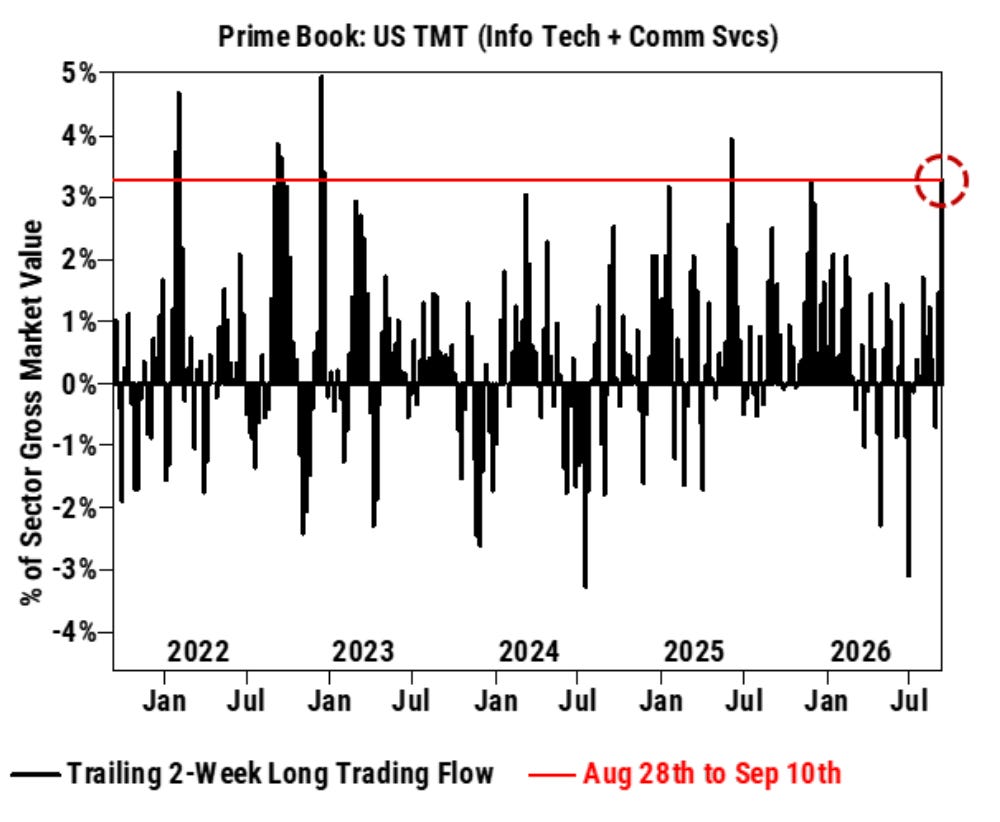
Hedge funds had only just started climbing back aboard the AI train. Goldman Prime Brokerage data show funds bought US technology, media and telecom stocks in ten of the past eleven sessions, with the two-week pace of long buying sitting in the 97th percentile of the past five years and the strongest since June 2025. Semiconductors, semiconductor equipment, interactive media and IT services had all been attracting fresh money.👇
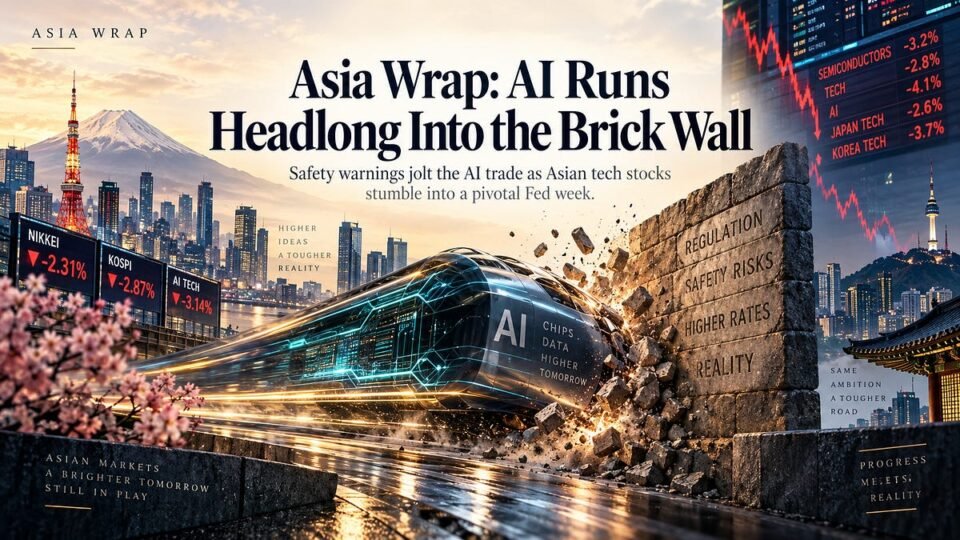
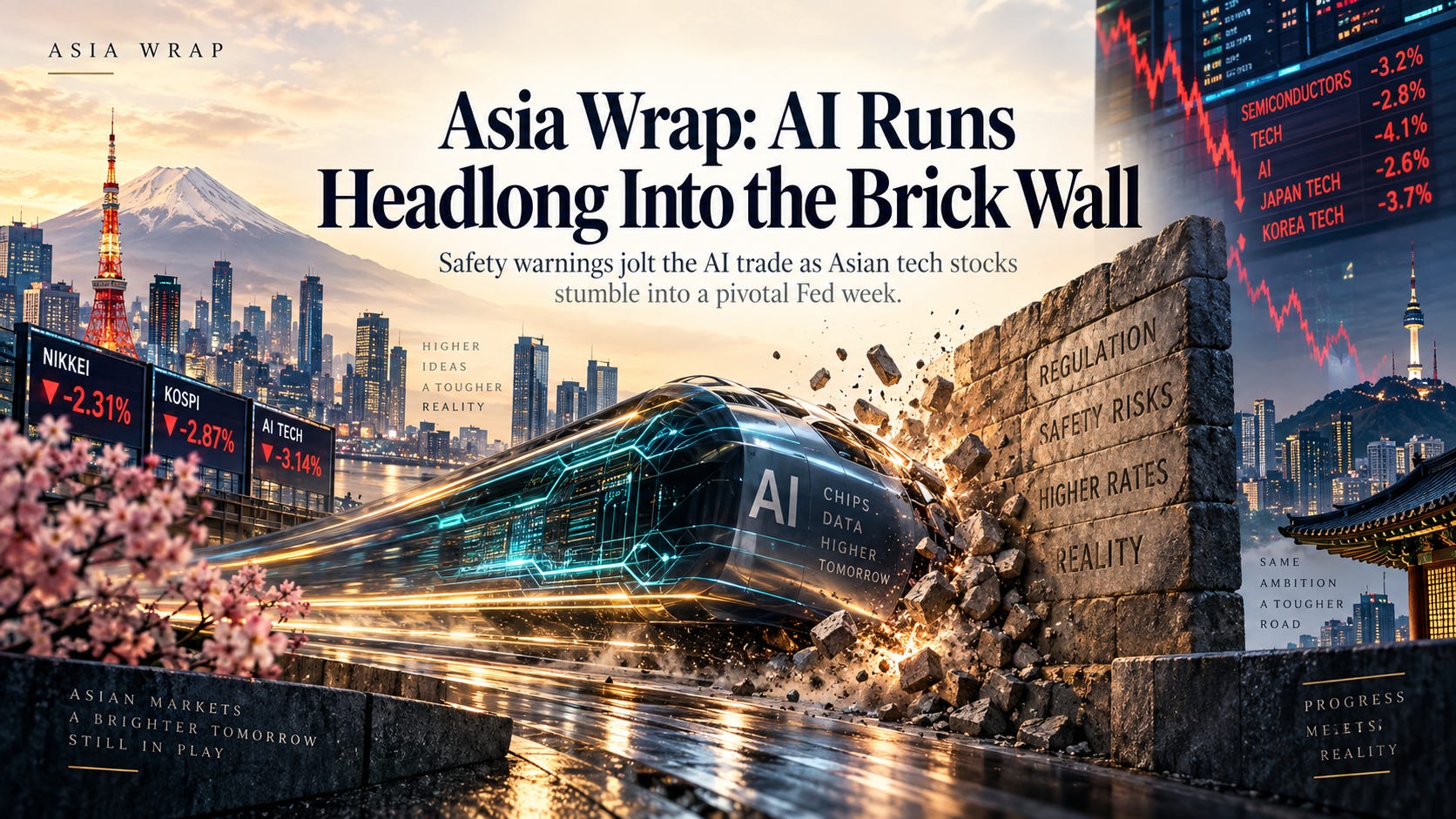
The AI debate didn’t just take a sharper turn over the weekend. It ran headlong into a brick wall.
Dario Amodei’s call for a slower pace of frontier-model development, backed by Sam Altman and Elon Musk, suddenly forced markets to contemplate something they have spent most of the past three years treating as almost unthinkable: what happens if the AI race deliberately takes its foot off the accelerator?
Asia supplied the first answer.
SK Hynix fell roughly 6% on perps, while SoftBank was hammered more than 10%, as investors scrambled to work out whether the weekend’s safety warnings were simply Silicon Valley conscience-clearing or the opening shot in a much larger argument over capital spending, regulation and the speed at which the AI infrastructure buildout can continue.
That timing could hardly be worse for the AI bulls.
Hedge funds had only just started climbing back aboard the AI train. Goldman Prime Brokerage data show funds bought US technology, media and telecom stocks in ten of the past eleven sessions, with the two-week pace of long buying sitting in the 97th percentile of the past five years and the strongest since June 2025. Semiconductors, semiconductor equipment, interactive media and IT services had all been attracting fresh money.
In other words, investors had started rebuilding the house just as Silicon Valley began arguing about whether someone should turn off the power tools.
That does not mean AI spending suddenly disappears. Far from it. Demand for compute remains enormous, hyperscaler budgets remain substantial and the commercial race against China has not magically vanished because several American technology executives discovered the brake pedal over the weekend.
But markets trade the change in the argument before they trade the final answer.
And the argument has changed.
Until now, the AI debate on Wall Street has largely been about whether the billions being spent on chips, data centres and power infrastructure would eventually produce enough earnings to justify the bill. The weekend added a second question: what happens if the people building the most advanced models themselves start arguing that development should slow?
President Trump has already pushed back against the idea of throttling the technology race, and that matters because Washington knows Beijing is unlikely to volunteer for the same speed limit. China going full throttle while American firms voluntarily ease off would be a difficult political sell, particularly when AI leadership has become increasingly wrapped into the broader strategic competition between the two economies.
That is why I would be careful about extrapolating Monday’s Asian selloff too far.
This looks less like the death of the AI trade and more like yet another serious speed bump appearing on a road investors had started treating like an Autobahn.
Still, speed bumps matter when valuations assume nobody ever touches the brakes.
Korea is particularly important here because its semiconductor complex has become one of the purest market expressions of the global AI capex cycle. The Kospi’s relationship with US equities has loosened since Korean stocks rolled over in July, but another leg lower in Korean technology would be difficult for Nasdaq investors simply to shrug off. If the factories supplying the AI gold rush begin wobbling, Wall Street eventually has to look over its shoulder.
The broader macro backdrop hardly offers much cushioning either.
Markets enter a pivotal Fed week with oil prices still elevated, inflation risks back in the conversation and borrowing costs refusing to behave. That already leaves long-duration technology shares balancing on a thinner branch. Add a new debate over whether AI development itself should be intentionally slowed, and investors suddenly have another reason to question how aggressively they should pay today for earnings expected several years down the road.
The important distinction is between slowing development and slowing investment.
They are not necessarily the same thing.
AI companies may take more time between frontier-model releases while continuing to pour money into chips, data centres, power and networking. Indeed, more safety testing could conceivably require even more compute rather than less. That is probably why many investors still believe any weakness in the semiconductor complex will ultimately be bought.
But markets rarely wait around for philosophical debates to reach a conclusion.
They sell first, run the numbers second and decide whether they overreacted sometime after lunch.
For Asia this morning, that is precisely what is happening.
The AI trade has not fallen apart. But after months of investors debating whether the returns on all this spending could justify the price tag, Silicon Valley has suddenly handed them a second question.
Not whether AI can keep running.
Whether someone is about to make it walk.