
THE Philippine industrial property market remained resilient in the first half of 2026 despite higher fuel and construction costs, geopolitical tensions and economic uncertainty, with Cebu among the areas seen to offer opportunities for further expansion, according to property consultancy Colliers Philippines.
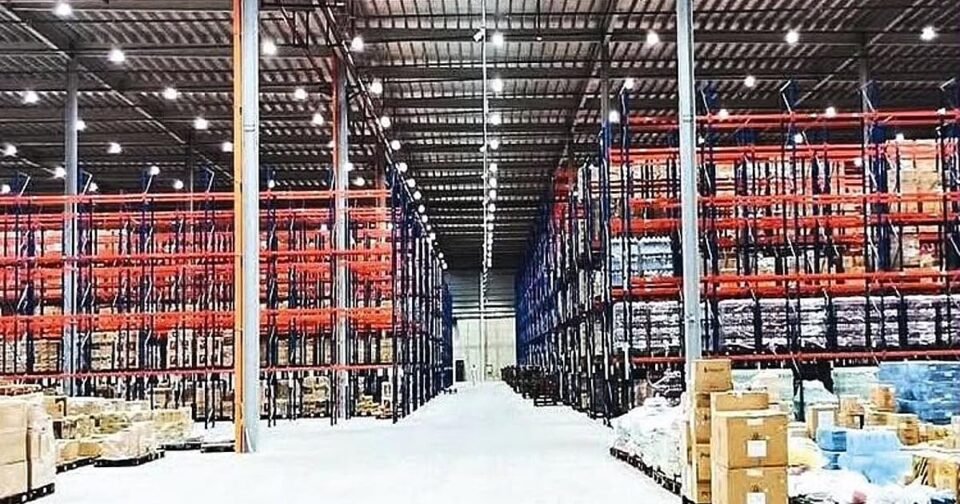
In its Industrial Property Market Pulse First Half 2026, Colliers said warehouse demand continued to strengthen, with overall vacancy in Central Luzon, Metro Manila and Southern Luzon falling to 13.1 percent in the first half from 16.8 percent a year earlier. New warehouse supply was being absorbed by traditional businesses and e-commerce-related occupiers.
Colliers’ survey of industrial park developers, facility landlords, manufacturers, logistics firms and related businesses also showed generally positive sentiment. About 84 percent of respondents said their business performance over the past two years was somewhat or largely positive, while only four percent said their businesses had not performed as well as expected.
Less affected by domestic concerns
The consultancy said the industrial sector was less affected by domestic economic concerns but faced more direct pressure from the surge in oil and logistics costs following the conflict involving the United States and Iran.
Higher fuel, freight and material costs prompted some companies to reconsider warehouse locations to reduce transportation expenses. Still, 26 percent of respondents said they were not affected by the oil crisis, while many others said their operations had already normalized.
For industrial locators, location, lease rates and proximity to expressways or highways remained the three most important considerations in selecting facilities. Colliers said the focus on these fundamentals reflects the need to control transportation and real estate costs amid higher fuel prices.
The report also highlighted continued demand for modern warehouses equipped with higher clear heights, improved floor loading, automation readiness, enhanced fire protection and energy-efficient systems.
Sustainability features such as solar power and rainwater harvesting are also gaining
importance among multinational and globally oriented companies.
E-commerce remains a major driver of demand for warehousing and logistics space. While about two-thirds of survey participants expect e-commerce growth to slow in the coming years, none expects demand for e-commerce facilities to decline.
Survey
Colliers said 84 percent of respondents plan to expand their operations in the Philippines over the next three years, although this was down from 93 percent in the 2025 survey, indicating greater uncertainty. Only eight percent planned to maintain the status quo, while another eight percent remained uncertain.
While Calabarzon and Central Luzon remained the leading expansion destinations, Central Visayas and Southern Mindanao also ranked among the preferred areas, reflecting continued confidence in the regions. Colliers cited strategic location, growing industrial activity and rising demand for logistics and supply-chain infrastructure as factors supporting regional expansion.
The report specifically noted opportunities in Cebu, with Isla Logistics saying it continues to see strong prospects in Metro Manila, Northern Luzon, Southern Luzon and Cebu.
Transactions
Industrial property transactions, however, slowed in late 2025 and early 2026 as investors adopted a wait-and-see approach. Colliers said demand was beginning to recover, particularly from end-users, with some large industrial property transactions already closing.
Colliers said rising construction costs, high utility and operating expenses, interest rates, bureaucracy and transportation costs remain key challenges. Developers are responding through phased construction, value engineering, bulk procurement and standardized or modular building designs to contain costs while maintaining expansion plans.
The findings suggest that while industrial developers and occupiers are becoming more cautious, demand for logistics and manufacturing space remains supported by supply-chain expansion, e-commerce and regional growth, including in Cebu and Central Visayas. / KOC