
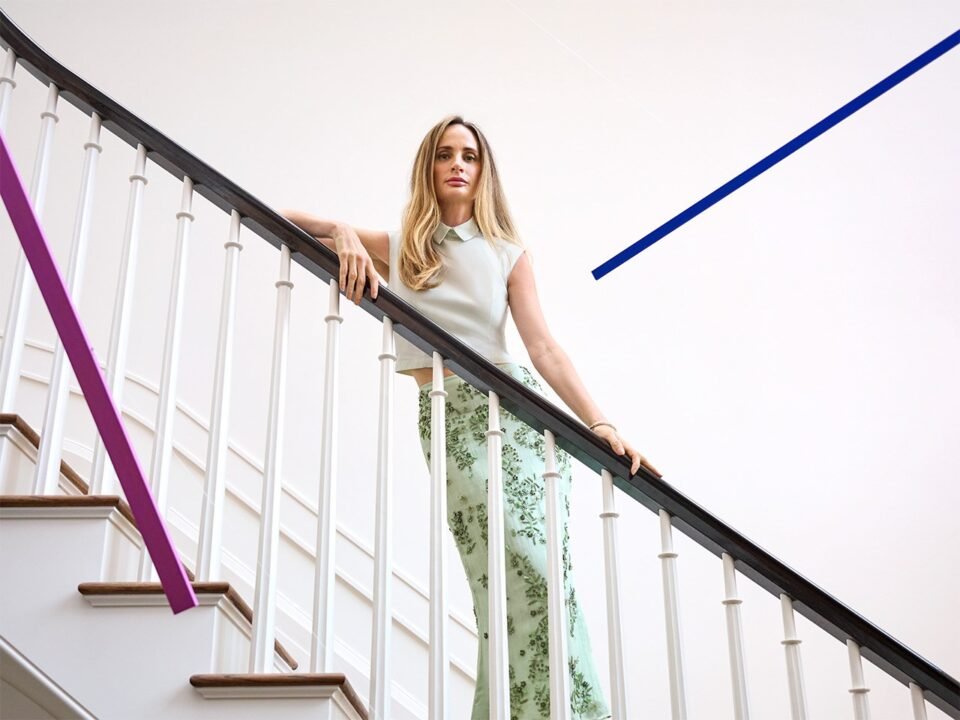
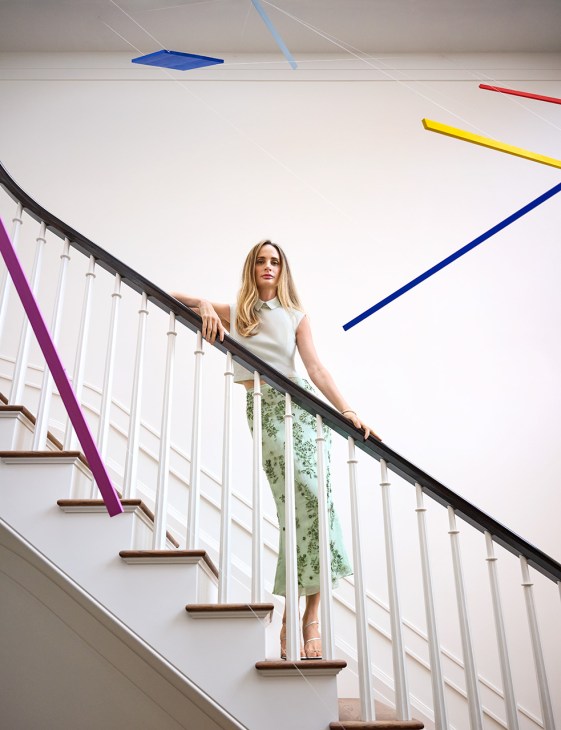
“Everyone thinking that they could become unicorns was clearly a fool’s errand,” says Lauren Santo Domingo, who co-founded fashion retail platform Moda Operandi in New York in 2010, just as venture capitalists and private-equity firms began eyeing up fashion businesses. The opportunities for quick customer acquisition and scaling up seemed endless, so investors started pouring money into the fashion sector in the same way as they had been with the tech industry and food businesses.
“Private-equity firms wanted to replicate the success that they had with the grocery sector, particularly in Canada,” says Santo Domingo. “They thought that fashion is an equivalent industry because we have seasonal products. But you can’t apply private-equity logic to a business that’s so much about instinct and relationships. Sometimes the decisions that fashion brands or retailers make aren’t rational.” Santo Domingo raised several rounds of funding to expand Moda Operandi to new territories, including $165m (€142m) led by Apax Digital Growth. The same year, the fund also acquired London-based competitor Matches Fashion at a valuation of $1bn (€860m).
These investors began betting heavily on up-and-coming apparel-and-accessories brands such as Copenhagen-based Ganni, which sold a majority stake to L Catterton (LVMH’s investment vehicle) in 2017; and Los Angeles-based Anine Bing, which raised $15m (€12.9m) in 2018 in a series-A round led by firms such as Felix Capital and Index Ventures – and $13.5m (€11.6m) less than a year later.
“At any start-up event, the conversation was always about how much money you raised and how many people you hired – as if those were the only metrics of success,” says Noura Sakkijha, who founded jewellery start-up Mejuri in 2015, during the industry’s private-equity boom. “This was a time when funding seemed unlimited if you were a fashion entrepreneur.”
Equally, investors had full confidence that they would receive their returns tenfold by simply opening more shops and boosting production of existing bestselling products. But this strategy diminished the importance of innovation and customers grew tired of seeing the same products, as well as shop concepts being copied and pasted, around the world. At the turn of the decade, revenues slowed and investors began to realise that quick returns are almost impossible when it comes to an ever-changing industry that’s reliant on storytelling and consumer psychology.
It’s why L Catterton has pulled back on most of its fashion investments, including the sale of sustainable-clothing label Everlane to fast-fashion giant Shein (a controversial move because of a clear misalignment in ecological values). US-based label Reformation – another product of the 2010s investing boom – started trading publicly in July, with its stock price continuing to fall below market expectations. As for Apax, it sold Matches for €60m to the UK’s Frasers Group, which declared the company bankrupt shortly afterwards.
These public fallouts have transformed the current landscape. The entrepreneurs who managed to make it out are buying back their businesses and rethinking the pace at which they want to operate, while investors looking to make quick exits are staying clear of fashion. “We were lucky to get out alive and put our private-equity days behind us,” says Santo Domingo, who was able to exit her partnership with Apax and refocus on her original business model and the company’s home market. “Any brand that is still doing well today is staying true to itself – hype is becoming hard to sustain.”
In place of that hype-based businesses is a new generation of brands that are returning to fundamentals: customer-centric approaches and understanding the value of ownership and creative control. In the United States, designer Jamie Haller has been building her company at pace. Her namesake clothing-and-accessories brand grew 450 per cent between 2023 and 2024 – without taking on any outside investment since its launch in 2020. “In an age of hedge-fund brands, AI-generated content and faceless marketing, what I’m doing feels intimate,” says Haller, whose brand stands out for its polished suiting and smart penny loafers. “I write my newsletters myself every night; customers can talk to me. These small moments of connectivity give customers a place to land.”
Haller makes a compelling case for the benefits of a self-starter approach in a business’s early days. It also signals a broader cultural shift towards independent brands with a clear mission statement. “Entrepreneurs are valuing ownership, control and bootstrapping more so than before, which is refreshing,” says Eshita Kabra-Davies of By Rotation. In the past decade, she pursued several rounds of investment for her fashion-rental start-up but stayed focused on her original peer-to-peer business model. As a result, By Rotation is on its way to reaching profitability: “I always think about my ownership and the alignment of the potential investor with our mission and values,” she adds.
Elsewhere, Mireia Llusia-Lindh, the founder of contemporary accessories label Demellier, argues that raising capital is still a necessary step for any ambitious entrepreneur who wants to build a global enterprise – but today partnerships are being formed on different terms. “More people are recognising that raising capital does not necessarily mean building a better company,” says Llusia-Lindh, whose brand’s sales grew 60 per cent last year, despite tough market conditions and an investment drought. “You need to build a company for long-term growth, not just for the next two years. Building a fashion brand, in particular, takes time. You can accelerate distribution or marketing but you cannot manufacture genuine customer connection or a strong brand identity overnight. Those are built through consistency over many years.”
Llusia-Lindh, who’s preparing to open a first flagship shop in London this autumn, adds that there’s more “scrutiny on profits” on the part of investors and an understanding that luxury is a long-term game. This means that fashion entrepreneurs shouldn’t give up on financial partnerships but do need to look beyond private equity to family offices or boutique firms that specialise in luxury. David Wertheimer, son of Chanel co-owner Gérard Wertheimer, is one of them. He set up 1686 Partners in Luxembourg to back fashion and lifestyle brands that prioritise slow production and high-end quality, such as artisanal eyewear label Ahlem and high-end running label Satisfy.
Santo Domingo is also using the expertise that she has built during decades of championing young designers and growing Moda Operandi to create her own fund, St Dominique Capital. Some of her early investments include handmade rug company Nordic Knots and The Row, an American label that has become an emblem of modern-day luxury. “I don’t care where a venture capitalist sits – they’re never going to have the same intel,” she says. “We have a front-row seat; we know whether a designer is a one-hit wonder or whether they have longevity. By taking an equity stake, we have extra incentive to propel these brands forward using the tools at our disposal, from warehousing to merchandising. There was so much money and so much burn. Don’t get me wrong, it was fun while it lasted – but it wasn’t sustainable. We need to go back to basics and remember that fashion businesses really are about the designer and the customer.”