
Africa investment opportunities are becoming closely tied to the technology infrastructure needed to connect people, businesses and markets.
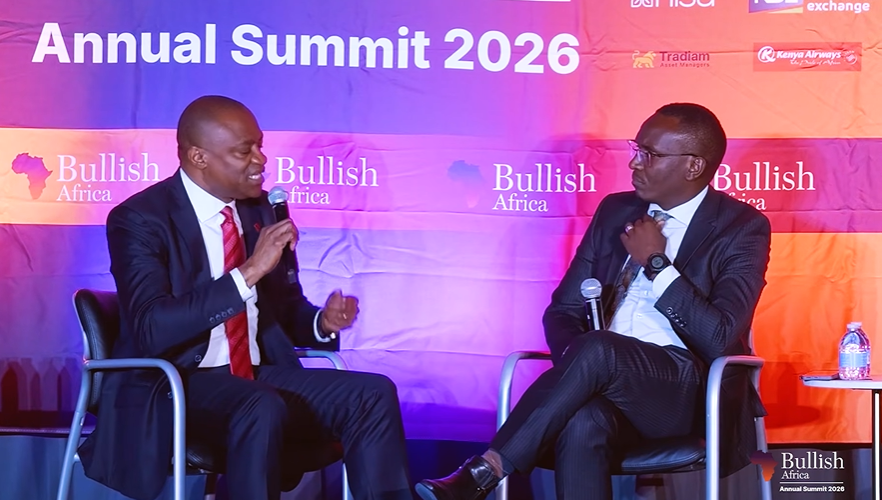
At Bullish Africa 2026, UBA Group Managing Director Oliver Alawuba pointed to Africa’s growing population, educated talent and natural resources as reasons global investors should pay closer attention to the continent. His argument, however, went beyond the size of the opportunity. He stressed the need for partners with the local knowledge to help investors navigate African markets, a point that takes on greater weight as digital infrastructure becomes part of the continent’s economic foundation.
Alawuba said that over the next 50 years, Africans could account for about 35% of the global population, while more Africans are receiving education both on the continent and in the diaspora. He also pointed to Africa’s resources as part of the continent’s long-term proposition. Those observations frame a familiar investment argument, but the technology sector shows what has to happen between demographic potential and actual economic value: people need connectivity, businesses need digital payments, companies need computing capacity, and markets need systems that allow transactions to move across borders.
Africa’s population is only part of the investment case
The scale of Africa’s population creates a large potential market, but the size of that market does not by itself determine how much value investors can capture. TechTrendsKE’s recent coverage of digital infrastructure shows the amount of capital now being directed toward the networks and facilities needed to serve that demand.
In September, WIOCC Group secured $300 million from Africa Finance Corporation and Vision Invest for an expansion covering data centres, open-access terrestrial fibre and subsea assets. WIOCC operates across more than 30 African countries, while the investment comes at a time when Africa still has a substantial connectivity gap. TechTrends reported that 35.7% of Africa’s population was online in 2025, compared with a global average of 73.6%.
That gap changes the way the investment opportunity should be understood. A large population creates potential demand, but infrastructure determines how much of that demand can participate in the digital economy. Fibre networks, submarine cables, data centres and cloud infrastructure are therefore becoming part of the basic economic systems required to turn population growth into commercial activity.

Digital infrastructure is becoming core economic infrastructure
Kenya offers a useful example of how the pieces are coming together. TechTrendsKE has reported on new and proposed data-centre capacity, including the proposed $1.5 billion Hercules project in Mombasa, where AMACO plans to combine AI computing infrastructure with dedicated power generation. The project has brought GE Vernova into the proposal, although the available information does not establish that financing has closed or construction is ready to begin.
That qualification is important because Africa’s infrastructure story contains a mixture of operating facilities, committed investment and proposed projects. TechTrends’ reporting on Kenya’s AI data-centre pipeline has also highlighted the importance of power, fibre connectivity, capital and actual customer demand. Proposed connectivity such as the LuLu subsea cable could add capacity, but planned infrastructure should not be treated as operational infrastructure before delivery.
The underlying direction is clear even when individual projects remain at different stages. AI workloads, cloud services and digital businesses require reliable electricity, international connectivity and local computing capacity. That makes infrastructure investment part of the investment thesis itself rather than simply an enabler sitting in the background.
Payments are helping connect fragmented markets
Alawuba’s emphasis on having a partner that understands how to navigate Africa also applies to the continent’s payment systems. Africa is made up of dozens of national markets, each with its own currencies, regulations, banking systems and business practices. Moving money between those markets has historically added friction to cross-border trade.
The Pan-African Payment and Settlement System, or PAPSS, is attempting to address part of that problem. By September, the platform had expanded to more than 30 African countries, connecting 24 national and regional central banks, more than 200 commercial banks and payment service providers, and 16 switches. TechTrendsKE reported that transaction volumes rose by about 1,000% between comparable periods in 2025 and 2026, while transaction values increased by roughly 120%, according to PAPSS.
PAPSS matters to the investment story because regional opportunity is difficult to realise if businesses cannot move money efficiently between markets. The platform allows participating institutions to process cross-border payments using African currencies, reducing some of the reliance on correspondent banking routes and foreign-currency conversions. TechTrends previously reported that Kenya’s connection to PAPSS through PesaLink was designed to address some of those cross-border payment bottlenecks.
The technology does not remove every barrier to doing business across Africa. It does, however, address one of the pieces that has made regional commerce more complicated than the size of the combined market might suggest.
Banks are building the digital rails for regional growth
The banking sector is also adapting to a market where customers and businesses expect financial services to work across multiple digital channels and, increasingly, multiple countries.
I&M Group provides one example. TechTrendsKE reported in September that about 85% of the bank’s retail accounts are now opened digitally. Its digital operations span Kenya, Tanzania, Uganda, Rwanda and Mauritius, with engineering and quality-assurance teams in Kenya supporting the wider group. The model allows the bank to reuse technology across markets rather than building completely separate digital systems in every country.
Mobile money shows another side of the same development. Airtel Money’s share of Kenya’s mobile-money market reached about 11.1% in the fourth quarter of the 2025/26 financial year, while the wider market had 54 million mobile-money subscriptions by June 2026. Airtel’s Kenyan agent network has also expanded substantially, giving the service physical reach alongside USSD and smartphone-based channels.
This is where Alawuba’s point about local partners becomes more tangible. An international investor looking at Africa does not encounter a single financial, regulatory or technology environment. Banks, mobile-money providers, payment networks and infrastructure operators can provide the local connections that make it possible to operate within those different systems.
AI is raising the cost of being digitally unprepared
Artificial intelligence adds another layer to the infrastructure requirement. Companies cannot deploy meaningful AI systems at scale simply by purchasing access to a model. They need data, connectivity, computing capacity, security controls, identity systems and people capable of integrating the technology into existing operations.
TechTrendsKE’s coverage of WSO2Con Africa in Nairobi highlighted this problem from the enterprise side, with discussions around fragmented data, integration, infrastructure, identity and governance. The same issue appears in the public sector, where governments seeking to use AI have to connect systems and establish the controls needed to manage increasingly autonomous software.
The infrastructure investment being reported across the continent therefore has implications beyond faster internet access. Data centres provide computing capacity; fibre and subsea cables move the data; payment networks allow commercial transactions; banks and fintechs provide digital financial access; and governance systems determine how increasingly capable software can operate safely within organisations.
The opportunity depends on what gets built
Alawuba’s broader message at Bullish Africa 2026 was that investors need to look at Africa with a deeper understanding of its markets. TechTrendsKE’s reporting suggests that the same principle applies to the technology opportunity. The continent has a large population, a growing pool of talent and substantial natural resources, but converting those assets into economic value requires infrastructure that can connect them to businesses and customers.
That is why the most consequential investments may not always be the companies with the most visible consumer brands. They can also include the fibre operators connecting cities, the data centres hosting cloud and AI workloads, the payment systems reducing cross-border friction, and the banks and fintechs building digital channels around local market behaviour.
For global investors, that creates a more complicated proposition than a simple bet on Africa’s population growth. The opportunity sits across the infrastructure required to make that population productive, connected and commercially accessible. UBA’s pitch for local knowledge fits into that picture: capital can identify an opportunity, but operating successfully across African markets still requires institutions that understand how the continent’s different systems work together.
Real ESG impact doesn’t happen in panels alone, it happens in the rooms where financiers, operators, and policymakers actually align. Our GreenShift Forum 2026 cuts the noise, bringing together the people rewiring Africa’s sustainability and energy frameworks for one focused day in Nairobi. Secure your seat.
Go to TECHTRENDSKE.co.ke for more tech and business news from the African continent and across the world.
Follow us on WhatsApp, Telegram, Twitter, and Facebook, or subscribe to our weekly newsletter to ensure you don’t miss out on any future updates. Send tips to info@techtrendsmedia.co.ke
