
In the 1970s, nonprofit mission-driven lenders emerged to fill gaps left by banks and other traditional financial institutions. Today, more than 1,300 community development financial institutions (CDFIs) nationwide provide financing to small businesses, nonprofits, homebuyers, community projects, and those with low incomes who might otherwise struggle to access loans with flexible terms.
Since Coastal Enterprises, Inc. (CEI) was founded in 1977, we’ve learned that money rarely tells the whole story. We take a holistic view of economic revitalization across Maine, listening to people and small businesses to inform our financing options, programs, and advocacy so that all people and communities can thrive. These lessons can benefit nonprofit leaders in any field.
Lesson 1: Pay attention to who has access to opportunities and who doesn’t
When Martha Leonard and Niky Walters set out to open Maiz in Portland, they had a deep connection to the community they hoped to serve—from first-generation Central and South American families looking for a taste of home, to people searching for safe, gluten-free dining options.
What they lacked, after living abroad for years, was the financial history in the United States needed to qualify for traditional financing. CEI’s business advising and early financing helped bridge that gap, allowing Maiz to grow into a restaurant, community gathering space, and local employer.
As a CDFI, we pay attention to who has access to opportunities and who does not. Programs are more effective when designed around overcoming the barriers people face rather than assumptions about what people need.
Lesson 2: Look for what’s getting in the way
When Matt Tarpey launched Maine Electric Boat, he saw an opportunity to address a challenge facing Maine’s working waterfront: the environmental impact of marine fuel emissions. He brought technical knowledge, industry experience, and a clear vision for a different way forward.
For years, potential funders and lenders viewed the company as too young and the concept too untested. Given CEI’s origin in the working waterfront, we understood both the opportunity of the market potential in climate-friendly equipment and the barriers of evolving from traditional customs, leading us to provide Tarpey a loan. For Maine Electric Boat, a “first mover” in the area, this loan had the additional benefit of de-risking future financing from other sources.
Community development often starts there: not with the solution itself, but with a closer look at what’s preventing a good idea from gaining traction.
Lesson 3: Put resources behind people who are already making things happen
Not every investment needs to launch something completely new. Often the most meaningful support helps strengthen a good idea and make it more sustainable.
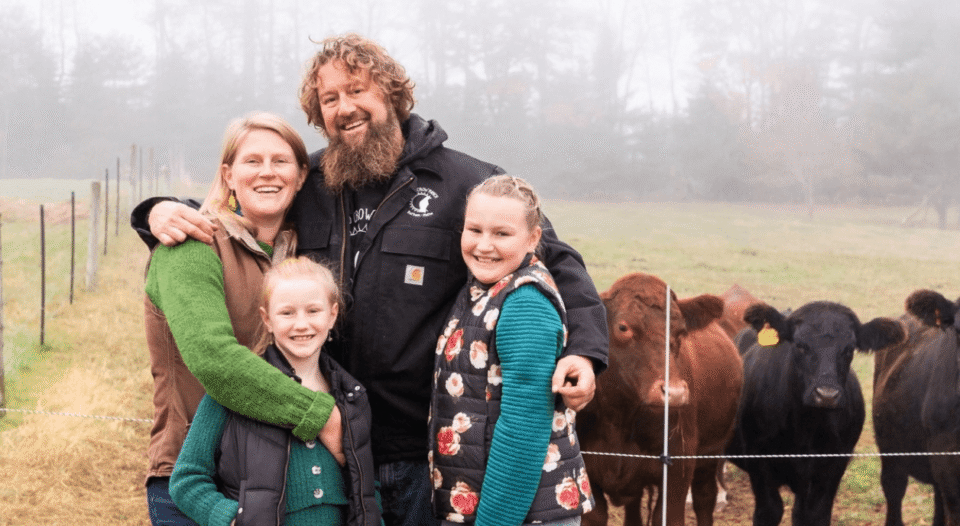
Old Crow Ranch in Durham was already a thriving livestock farm when owners Seren and Steve Sinisi began looking for ways to reduce operating costs and invest in the farm’s long-term sustainability. A CEI solar loan, paired with a USDA grant, helped make a solar power installation possible and now offsets the farm’s electricity use.
By the time Old Crow Ranch pursued financing for solar, the owners had already built a successful business rooted in their community. The investment helped lower costs, strengthen the farm’s long-term viability, and free up resources for whatever comes next.
Lesson 4. Money helps, but other kinds of support matter, too
When Andrew and Chloe Schundler launched a canned matcha latte business from their home, CEI gave them a start-up loan and advice on business planning, financial projections, and growth goals. That technical assistance enabled them to put their product on shelves in 30 stores within six months, growing to more than 100 locations within their first year.
Lesson 5. Focus on what changes for the community
When Summit Learning Center opened in Bangor, each child care slot helped parents return to work, work more hours, pursue training, or accept new opportunities. Employers benefited from a more reliable workforce, and children gained access to early learning experiences that support long-term success.
This ripple effect is why CEI has invested in child care for decades. Since 2020, through financing, advising, and technical assistance, CEI has helped launch 64 new child care enterprises, creating over 1,600 new slots and 219 new jobs in this critical sector.
Proving return on investments
CDFIs can’t accomplish this alone. We rely on a mix of partners, including foundation funders, banks, businesses, individuals, and government, to bring these impacts to life. What we’ve learned from 50 years of experience is that mission-driven lending is not inherently riskier than conventional practices, especially when paired with supportive advising. And the return on investment—in the form of good jobs, locally owned small businesses, and affordable child care—is lasting community change.
Photo credit: Old Crow Ranch