
Defence
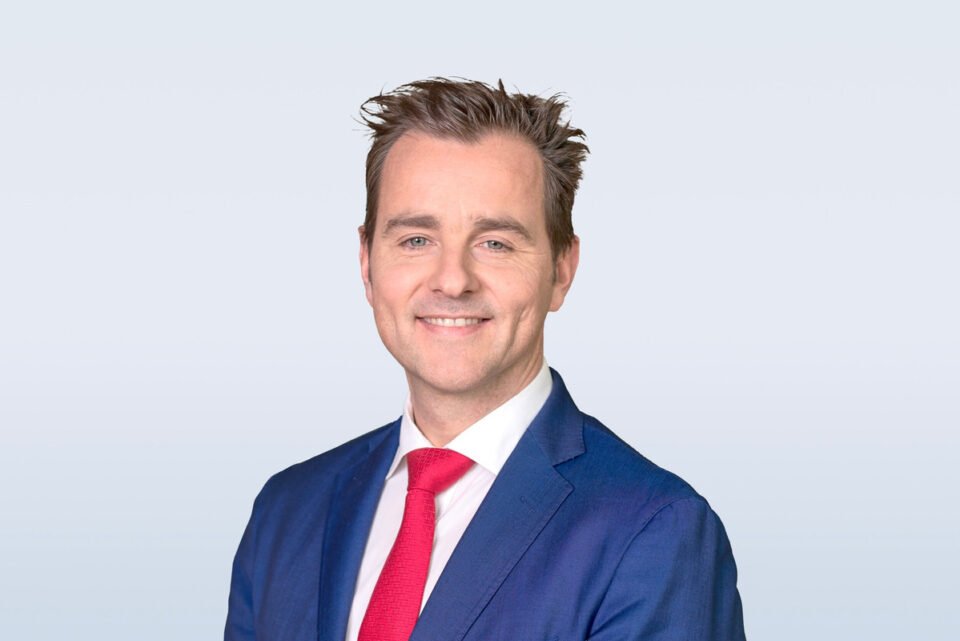
Major economic and geopolitical shifts are reshaping the investment landscape. In this new environment, defence is gradually emerging as a new destination for private capital. “Given the current geopolitical context, we are seeing much greater focus on defence,” emphasises René Paulussen. However, the sector remains challenging, due to “the scale of capital required and the long lead times for project completion”, particularly for the production of drones or fighter aircraft.
This timeframe may, however, suit institutional investors with a longer-term horizon, such as pension funds, sovereign wealth funds or insurance companies. Beyond the profile of investors capable of taking positions, it is above all the issue of financing that could accelerate the inflow of private capital. According to René Paulussen, the investments required between now and 2030 cannot be met by governments alone, despite NATO’s target of increasing defence spending to 5% of GDP. The private sector will therefore be called upon to play an increasingly significant role.
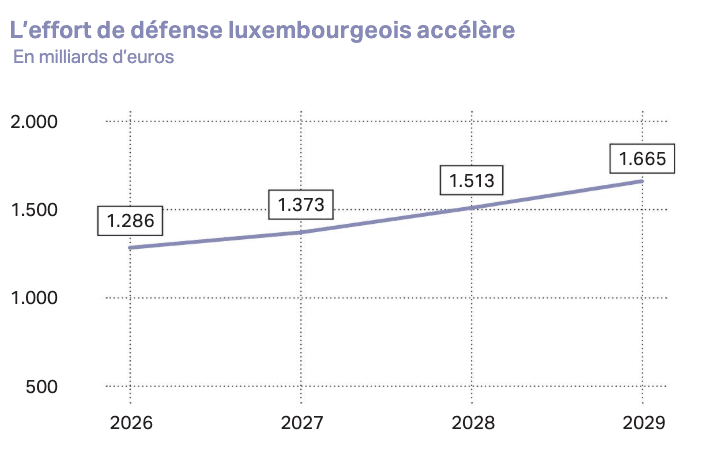
Luxembourg’s defence efforts are gathering pace. (Source: Direction de la défense)
Energy transition
“The issue of the energy transition has taken a significant back seat in the United States since Donald Trump’s return, whilst in Europe, certain projects have been postponed, notably due to the European Commission’s Omnibus package, which has restricted the scope of sustainability reporting (CSRD). But this issue is likely to remain important for private investors in the coming years,” says the alternative investment leader. The energy transition also touches on the energy sovereignty and self-sufficiency of nations. “We will therefore need to continue investing in solar, wind, hydroelectric power, batteries and energy storage. This trend is set to continue,” says René Paulussen.
“Some of our research suggests that around half of the capital allocated to infrastructure could be channelled into energy and transport,” he adds. These needs remain considerable: the European Commission estimates them at around €660bn per year by 2030. The ageing of Europe’s transport infrastructure, much of which was built after the Second World War, will also require significant investment in the coming years.
Artificial intelligence
After defence and energy, the final major area for investment is, unsurprisingly, artificial intelligence, where infrastructure requires massive amounts of capital. “Annual investment in data centres is expected to reach $252bn by 2027, representing a 121% increase since 2024,” says René Paulussen. This race to build infrastructure is affecting asset values. “When there is significant enthusiasm and demand outstrips supply – particularly because building data centres is time-consuming – one can certainly get the impression that valuations are rising sharply,” he emphasises.
An investment cannot be based indefinitely on hypothetical income.

However, he does not see this situation as indicating a bubble comparable to the dot-com bubble of 2000, considering the parallel to be unfounded: artificial intelligence, he argues, is based on genuine substance and real economic value, which was not the case for many companies that vanished when the ‘dot-com’ bubble burst. The Bank of England, for its part, is taking a more cautious stance. In a report published in December 2025, it stated – without going so far as to call it a bubble – that AI valuations were ‘considerably stretched’ and warned of the risks associated with using debt to finance this infrastructure.
“The challenge for investors will be to distinguish between projects that are already generating cash flow and those that still rely primarily on hypothetical future returns. Over time, this distinction will influence the way investors value these assets. An investment cannot rely indefinitely on hypothetical income; at some point, concrete returns must materialise,” concludes René Paulussen.
This article was written for the supplement Alfi + LPEA from the October 2026 issue of Paperjam magazine, published on 16 September. The content was produced exclusively for the print magazine and is published on this website solely to contribute to Paperjam’s complete archive. Click this link to subscribe to the magazine.
Is your company a member of the Paperjam Club? You can apply for a subscription in your own name. Please let us know via [email protected].