


Earlier this month, I had the opportunity to attend an Alternative Investments forum at Peak Hudson Yards in New York. It was a rare opportunity to hear directly from some of the most influential leaders in global finance and to reflect on how their views might translate for investors closer to home.
The speaker line-up included Howard Marks of Oaktree Capital Management, Marc Rowan of Apollo Global Management, Robert Smith of Vista Equity Partners, Scott Nuttall of Kohlberg Kravis Roberts, Libby Cantrill of Pacific Investment Management Company, Lauren Casentini of Resource Innovations and Philippe Laffont of Coatue Management.
The event centred on private markets, artificial intelligence, infrastructure and global capital flows, all of which have direct relevance for investors in Cayman and across the Caribbean. The challenge for regional investors is not simply understanding these trends but finding practical and appropriately diversified ways to participate through public markets.
Fundamental principles
One observation was remarkably consistent throughout the forum: the global investment landscape is changing rapidly, but the fundamental principles of successful investing remain unchanged. Howard Marks emphasised that markets move between fear and greed, as well as pessimism and optimism, and that investors should focus on understanding where the market sits within those cycles rather than attempting to predict short-term movements.
Marks also reminded investors that great companies do not always make great investments if purchased at excessive prices. Valuation still matters. In an era dominated by enthusiasm around AI and technology, that lesson feels especially relevant. A powerful long-term theme can still produce disappointing returns when investors pay too much or concentrate too heavily in a small number of securities.
Technology
AI proved to be a dominant theme, with Marc Rowan, Robert Smith and Philippe Laffont all presenting AI as a technological shift comparable to the internet and cloud computing. Yet they highlighted a point often overlooked by retail investors: some of the most attractive opportunities may not be the applications making headlines today, but the infrastructure required to support its growth.
Potential beneficiaries include semiconductor manufacturers, data-centre operators, utility companies, power producers and infrastructure providers. AI requires immense computing power, and computing power requires electricity, transmission networks and physical infrastructure. Rather than trying to identify the next promising AI start-up, retail investors can seek exposure through established technology companies, diversified technology funds, utility stocks, infrastructure funds and sector-focused exchange-traded funds.
This approach does not eliminate investment risk. Technology changes quickly, sector funds can become expensive, and yesterday’s market leaders may not remain tomorrow’s winners. However, a diversified public-market vehicle can reduce the company-specific risks associated with selecting a single emerging business. It can also provide liquidity and transparency that may not be available in private investments.
Infrastructure
Infrastructure emerged as another major theme. KKR, Apollo and Resource Innovations described a world requiring enormous investment in electricity grids, energy generation, digital infrastructure and industrial modernisation. Much of this demand stems from AI, electrification, reshoring of manufacturing and ageing infrastructure across developed economies.
These discussions have particular relevance for the Caribbean. Across the region, energy security, affordability and infrastructure resilience remain pressing concerns. Many islands continue to face high electricity costs while balancing economic growth, tourism development and climate-related challenges. The conversations in New York underscored that investment in energy efficiency, renewable energy, power infrastructure, storage and grid modernisation is no longer simply an environmental objective. It is increasingly an economic necessity.
For Caribbean businesses and governments, more efficient and resilient infrastructure can support competitiveness, improve reliability and reduce vulnerability to external shocks. For investors, the opportunity is broader than owning a local utility. Public markets offer access to global companies involved in engineering, electrical equipment, grid technology, renewable power, energy storage and digital infrastructure. These are global themes, but their implications are increasingly local.
Private credit
Private credit was another major discussion point. Both Howard Marks and Marc Rowan argued that higher interest rates have improved the attractiveness of lending after more than a decade of ultra-low rates. Investors are once again being compensated for assuming credit risk, creating opportunities across fixed-income markets.
Most Caribbean retail investors cannot directly access institutional private-credit strategies, and private assets may bring additional liquidity, valuation and manager-selection considerations. However, the broader lesson remains important. For years, investors were pushed into riskier assets in search of returns. Today, government securities, investment-grade corporate bonds and short-duration strategies can once again provide meaningful income and diversification. For retirees and income-focused investors, the return of yield should be welcome news.
Caution
The final theme that stood out was caution. Despite widespread optimism about innovation and economic growth, speakers repeatedly highlighted elevated market valuations, geopolitical risks, fiscal deficits and inflationary pressures. Yet the message was not to abandon markets. Instead, the emphasis was on diversification, disciplined portfolio construction and maintaining sufficient liquidity to navigate uncertainty.
That may be the most valuable lesson for Caribbean investors. The forces shaping global markets, including AI, infrastructure spending, energy demand and technological disruption, may seem distant from our shores. In reality, they are already influencing economic activity, capital flows, operating costs and investment opportunities throughout the region.
Investors do not need access to billion-dollar private equity funds to participate. Public markets increasingly provide exposure to many of the same long-term themes through diversified ETFs, infrastructure funds, technology companies, utilities and fixed-income securities. The objective should not be to chase every fashionable idea, but to select exposures that fit an investor’s goals, risk tolerance, time horizon and liquidity needs.
It was clear that the world’s leading institutional investors are positioning for a future shaped by intelligence, infrastructure and innovation. The opportunity for Caribbean investors is to recognise these forces, remain disciplined and build diversified portfolios that balance growth, income and resilience. The forum’s central message was equally clear: the future may be global, but the investment lessons remain remarkably local.
This article was first published by the Cayman Compass.
Disclaimer: The views expressed are the opinions of the writer and, whilst believed reliable, may differ from the views of RF Bank & Trust (Cayman) Limited. The Bank accepts no liability for errors or actions taken based on this information.
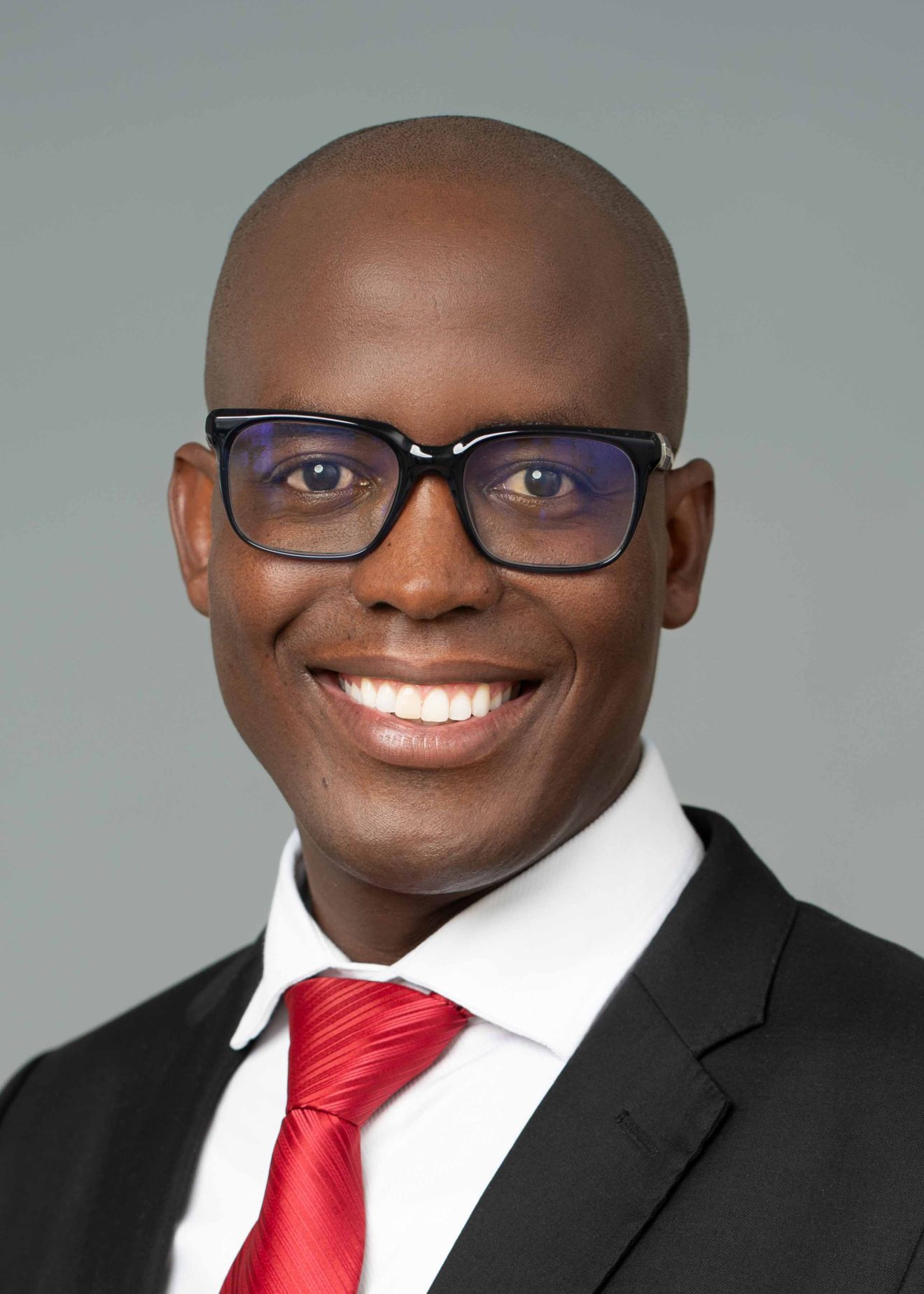
Richard Maparura, CFA, CA, is the Chief Executive Officer of RF Bank & Trust (Cayman).