
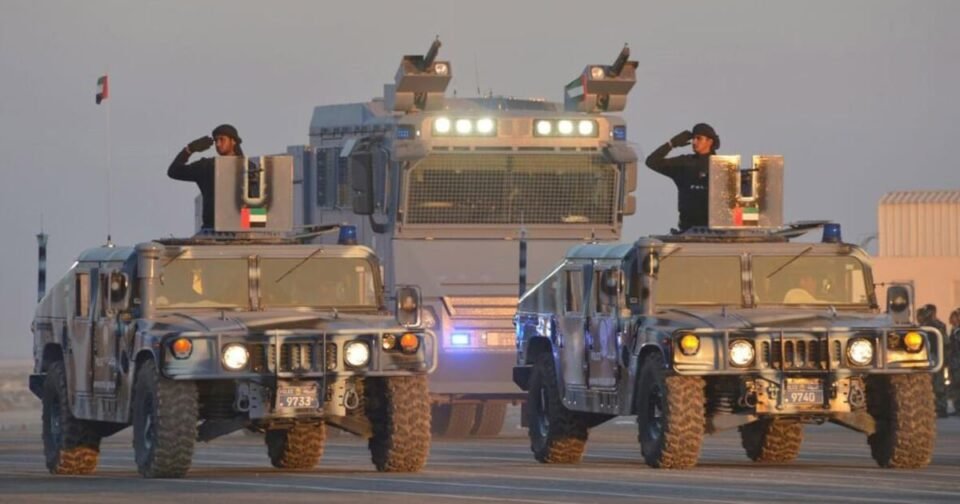
The Gulf states find themselves at the centre of a regional war that is not of their making. A confrontation that began with US and Israeli strikes on Iran has spread into a web of proxy conflicts, reaching from the Strait of Hormuz to the Red Sea and Bab Al Mandeb, through Iraq and Yemen. The members of the GCC now face a question they can no longer put off: will they turn their commitment to collective security from communiques into a working military deterrent?
Over several decades, Gulf states have invested heavily in advanced military capabilities, but progress towards operational integration has not kept pace. They have weapons and institutions. What is missing is an integrated collective response. Despite existing GCC defence co-operation mechanisms, each state continues to rely on its own national defence arrangements, while regional threats increasingly operate through cross-border armed networks.
As a result, states with some of the most sophisticated arsenals in the world can be threatened by armed groups using drones and missiles that cost a fraction of the interceptors fired at them.
For decades, Iran has cultivated armed partners in Lebanon, Iraq and Yemen. These networks extend its reach and give it leverage well beyond its borders. Tehran’s control over each group varies, and Iran does not order every attack directly. The strategic effect is the same either way: a set of fronts from which neighbouring states can be threatened and drained.
This model can become more dangerous as pressure on Tehran grows, particularly if Iran’s armed partners join the conflict. Armed non-state actors are now built into the region’s calculations of deterrence, coercion and bargaining.
Civilian airports, seaports, energy installations and critical infrastructure have also been targeted by armed groups. The recent Houthi escalation against Saudi Arabia, and earlier attacks and threats against vital facilities in the UAE, Kuwait, Bahrain and Qatar, mark a dangerous shift, even though the actors and circumstances behind each incident have differed.
The Iranian aim is no longer only to exchange strikes. It is to carry war into civilian and economic life, and to turn public safety, market stability, trade and shipping into tools of blackmail. Gulf cities run the risk of becoming open arenas for settling regional scores, with civilians and economies treated as legitimate targets by groups that answer to no state and respect neither sovereignty nor the laws of armed conflict.
The greatest danger in the current crisis is that the Gulf becomes the arena where Iran, the US and Israel settle their accounts
This leaves the Gulf with an uncomfortable irony. States that chose diplomacy and stayed out of the war may still pay for it. Staying neutral does not buy immunity, and restraint alone will not deter actors who see escalation as their best bargaining tool.
The GCC does not need to invent collective defence, as the framework for it already exists. The Joint Defence Agreement declares that an attack on one member is an attack on all. The council has created the Peninsula Shield Force and a Unified Military Command, along with a range of security co-operation mechanisms.
The challenge now is ensuring that these structures can respond effectively to current security threats. Can they counter missile and drone salvos, cyberattacks and simultaneous strikes on critical infrastructure? If several Gulf capitals came under attack on the same day, could a joint operational mechanism respond in hours rather than weeks?
For the GCC, the effectiveness of collective defence depends on whether its military co-operation can credibly deter potential attacks. Armed groups are not deterred by statements of condemnation or by solidarity expressed after the fact. Deterrence begins when an aggressor understands that striking one Gulf state means facing an integrated defence system, not an individual state’s response.
That requires moving from co-ordination to integration. In practice, this means making the Unified Military Command fully operational, with the authority to co-ordinate joint responses, and linking early-warning and air and missile defence systems across the six GCC states. It also means establishing mechanisms that facilitate intelligence sharing in real time, developing joint plans to protect critical infrastructure, including airports, ports, energy installations and desalination facilities, and strengthening shared counter-drone and cyber-defence capabilities. Greater investment in regional defence industries would further reduce dependence on external suppliers.
Some may argue that strengthening Gulf joint defence risks escalating tensions with Iran. Yet the purpose of deterrence is precisely to prevent war. Credible, integrated defences can strengthen Gulf states’ ability to protect their interests and pursue diplomacy from a position of strength, while reducing their vulnerability to coercion and prolonged attrition.
Collective defence does not mean that every attack on one member leads to a joint war. It means a clear, predictable mechanism for collective response: defensive, intelligence and logistical support, protection of critical infrastructure and co-ordinated diplomacy. That mechanism should rest firmly on international law and draw a clear line between legitimate self-defence and open-ended retaliation.
The message to Tehran should be equally clear. Iran cannot seek normal relations with its Gulf neighbours while arming groups that threaten them. Regional dialogue depends on respect for sovereignty, and de-escalation cannot serve as cover for continued pressure through proxies.
The greatest danger in the current crisis is that the Gulf becomes the arena where Iran, the US and Israel settle their accounts. Each has its own strategic calculations. But the Gulf states should not bear the costs of wars they can neither start nor end on their own.
For this reason, a joint Gulf defence system is about more than military readiness. It is about strategic autonomy. Outside security partnerships will remain important, but they cannot permanently replace the Gulf’s own capacity to defend itself.
GCC leaders have an opportunity to convene an extraordinary summit devoted solely to security and defence. Such a summit would produce binding decisions with clear timelines to activate joint defence, empower the Unified Military Command, and build an integrated system for early warning and crisis response. Collective defence cannot stay on hold until the next crisis arrives.
Iran has expanded its influence through several fronts and a network of armed groups. The Gulf would do well to not respond by copying that model or by sliding into a war of attrition. It would prove more worthwhile in the long run to build shared institutional strength that makes any attack on a Gulf state costlier and less likely to succeed.
Statements do not create collective security, good intentions do not protect sovereignty, and a peace without credible deterrence may prove to be nothing more than a pause before the next war.