

- Silver fell 3.8% to about US$48.73/oz on November 3 as Brent rose above US$105/barrel following a reported US strike on Iran’s Qeshm Island.
- Higher oil prices can lift inflation and December Fed hike bets, making interest-paying assets more competitive with silver.
- A December 9 hike could pressure silver; an unexpected hold could support a recovery toward its October 28 level near US$54/oz.
- The World Silver Survey 2026 reported 2025 primary-mine all-in sustaining costs of US$12.21/oz after credits from other metals; producers’ current costs determine their cushion against lower silver prices.
- December hike odds below 50% on CME FedWatch after November 6 payrolls or November 10 inflation data would signal a hold is favored, potentially supporting silver.
Iran Strike Reports Lift Oil, Sending Silver Below US$50
Silver fell 3.8% to about US$48.73/oz, reversing a rebound to US$50.80 as reports of a US strike on Iran’s Qeshm Island renewed oil supply concerns. Brent rebounded about 2% to nearly US$107/barrel after falling 7.63% to US$104.77 on hopes of US-Iran diplomacy.
Higher oil prices can lift inflation and rate expectations, making interest-paying assets more competitive with silver. At US$48.73/oz, silver traded 60% below its January record of US$121.64, reducing unhedged sales revenue and strengthening the case for producers able to preserve cash flow at lower prices.
Energy Inflation Fuels Rate Hike Bets, Pressuring Silver Funds
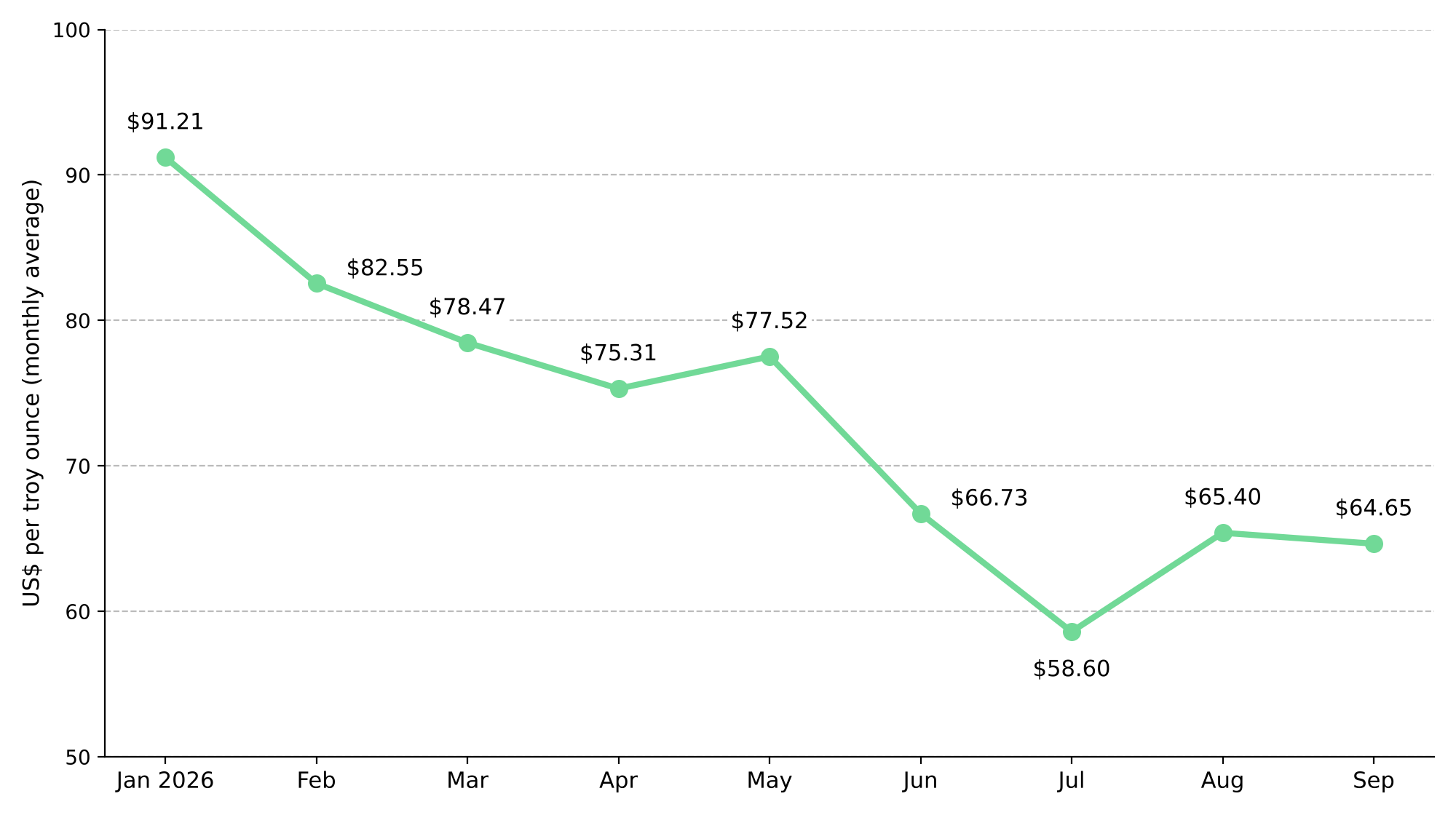
Brent’s monthly average rose from US$64.59/barrel in January to US$102.02 in September, raising miners’ fuel costs. US inflation reached 3.7% in September, while the Fed subsequently held rates at 3.75%-4.00%, with two policymakers favoring another 0.25-percentage-point hike. Higher expected rates make interest-paying assets more competitive with silver, which pays no interest.
Global silver-backed exchange-traded product holdings fell about 60 million ounces year to date, releasing metal into the physical market. London vaults held 932 million ounces at end-September, the highest in nearly four years, although that total includes metal backing funds. Metals Focus forecasts a 2027 surplus, weakening the case for a recovery driven by supply shortages alone.
A Surprise Fed Hold Could Support Silver’s Recovery
Markets still assigned roughly 75% odds to a December Fed hike, keeping silver exposed to higher rates. Peter Grant, Senior Metals Strategist at Zaner Metals, said recent rate holds had left the outlook for prolonged high rates intact, weighing on precious metals.
A December 9 hike could pressure silver, while an unexpected hold could support a recovery toward its October 28 level near US$54/oz. Ole Hansen, Head of Commodity Strategy at Saxo Bank, warned that further fund selling could push silver toward the mid-US$40s. The Reuters poll’s US$70.30/oz forecast is a 2026 annual average, not a December price target.
October payrolls on November 6 and inflation data on November 10 could reshape rate expectations before the December decision. December hike odds below 50% on CME FedWatch would signal that a hold had become favored, potentially supporting silver’s recovery.
Higher Borrowing Costs Favor Producers That Fund Their Own Growth
The World Silver Survey 2026 put primary silver mines’ 2025 all-in sustaining costs at US$12.21/oz after credits from other metals. At US$48.73/oz, that leaves US$36.52/oz above sustaining costs, assuming unchanged costs and credits, before income taxes, financing costs and growth spending.
Companies funding their next stage from operating cash flow depend less on new debt or share issuance. Developers requiring external funding face higher borrowing costs when benchmark rates rise and greater dilution when share prices fall.
The contrarian case favors producers able to preserve cash flow at lower silver prices, although profitable mines can still suffer share-price losses. Physically backed silver funds follow the metal’s price, while producer shares also reflect operating costs, debt and execution. Neither guarantees protection from unexpected oil or Fed developments.
Cash Flow at Lower Prices Matters More Than Supply Deficits
Oil-driven inflation and Fed hike expectations can pressure silver even as fund outflows return metal to the physical market. Metals Focus forecasts a 2027 surplus, leaving shortages alone unlikely to drive a recovery.
After silver’s 60% decline from its record, producers able to generate cash at lower prices and fund growth without new debt or share issuance carry less risk. Developer valuations need to reflect higher financing costs and potential dilution. October payrolls, November inflation data and the December 9 Fed decision will set the next direction for both silver prices and the sector’s cost of capital.