
The definition of public works is experiencing a paradigm shift as climate volatility and hyper-urbanization challenge traditional grey engineering methods. Conventional infrastructure, relying on rigid concrete, heavy piping, and defensive containment, frequently faces capacity limitations when managing volatile precipitation patterns and urban runoff. Yet, beyond engineering constraints, there is a deeper failure at play.
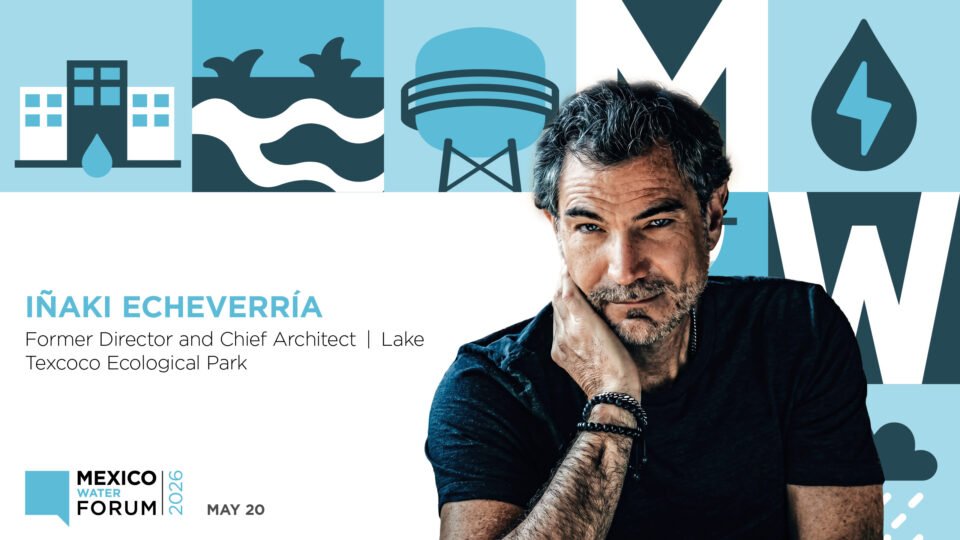
As Iñaki Echeverría, Former Director and Chief Architect, Lake Texcoco Ecological Park, argued, “pseudo-realist discourse has reduced beauty to a luxury, a privilege reserved for the few, when in reality it is a fundamental necessity. Beauty is not the decoration at the end of a project. It is the reason the project exists at all: the why and the what for of everything we build.” Confronted by these systemic constraints, modern urban planning is increasingly evaluating soft infrastructure, and redefining what infrastructure is allowed to mean.
Soft infrastructure is a nature-based model that utilizes natural biological and hydrological processes as mechanisms for environmental mitigation, shifting the focus from total containment to landscape-level adaptation. It is also, at its core, a shift in ambition, from infrastructure that merely functions to infrastructure that carries meaning. “Beauty is infrastructure that carries meaning; it holds the past and the future together, filled with longing and hope. It is what allows us to imagine and construct worlds that are genuinely different and genuinely better,” said Echeverría.
The operational application of this concept is being executed at the Lake Texcoco Ecological Park (PELT) in Mexico. Spanning 14,030ha of a highly complex basin, this project repurposes a territory once slated for the New Mexico City International Airport (NAICM), establishing an environmental zone that covers 11% of the Mexico City metropolitan area.
It is also something far more charged than a planning reallocation. “Lake Texcoco Ecological Park is where all of these ideas converge. At its most intimate core, it is beauty and infrastructure as a single inseparable thing: not a park, but the restitution of a destroyed ecological system,” added Echeverría.
Managing a landscape of this scale requires a departure from traditional, static master plans. It demands the adoption of a gardener’s logic, defined as a flexible, long-term stewardship strategy designed to guide and cooperate with natural environmental successions rather than trying to permanently restrict them.
Reconciling City and Basin
The core engineering challenge of the Lake Texcoco basin centers on its structural complexity, characterized by highly localized hyper-saline soils and extreme seasonal water fluctuations. Traditional civil engineering historically addressed this dynamic by constructing extensive drainage and canal networks to rapidly pump storm runoff out of the valley, a practice that alters regional water tables and influences urban heat island effects. Soft infrastructure alters this approach, utilizing the basin’s natural capacity to retain water as a regional regulation mechanism.
The physical execution of this restoration relies on a technical process of division and saturation rather than large-scale drainage. Because the historic lakebed features extreme Solonchak salinity, the ground is naturally dry and hot, causing shallow surface water to evaporate almost immediately. To counter this, the project framework splits large, shallow bodies of water into smaller, deeper basins. Forcing deeper water levels saturates the soil and retains moisture, rebalancing the Valley of Mexico’s water system.
Over time, this continuous saturation alters the immediate climate loop, as enhanced surface humidity encourages the growth of native halophytic plants. These salt-tolerant species stabilize the soil and gradually alter the substrate’s chemical composition, establishing an ecological foundation for biodiversity to return. Through this phased biological intervention, the park creates an absorbent buffer zone where lagoons naturally recharge aquifers and mitigate the urban heat island effect.
Biocultural Infrastructure and Regional Integration
Physical landscape restoration represents only one component of the soft infrastructure model, as large-scale environmental works are increasingly designed to serve as active platforms for social and recreational integration. But framing this solely as an environmental or engineering achievement misses its most radical dimension: beauty as an act of social justice.
The eastern periphery of the Valley of Mexico has historically experienced high economic vulnerability, environmental degradation, and a lower per capita distribution of quality public space compared to other areas of the city. For generations, beauty in public infrastructure, thoughtful design, ecological richness, spaces that inspire rather than merely function, has been concentrated in wealthier districts, treating aesthetics as a reward for prosperity rather than a right of citizenship. Declared an official PNA and recognized under the international Ramsar Convention, the territory serves as a tool for environmental justice by providing high-quality infrastructure directly to marginalized municipal populations. It is, as Echeverría describes it, “a project of social justice for vulnerable communities, built on the very ground where Mexico was founded, a place that has been stripped of everything for centuries.”
This is what makes the project’s design philosophy so consequential: it refuses to separate beauty from utility, or ecology from equity.