

Pennsylvania Gov. Josh Shapiro is embroiled in a property dispute resulting from a traumatic attack on Shapiro and his family on the night of the second Passover Seder last year.
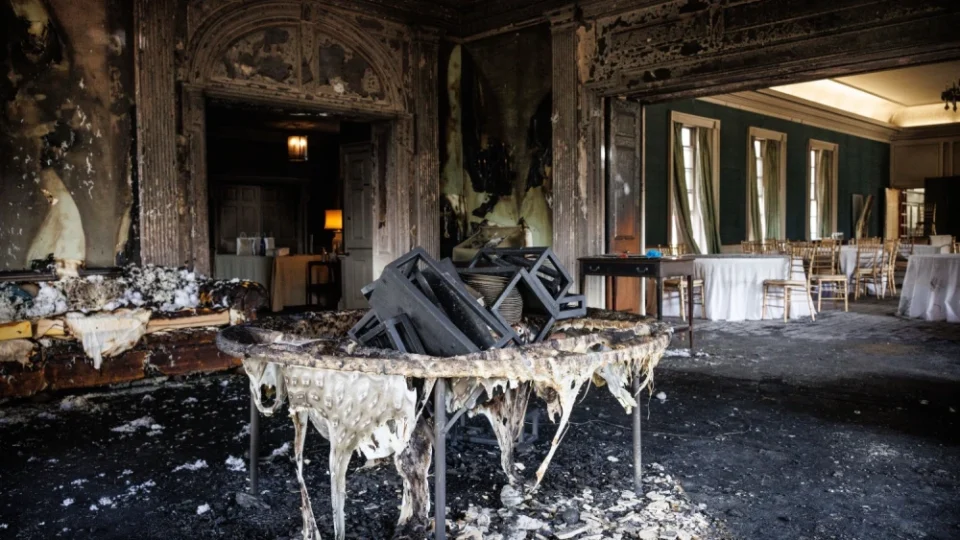
On April 13, 2025, the second day of Passover, Cody A. Balmer broke into the governor’s mansion and set it on fire.
Shapiro had held a Seder at his home before the attack, and his family and guests were sleeping in the mansion at the time. Everyone was evacuated safely with no injuries. However, prosecutors said the mansion sustained heavy damage.
As a result, Shapiro’s security team upgraded security at his private residence in Abington but ran into a problem when a surveyor examined his property in order to build a security fence and discovered that the original fence that separated the property from the neighbors’ did not follow the deeded line: The survey showed a strip of land on the Shapiros’ side of the fence they had assumed belonged to them in fact belonged to their neighbors, Jeremy and Simone Mock.
A dispute between the neighbors ensued that involves two lawsuits, filed last February, addressing two entirely different questions.
The Mocks’ lawsuit, filed in federal court in the U.S. District Court for the Eastern District of Pennsylvania, accused Shapiro and his wife, Lori, of unlawful possession of their property and abuse of government power. The Mocks alleged that the Shapiros offered to buy the disputed strip of land in July 2025, but they failed to agree on a price. Subsequently, they failed to reach an agreement on a proposed lease, the lawsuit stated.
The lawsuit said that by offering to buy the property, the Shapiros acknowledged the Mocks’ ownership. The lawsuit alleged that the governor and attorney general then engaged in “an outrageous abuse of power” by claiming adverse possession of the land, planting trees and plants on the strip, installing state police on the piece of land who stopped the Mocks from accessing it, and informing the Mocks that the area is a security zone that they may not enter without permission.
The complaint also noted that the Shapiros attempted to build a security fence on the Mocks’ property but stopped the Mocks from building their own fence when it encroached on the disputed area.
The lawsuit alleged that the governor violated the 14th Amendment’s due process clause “that the government may not deprive any person of life, liberty, or property without due process of law”; the Fourth Amendment because the Mocks were subjected to “unreasonable seizure or destruction of property”; and the Fifth Amendment, which states that “private property [shall not] be taken for public use, without just compensation.” In addition, the lawsuit claims that the governor trespassed on the Mocks’ private property.
The Mocks are seeking a court declaration that the Shapiros violated the amendments mentioned above; an injunction against the Shapiros from occupying the strip of land; payment of various damages; and payment of court and legal fees.
The Shapiros’ lawsuit, filed in Montgomery County Court of Common Pleas, is a quiet title action, which seeks a court ruling declaring ownership of disputed property.
The Shapiros’ lawsuit makes use of a law known as adverse possession, a circumstance in which ownership of property automatically reverts to someone who has “maintained actual, continuous, exclusive, visible, notorious, distinct, and hostile possession under claim of right for the statutory period” of 21 years required by Pennsylvania law.
Under Pennsylvania law, someone who possesses another person’s property for at least 21 years may be able to claim ownership if they meet specific legal requirements, including continuous, exclusive and open possession. The Shapiros purchased the property in 2003 and claim they believed it was theirs, continuously caring for it for more than 21 years.
The lawsuit acknowledges that the Mocks owned the strip of land dividing the property. The complaint then explains that a fence had already divided the property when the Shapiros purchased their home in 2003 and that they believed that the land on their side of the fence belonged to them, leading them to care for it as if it were their own. The lawsuit alleges that the Mocks never objected.
The lawsuit states that the Shapiros did not discover the problem until they surveyed the land to construct a security fence but attempted to resolve the matter amicably. After negotiations failed, they abandoned their attempt to construct a security fence.
“Defendants for the first time now claim ownership of the Disputed Area and are interfering with Plaintiffs’ quiet enjoyment of the Disputed Area,” the lawsuit alleges.
The complaint also addresses what it says is the harassment of the Shapiro family.
“Defendants’ ongoing harassment of Plaintiffs and their invitees is unlawful, constitutes a private nuisance under Pennsylvania common law, interferes with Plaintiffs’ use and enjoyment of their property, and poses an ongoing security threat to Plaintiffs and their children,” the lawsuit states.
The lawsuit is seeking a declaration from the court that the Shapiros are the owners of the disputed property due to adverse possession, a ruling that the Mocks have no right or title to the area, and payment of costs and attorneys’ fees.
In July, Judge Harvey Bartle III partially dismissed the Mocks’ federal lawsuit, dismissing the claim of civil rights violations and complaints against the governor in his official capacity. However, complaints against the Shapiros as private homeowners were allowed to continue.
An important point to bear in mind is that the Shapiros’ offer to purchase the land and the Mocks’ payment of property taxes on the same piece of land do not necessarily negate the Shapiros’ claim of adverse possession.
A resolution has yet to be reached, as a federal judge paused the federal lawsuit earlier this month and the state lawsuit is still pending.
JNS contributed reporting to this article.