
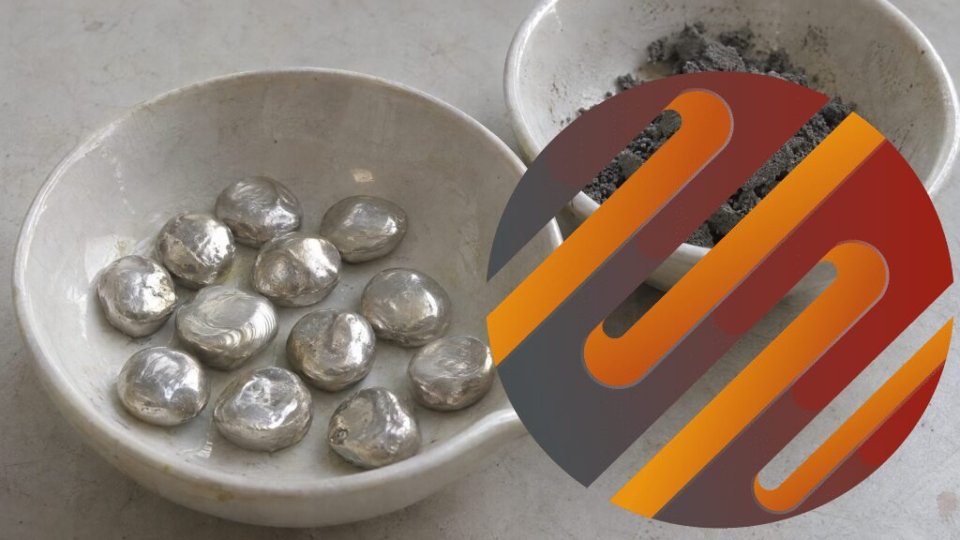
The most expensive metal on the major refiners’ daily price sheets is iridium, at $10,200 per troy ounce on Umicore’s price sheet (opens in a new tab) for November 24, 2026. Rhodium was second at $8,850, with gold a distant third. Radioactive isotopes are in another class: the U.S. government’s 1999 sales price for californium-252 was $60 per microgram, or $60 million per gram.
The lead is recent. On the Umicore series, iridium passed rhodium on October 19, 2026, after trailing it since December 2024, so the order could flip again. Rare earths sit far lower. The dearest on the REEx price page is terbium oxide delivered outside China, at about one-tenth of gold’s price by weight (October 2026 terbium, November 24 gold). Inside China it is scandium metal, at its 2025 price.
Iridium is the most expensive metal on the price sheets of both Umicore and Johnson Matthey (opens in a new tab) for November 24, 2026. As late as October 12, 2026, Heraeus still had rhodium ahead, at $9,300 against $8,850 for iridium.
The most expensive metals ranked by price
| Metal | USD per troy oz | USD per kg |
|---|---|---|
| Iridium | 10,200 | 327,900 |
| Rhodium | 8,850 | 284,500 |
| Gold | 3,626.50 | 116,600 |
| Ruthenium | 1,900 | 61,100 |
| Platinum | 1,310 | 42,100 |
| Palladium | 896 | 28,800 |
| Silver | 42.40 | 1,363 |
These seven share one seller, one day and one unit, so the order is a true ranking. Umicore publishes them as indications rather than firm offers. A troy ounce is 31.10348 grams, so multiplying a per-ounce price by about 32.15 gives the price per kilogram.
Why iridium and rhodium trade places
Both metals are byproducts. Factsheets by SFA (Oxford) (opens in a new tab) for the platinum-metals trade association put 2025 mine output at about 22 metric tons of rhodium and 7 of iridium, with South Africa supplying 80% or more of each. Miners dig for platinum and palladium, which make up 86% of the mix by weight. A higher iridium price alone therefore does little to raise iridium output, which depends on the economics of the whole group. It can take up to six months for mined ore to become refined metal.
Demand is where they part. Autocatalysts take 85% of rhodium because it cuts nitrogen oxides in exhaust. That ties the metal to car output, emissions law and scrap. After rhodium passed $10,000 an ounce in 2008, carmakers cut its use as far as they could until tighter rules forced more back in.
Rhodium’s annual average fell from about $20,250 in 2021 to $4,660 in 2024, then recovered to an estimated $5,800 in 2025, on USGS figures. Scrap also acts as a brake. Johnson Matthey’s May 2026 report forecast a four-year high in rhodium recovered from old catalysts and a possible small surplus for the year.
Iridium has no such brake. Almost half goes into electrochemical uses such as chlorine electrodes, water treatment, copper-foil plating and hydrogen electrolyzers. Almost none returns to the open market as scrap, because users that recycle it keep ownership of the metal. In chemical processes, changing the catalyst metal is slow and needs requalification. Johnson Matthey forecast a modest deficit for 2026, with the first commercial-scale use in electrolyzers for green hydrogen. Umicore’s iridium price has more than doubled in a year, from $4,400 on November 24, 2025.
Osmium, californium and other special cases
Some metals cost more than iridium on paper. They are left out of the ranking of the most expensive metals because Umicore does not price them.
USGS prices every platinum-group metal except osmium, and Shanghai Metals Market added osmium price points only in March 2026. One sales network, osmium-preis.com, asked 2,412.70 euros per gram for crystalline osmium on November 24, 2026, while asking 54.15 euros for a purified grade described as fine osmium. The site says its figure is not a stock market price. A premium of about 45 times for the crystal form says little about the metal itself; the cheaper grade works out to about 1,684 euros per troy ounce, far below iridium.
Californium-252 is the other extreme. An Oak Ridge paper (opens in a new tab) gave the Department of Energy’s 1999 sales price as $60 per microgram. The $27 million per gram repeated online matches the government’s 1987 price. The National Isotope Development Center sells it by the microgram, on quotation, as a solution or custom form. It is used as a neutron source and decays with a half-life of 2.645 years. Scaled up, the 1999 price comes to about $1.87 billion per troy ounce, for a material sold in millionths of a gram.
Where rare earths sit in the price ranking
Rare earth prices run from $1.00 per kilogram for lanthanum oxide (2025 average) to about $11,500 for terbium oxide delivered outside China (October 2026). The price depends on which element, in what form, and where it is delivered. Scandium, one of the 17 rare earths, reached $5,200 as 99.999% metal in small lots, about eight times the price of its 99.99% oxide.
The selection below sets rare earths beside specialty metals of similar price. Two rows are lowest reported prices, marked with a plus sign.
Selected rare earths and specialty metals
| Metal or oxide | USD per troy oz | USD per kg | Price basis |
|---|---|---|---|
| Germanium | 575 | 18,500 | Rotterdam, REEx midpoint, Oct 2026 |
| Terbium oxide | 358 | 11,500 | Outside China, REEx midpoint, Oct 2026 |
| Rhenium pellets | 211 | 6,780 | China, SMM mid-2026, at 6.79 yuan per dollar; may include VAT |
| Scandium metal | 162 | 5,200 | China ex-works, USGS 2025 |
| Dysprosium oxide | 124 | 4,000 | Outside China, REEx midpoint, Oct 2026 |
| Yttrium metal | 124+ | 4,000+ | Outside China, REEx lowest reported, Oct 2026 |
| Hafnium | 118 | 3,800 | Unwrought, USGS 2025 average |
| Gadolinium oxide | 92 | 2,950 | Outside China, REEx midpoint, Oct 2026 |
| Samarium metal | 65 | 2,100 | Outside China, REEx midpoint, Oct 2026 |
| Gallium | 56+ | 1,800+ | Western markets, REEx lowest reported, Oct 2026 |
| Terbium oxide | 28 | 900 | China ex-works, REEx midpoint, Oct 2026 |
| Lutetium oxide | 27.60 | 888 | Free on board, USGS 2025 average |
| Dysprosium oxide | 6.20 | 198.50 | China ex-works, REEx midpoint, Oct 2026 |
| Neodymium-praseodymium (NdPr) oxide | 3.25 | 104.50 | China ex-works, REEx midpoint, Oct 2026 |
Terbium oxide outside China ranged from $10,000 to $13,000 per kilogram on the REEx page in October 2026. Thin markets produce different numbers: Benchmark’s third-quarter review (opens in a new tab) had it at $6,745 delivered to Europe in September. Either figure leaves it below palladium and above scandium metal.
Where the oxide is delivered can matter more than which oxide it is. At October 2026 REEx midpoints, a buyer outside China pays about 12 times the Chinese price for terbium and 19 times for dysprosium at the market exchange rate. Benchmark’s September 2026 figure for dysprosium is lower, at about 16 times. Assessors differ on the size of the gap and agree that it is very large.
Germanium, which is not a rare earth, shows a smaller split, as REEx reported on germanium prices. Monthly ranges are on the REEx page for rare earth and critical mineral prices.
Geology helps explain the distance from iridium. Rare earths are relatively abundant, though minable concentrations are uncommon, whereas platinum-group metals together average about 1.5 parts per billion in the upper crust. The REEx guide to the rarest metal on earth ranks scarcity, and its ranking of the densest metals compares weight.
Why a low price hides rare earth supply risk
A rare earth magnet buyer can pay a small bill and still lose a production line when a shipment fails to arrive. After China’s April 2025 controls, some automakers cut output or briefly shut down for want of magnets.
U.S. imports of rare earth compounds and metals were worth only an estimated $165 million in 2025. Yet the International Energy Agency (opens in a new tab) estimates that China’s expanded controls, which are suspended, could if fully applied put $6.5 trillion a year of production outside China at risk.
Three features make the risk larger than the sticker suggests:
- One dominant refiner. China made 91% of refined magnet rare earths in 2024. It supplied 100% of U.S. terbium and lutetium imports in 2021 to 2024, on USGS data (opens in a new tab).
- Little scrap to fall back on. Only small quantities of heavy rare earths are recovered from magnets, while rhodium has a working scrap-catalyst trade.
- Licenses in front of price. China’s April 2025 licensing on samarium, gadolinium, terbium, dysprosium, lutetium, scandium and yttrium was never part of the pause (opens in a new tab). General licenses have gone to selected exporters. A notice of November 9, 2026 covers only the October 2025 measures, which stay suspended to January 10, 2027.
A working rule for buyers: budget on the delivered price outside China, treat the Chinese price as a reference, and check license status and product form before comparing quotes. An oxide price understates metal cost: in October 2026, Chinese terbium metal was $1,118 to $1,132 per kilogram, about 25% above the oxide.
Read the latest rare earth news on REEx
Frequently asked questions
Is rhodium more expensive than gold?
Yes, by about 2.4 times on November 24, 2026, using same-day Umicore prices. The catch is the cost of getting in and out. Kitco’s bid and ask for rhodium were $1,000 apart that day, against $2 for gold, so a seller gives up far more of the quoted price.
How far has rhodium fallen from its peak?
Rhodium was about 70% below its record on November 24, 2026. Umicore’s price peaked at $30,000 per troy ounce on March 22, 2021. During 2026 it has ranged from $7,600 in June to $12,100 in February, so the fall has been neither smooth nor one way.
What is the most expensive rare earth?
Terbium oxide delivered outside China had the highest rare earth price on the REEx price page in October 2026, at a midpoint of $11,500 per kilogram. Lutetium has no outside-China price there. At Chinese prices the order changes: scandium metal leads at $5,200 in the latest USGS figures, ahead of terbium metal near $1,125 and terbium oxide near $900.
Are rare earths worth more than silver?
Some are, depending on where they are delivered. In October 2026, terbium, dysprosium and gadolinium oxides and samarium and yttrium metal were quoted outside China above silver’s November 24 price of about $1,363 per kilogram. Scandium metal was higher too, at $5,200 in China in 2025. Chinese prices for terbium, dysprosium and neodymium-praseodymium oxides were below silver.