
Writer and Director: Larisa Faber
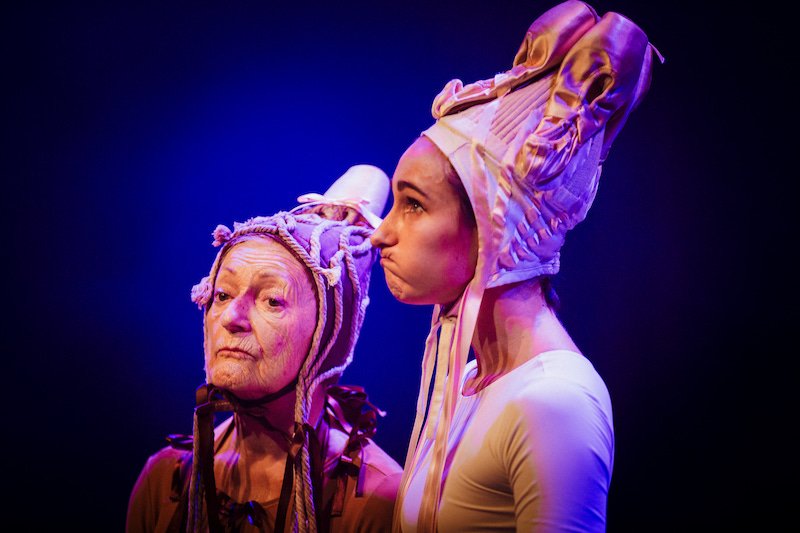
The story of a growing asparagus spear, desperate for the harvest and German food production supported by Romanian labour may not suggest riveting theatre, but Larisa Faber weaves a smart and strangely compelling coming-of-age story using the asparagus as a metaphor for a child learning to accept an identity away from its mother. Charismatically performed by Kristin Winters, White Gold is an absurdist piece but uses its two related stories of a young ballerina and the eager vegetable to begin a larger commentary on the European labour market and how manual labour can become high art.
In conversation with her own roots, a ripe white asparagus spear awaits the pickers, eager to know if she is good enough to make the cut. Covered in the plastic sheeting that keeps them white, there is nothing to do but ponder her origins and her destiny. Meanwhile, the daughter of a labourer at the asparagus farm dreams of becoming a ballerina but is separated from her mother, who has migrated for work, leaving the child with her grandmother.
White Gold, performed at the Camden People’s Theatre, refers to a German synonym for the lucrative white asparagus market – anyone expecting a play about double glazing (also known as white gold in 1980s Britain) will be sorely disappointed. Faber’s very theatrical piece includes two narrative strands played simultaneously and performed by the same two actors, along with songs, ballet pieces and documentary footage of asparagus being cocooned and then picked. But as the piece unfolds, the connections start to form between the different sections and while perhaps over-burdened with more asparagus facts than you might ever want to know, something tender and even moving occurs.
There is a relationship between the 11-year-old ballerina and the vegetable which emerges through letters to her mother, short monologues that speak about the cost of pursuing her dancing dream in terms of how much asparagus her mother would have to pick to afford it. The underlying economics give this a real grounding, and while never laboured, there is a political translation of working effort and the strain of parental sacrifice to fund a more rarefied life for the next generation, one that couldn’t be further from the intensive, backbreaking work that the mother endures.
And Faber creates these tender moments as the audience starts to register the cost of the opportunity created for the young ballerina, having to be separated from her mother, rarely speaking on the telephone and recognising the health impacts on her mother’s body as the years pass. The asparagus and roots storyline is part of the same effect; for a butterfly to emerge from its chrysalis and be admired, having sustained its life, the roots have to be pillaged and discarded, which comes across clearly in the absurdist section.
The switch to the mother’s responses at the end isn’t really needed; it’s clear enough through the prior dialogue what this means, and there could be more to say about the feelings of abandonment the child feels, along with hints of her unhealthy body image. Yet Winters as the spear and Christiane Eiffes as The Roots galvanise the concept in this strange but surprisingly endearing 50-minute performance.
Runs until 28 November 2026
The Reviews Hub Star Rating:
Charismatically performed