
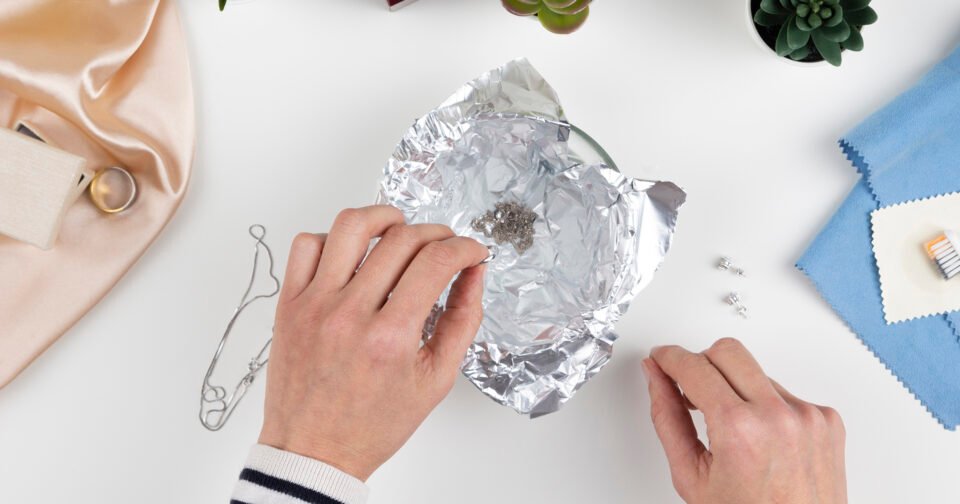
Tarnish on your silver jewelry is normal. “Even the best silver jewelry tarnishes, so don’t assume the problem is related to the quality of your piece—or that it’s not made of real silver,” Walsh warns. “If anything, tarnish indicates that it really is silver!” This is because as silver is exposed to gases in the air—especially sulfur —it discolors and darkens as it reacts with the gas. “This is what forms a layer of tarnish on the surface.”
Still, according to Walsh, there are a few factors that can speed up the tarnishing process. “If you find your silver is tarnishing quickly inside your storage container, then this might indicate that the container is unsuitable and should be switched to something else.” (More on that below.) She also adds, “Many things in your everyday life can cause your silver to tarnish. These include hand creams, perfumes, certain soaps, makeup, chlorine from swimming pools or cleaning chemicals. Even the PH of your skin, or the air around you (especially if it’s humid) can cause tarnish.”
So below, three simple tips you can use to help slow down the tarnish process:
- Wear your silver when you can: Simply wearing silver jewelry regularly can help to keep tarnish at bay—it rubs against your skin and clothing, which can mechanically remove tarnish and grime. “It won’t prevent tarnish, but it can help,” Walsh explains. She also adds: “Just be sure to remove silver when showering, swimming and especially when cleaning with harsh chemicals.” Hot tip: you also might want to take it off before applying makeup or skin care products to prevent buildup.
- Store it in a small, dry container: Walsh says to avoid storing pieces in jewelry trees or open-air storage solutions “unless you’re happy to clean your jewelry quite often.” This is because open-air storage allows dust and household grime to accumulate, making it tarnish ten times quicker. This is doubly true if you live in a humid place or keep your jewelry in a bathroom. As a result, the best place to store your silver is in a small, dry container that doesn’t allow free-flowing air to pass through it. “You might also find that putting some humidity-absorbing sachets into such a container will help to slow down tarnish further.”
- Establish a seasonal cleaning routine: Naturally, you should pay close attention to signs of tarnish—and spot-clean before you reach the point of no return. Still, Walsh says, “When you’re wearing certain pieces every day, it can be easy to overlook how increasingly dull and grimy they’re getting.” That’s why she recommends you do a thorough check of your jewelry at least twice a year—and properly clean all of the pieces that need it. “Doing this in spring and autumn when you’re transitioning to different clothing is a great routine to get into.”