
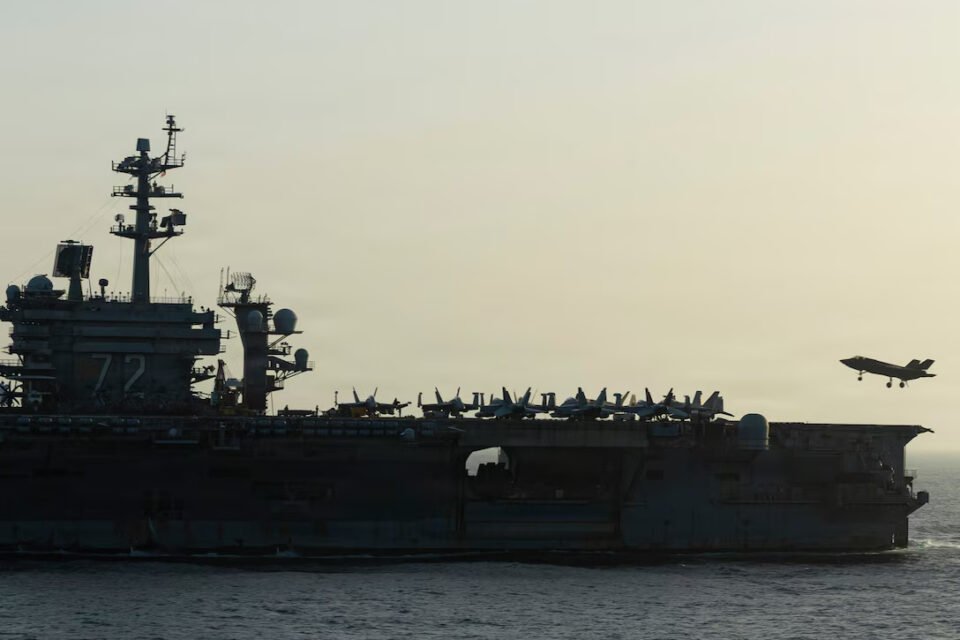
 The USS Abraham Lincoln conducts U.S. blockade operations in the Arabian Sea, April 16. Credit: U.S. Navy
Gold jumped to its highest in nearly a month after Iran reopened the Strait of Hormuz for commercial traffic, alleviating investor concerns of a prolonged war and further pressure on global inflation.
Spot gold rose as much as 1.7% to about $4,887 an oz., its highest since March 17, extending its gains from the previous session. Silver also surged over 5% to reach $83 an oz., a five-week high.
With this move, bullion has now recovered more than half of its losses since the Mid-East war started over six weeks ago. The closure of the Strait of Hormuz, which accounts for a fifth of the world’s oil supply flow, especially had a profound impact on global markets by triggering a surge in energy prices, leading to inflation worries worldwide.
As a non-yielding asset, gold benefits from a low-interest environment, a scenario that is less likely to happen should the inflationary pressures remain. Despite being also a safe-haven asset, the metal fell nearly 10% since the onset of the war, amid expectations of elevated interest rates as well as a stronger U.S. dollar.
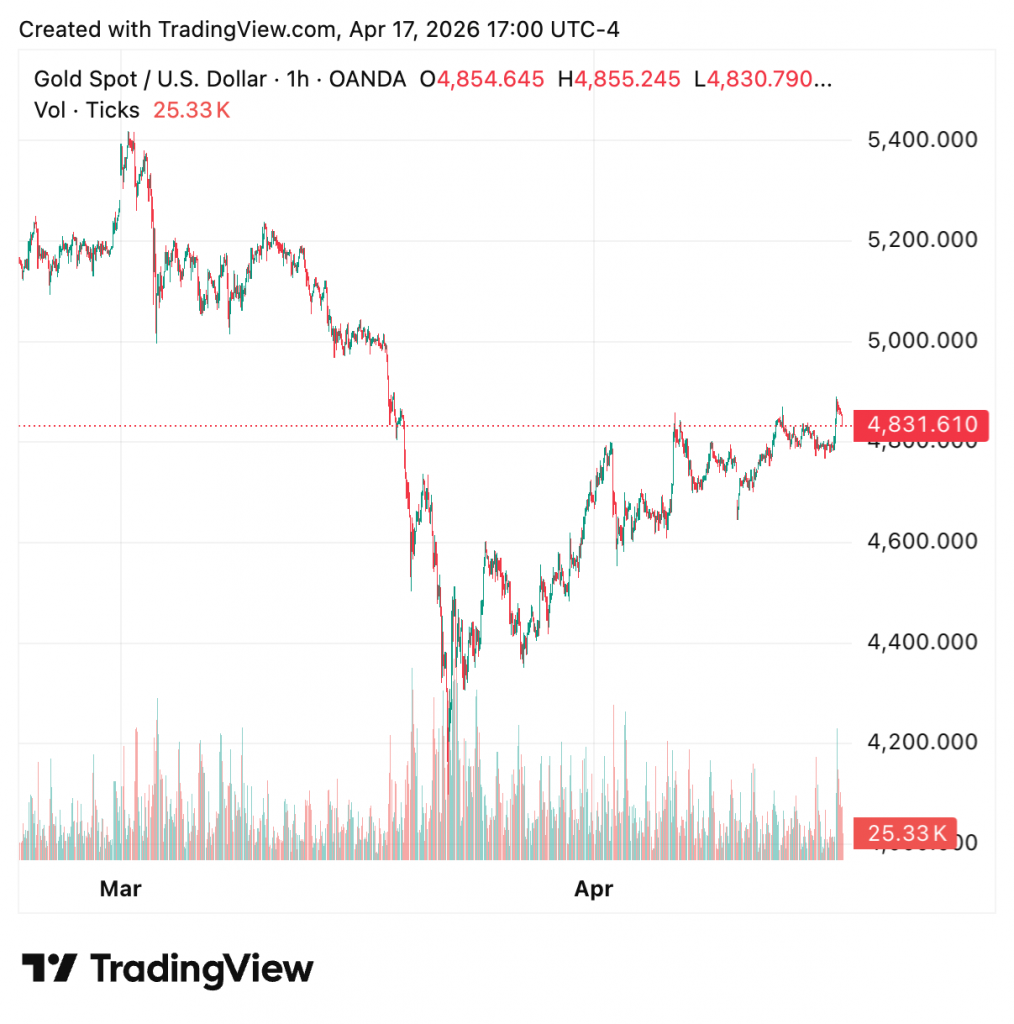
Longer term, the outlook on gold remains bullish, with Goldman Sachs recently reiterating its year-end target of $5,400 an ounce. Year to date, the precious metal has risen by 10% despite the war-driven downturn.