
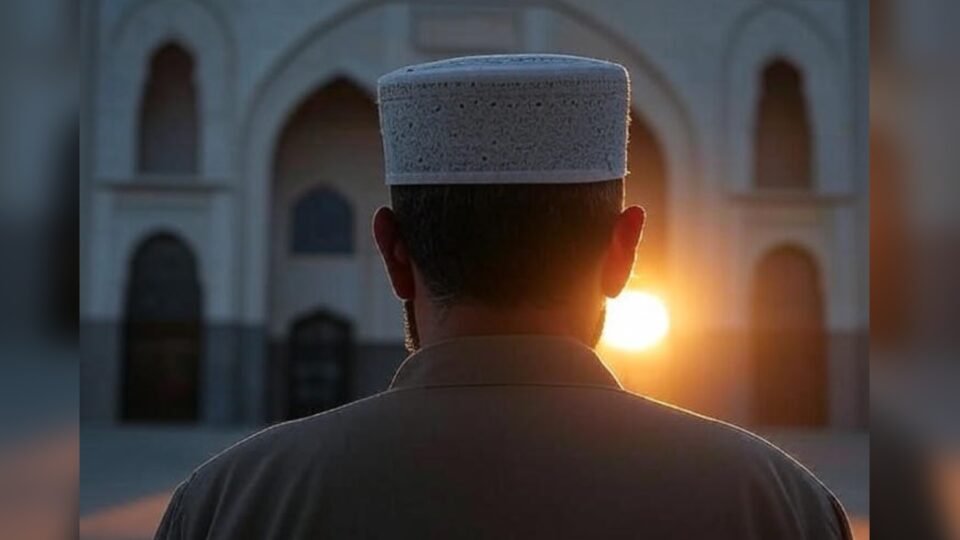
The Allahabad High Court has dismissed a writ petition seeking permission and police protection for offering regular Namaz at a property in Sambhal district’s Ikona village.
A Division Bench comprising Justices Saral Srivastava and Garima Prashad ruled that the fundamental right to practise religion under Articles 25 and 26 of the Constitution does not extend to converting private premises into an “unregulated congregational space.”
The petitioner, Aseen, claimed ownership of the land (Khata No. 613, Gata No. 629) based on a registered gift deed dated June 16, 2023. He alleged that authorities, in collusion with local elements, were illegally preventing him and other worshippers from offering prayers, violating his rights under Articles 19, 25, 26, 27, and 28.
The Uttar Pradesh government strongly opposed the plea, stating that the land is recorded as Abadi land under Category Shreni-6(2), meant for public use.
Officials clarified that Namaz had traditionally been offered only on special occasions like Eid, and the petitioner was attempting to introduce regular congregational prayers involving outsiders, which could disturb communal harmony.
The court observed that while private property may be used for personal and limited religious activity, regular or organised congregational prayers involving a larger group fall outside constitutional protection and remain subject to regulatory control.
“Freedom in a constitutional society is always accompanied by responsibility towards others,” the Bench noted. The right to practise religion is not absolute and is subject to public order, morality, and health. No person can claim recurring religious use of public land as a matter of right.
The court further held that the petitioner’s pleadings were vague, lacked material particulars, and failed to establish ownership against official revenue records.
Even assuming the land to be private, the attempt to convert it into a regular prayer venue justified regulatory intervention to maintain social harmony.
Dismissing the petition, the Bench emphasised that authorities need not wait for actual disturbance before acting when public order is likely to be affected.
The judgment reinforces that religious freedom must be balanced with community peace and lawful regulation.