
Investors are now turning to U.S. Consumer Price Index data for March, due later on Friday, for fresh signals on the Federal Reserve’s policy path
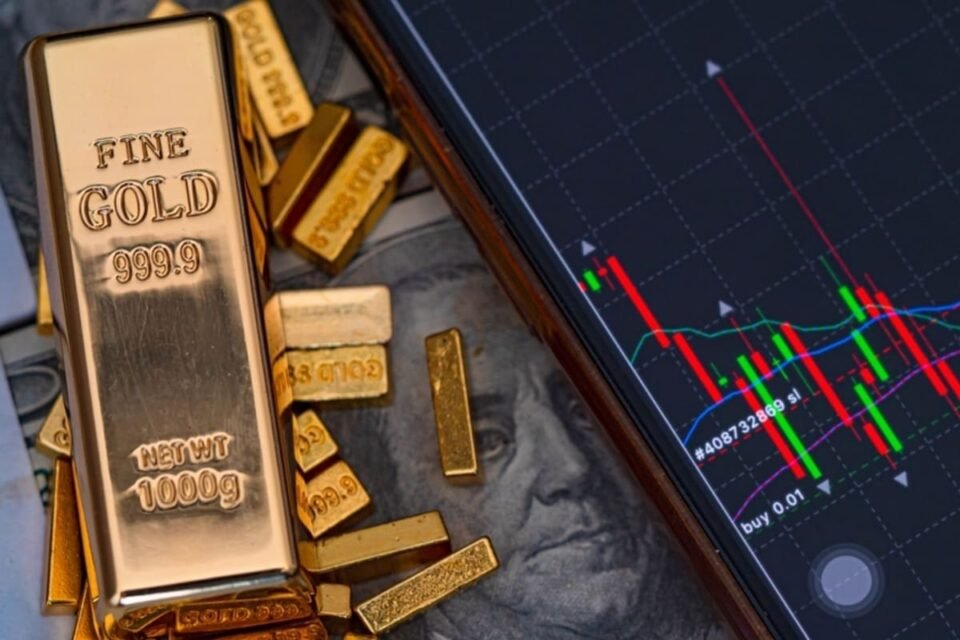
Gold prices edged lower on Friday as a stronger dollar and lingering uncertainty around the U.S.-Iran ceasefire weighed on the precious metal. However, bullion remained on track for a third straight weekly gain as markets continued to factor in earlier and steeper U.S. interest rate cuts, boosting support for the non-yielding asset.
As of 5:30 GMT, spot gold slipped 0.62 percent to $4,763.43 an ounce, but was still up 1.85 percent for the week so far. Meanwhile, U.S. gold futures for June delivery fell 0.65 percent to $4,786.70.
In the UAE, gold rates marked declines, with 24-carat gold falling AED3.5 to AED573.75 and 22-carat gold easing AED3.25 to AED531.25.
Additionally, 21-carat gold edged down AED3 to AED509.5, while 18-carat gold declined AED2.75 to AED436.5.
Meanwhile, 14-carat gold declined AED2.25 to AED340.5.
Stronger dollar and inflation worries weigh on bullion
The dollar index strengthened on Friday, making gold prices more expensive for buyers using other currencies. Spot gold has dropped roughly 10 percent since the U.S.-Israel conflict with Iran began on February 28, as higher energy prices stoked inflation worries and reinforced expectations of elevated interest rates.
The fragile two-week ceasefire between the U.S. and Iran came under renewed pressure on Friday, with Washington accusing Tehran of failing to honor commitments related to the Strait of Hormuz.
Brent crude, meanwhile, has fallen more than 11 percent this week amid hopes that the ceasefire could lead to the reopening of the Strait of Hormuz, a route that carries around 20 percent of global oil and liquefied natural gas flows.
“The rise in gold this week has closely mirrored the rebound in U.S. equities, highlighting a notable shift in recent weeks where the yellow metal has been behaving more like a risk asset than a traditional safe haven. Assuming this correlation persists — as we suspect it will — it reinforces our technical view that gold has put in a significant bottom at the late-March low,” said Tony Sycamore, Analyst at IG.
U.S. inflation rises 2.8 percent in February
On the economic front, the U.S. Personal Consumption Expenditures index, the Fed’s preferred measure of inflation, rose 2.8 percent in the 12 months to February, matching forecasts, and was likely to have increased further in March.
Investors are now turning to U.S. Consumer Price Index data for March, due later on Friday, for fresh signals on the Federal Reserve’s policy path.
Markets are currently pricing in a 31 percent probability of at least a 25-basis-point rate cut at the Fed’s December meeting, according to CME’s FedWatch Tool, up from 20 percent in the previous session.
“Provided gold prices hold firmly above the 200-day moving average, currently sitting at $4,166 and reinforced by the recent swing low of $4,098, we continue to look for a steady grind higher. The initial target remains a test of the psychologically important $5,000 level, before a retest of the $5602 record high,” added Sycamore.
Read: Oil prices rise to $96.11 as Strait of Hormuz risk premium persists
Other precious metals
As gold prices declined, the precious metals market saw mixed movement on Friday. Spot silver gained 1.10 percent to $75.90 per ounce, while platinum fell 1.89 percent to $2,063.21 and palladium declined 0.49 percent to $1,549.77.