
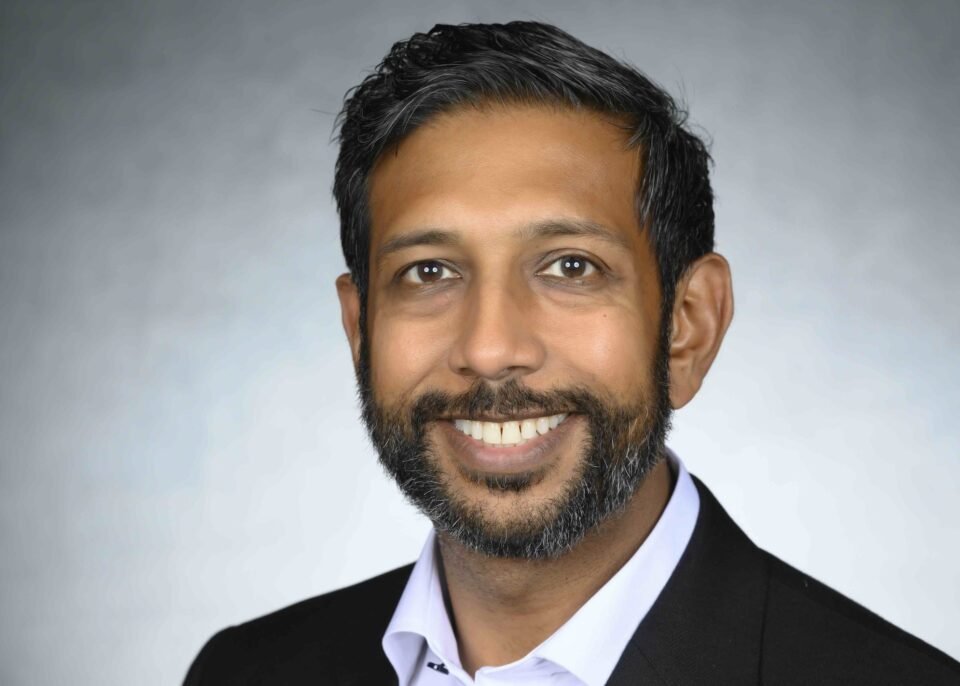
Ajay Mago, Chicago-based investor-lawyer and co-founder of Twelvefold Ventures, on how generative AI is reshaping industries, venture investing, and regulation
Artificial intelligence is redefining how non-tech businesses compete, enabling industries long considered “traditional” to achieve technology-style growth by embedding AI directly into day-to-day operations, says Ajay Mago, the co-founder, general partner, and chief legal officer at Twelvefold Ventures.
Mago brings a rare blend of legal depth and venture capital experience, advising founders not just on capital strategy, but on governance, risk, and long-term scale.
A trained lawyer by background, Mago serves as managing partner at Maxson Mago & Macaulay LLP and began his legal career in Big Law as beginning as a young associate and through partnership at Mayer Brown and Jones Day, and Duane Morris. That legal foundation continues to shape his approach to venture investing, particularly as AI, data privacy, and liability become central concerns for startups and regulators alike.
Beyond his work in venture capital, Mago is an investor and advisor to Censius, an AI observability and model monitoring company, and is actively engaged in broader business and civic circles as a member of The Economic Club of Chicago and a Leadership Dallas alumnus through the Dallas Regional Chamber and a board member of the U.S. India Chamber of Commerce of Dallas Ft. Worth. His work spans Chicago, Dallas, and Austin; the latter two reflecting the growing importance of Texas as a technology and innovation hub.
Mago is a triple Longhorn, having earned his law degree from The University of Texas School of Law and his bachelor’s and master’s degrees from The University of Texas McCombs School of Business. Through Twelvefold, a venture fund and studio focused on generative AI and large language models, he works closely with founders to build and validate new companies from the earliest stages. The fund provides the initial capital and the studio combines operational support and technical expertise to help entrepreneurs move quickly from idea to execution, with an emphasis on applying foundational models capabilities across real-world business verticals.
In an exclusive conversation with The American Bazaar, Mago spoke about the shifting technology landscape, the future of AI regulation, and how venture investing is evolving beyond the coasts.
The American Bazaar: Dallas has emerged as a growing tech and VC hub, and there is talk that Texas could be the next Silicon Valley. How do you compare Texas with Silicon Valley and New York in terms of founder quality and capital efficiency?
Ajay Mago: In terms of founder quality, Texas, especially Dallas, has a very diversified economy. Austin has traditionally been tech- and government-focused. Houston has been energy-focused, along with other sectors. There are also strong legal industries across these cities.
All the tools needed for capital efficiency are present. There have been exits, and founders are reinvesting into the local startup community. That started to gain momentum about ten years ago and has continued with increasing frequency. From a capital efficiency perspective, there is more reinvestment of capital after successful exits.
You are also seeing the establishment of the venture community. I am an investor in several ventures, and we launched our first Twelvefold portfolio company, Censius, in 2020. We come in very early stage with first checks, and our studio supports entrepreneurs in building their vision, go-to-market strategy, sales, back office, and legal, positioning them for success through enterprise customers or exits.
In terms of founders, the quality is very high because Texas is home to many Fortune 100 companies. That creates executive and C-suite talent, along with strong education systems like the University of Texas, Texas A&M, and the University of North Texas. When you combine capital, executive talent, and up-and-coming talent, it creates a fertile environment.
READ: Beyond the hype: Dr. Venkat Srinivasan on AI’s potential and Innospark Ventures’ vision (December 23, 2024)
From a Twelvefold perspective, when we co-found and invest, we look for entrepreneurs who have already been successful, often in non-tech fields. Texas is very rich for that type of entrepreneur. The Silicon Valley playbook has expanded to other markets, including Texas.
What business models are currently being prioritized, and what red flags give you immediate pause?
In terms of industries being targeted, if you think about middle America, you have manufacturing, healthcare, insurance, agriculture, advertising, legal, financial services, and energy. These industries are being heavily impacted by the current technology revolution, specifically generative AI.
You can take businesses that never viewed themselves as technology-driven and unlock technology-style growth. AI puts technology in the hands of business users, rather than just technologists who may not understand the needs of industries like advertising or real estate.
Industry-wise, it is traditional services and manufacturing businesses seeing an uptick. There is a move away from simply building apps. Instead of bringing consumers into businesses through apps, businesses are asking how they can become more tech-enabled and tech-responsive. These are traditional businesses that historically did not see themselves as technology companies.
As traditional businesses integrate AI, how should they structure data amid rising regulatory scrutiny, data privacy concerns, and issues like deepfakes?
This is a major issue. The first company we started, Censius.ai, has always focused on observability, transparency, and monitoring. You need to be able to audit what your technology is doing and retain accountability.
In the U.S., regulation is not uniform and continues to change. Regardless, the same principles apply as with any regulated industry. Take legal services, for example. Legal technology companies are increasingly offering services traditionally provided by law firms. While technology vendors historically limited liability, professional services like law and medicine have much higher liability thresholds.
You are now seeing business models change, with more liability being imposed on technology companies. This leads to contractual and regulatory requirements for auditing, accountability, and tracing.
READ: How artificial intelligence is reshaping capital, careers, and company strategy (July 22, 2025)
Technology is becoming integrated into every aspect of life and business. We cannot move away from real-world impact. With hallucinations and deepfakes, there needs to be continued evolution of technology frameworks to detect and address these issues.
You wear multiple hats as an investor and a lawyer. Can you talk about some of the AI companies you are invested in?
Censius.ai, founded in 2020, focuses on machine learning and AI observability, transparency, and monitoring. Use cases are increasing as more agents are deployed. These agents will translate into digital workers. Being able to monitor and course-correct them is critical.
Another company is Location Matters, which sits at the intersection of geolocation information systems and AI. Generative AI focuses on language, but there is also the physical and spatial world. Companies like Tesla and Waymo are investing heavily in spatial understanding. The U.S. has rich geolocation data, but it exists in disparate sources. Location Matters allows users to interact with maps using AI by combining large language models, agentic frameworks, and geolocation systems.
We also invested in Attri.ai, which enables business users to access AI directly. Traditionally, building a tech solution required consultants, long timelines, and high costs. Attri allows users to describe their vision, generate product requirements, design interfaces, and integrate systems through AI agents. This reduces development time from months to days or hours and shifts technology from capital expense to operating expense.
This aligns with our thesis that generative AI will most impact businesses that were historically technology-deprived due to cost and resource constraints. We have also made smaller investments and are exploring areas like drones and urban applications tied to spatial recognition.
Many investors say AI is overhyped, with a large share of capital flowing into AI. Do you see a bubble similar to the late-1990s internet era?
That is an understandable perspective. Whenever there is rapid growth and changing market dynamics, skepticism is warranted. The impact of AI, however, is real.
Think about the power being put into users’ hands for $20 to $50 a month through tools from OpenAI, Anthropic, Meta, Grok, and Gemini. That level of capability costs less than a cable bill. It is similar to what Uber or Amazon delivery did for the physical world, or what Etsy did for marketplaces.
READ: Tapping into India’s growth engine, Monsoon Pabrai launches NSE investment vehicle (June 13, 2025)
Now, everyone can reimagine their day-to-day work and add value at very low cost. That will have exponential economic impact across industries.
There will be pockets of exuberance and concern. Investment in data centers affects energy markets and sustainability. These require regulatory attention and thoughtful planning. Overall, the economic impact is undeniable.
What we see today with generative AI is only a small part of what is coming. For the first time, people without technical experience can talk to computers in natural language. Beyond that, there is spatial computing, energy, space, and the pursuit of AGI. Where we are now is just a small piece of what lies ahead, and timelines around AGI are still uncertain.
As a lawyer, what is the regulatory landscape of AI right now? Do we need more regulation, or is it still a wild west where lawmakers are trying to catch up, both in the U.S. and globally?
As a lawyer, and representing many technology companies doing innovative work from mental health to enabling drones in the real estate market, I think regulations are absolutely needed. The most important area is rethinking what a technology business’ liability should be when things go wrong.
Historically, technology companies have been able to limit liability. We have all received notices from large companies after data breaches saying our data may have been compromised, followed by a complimentary one-year privacy monitoring subscription. That does not feel like the right solution.
There needs to be a revisiting of how we think about liability for technology companies. Technology is becoming pervasive in every business. There need to be regulatory frameworks, and within the U.S., a combination of a strong federal framework where certain things are preempted at the federal level, including data ownership requirements.
Think about how powerful it would be if individuals had rights to their own data and could revoke access to that data. With AI enabling technology at a very individual level, these frameworks become critical.
At the state level, there should still be room for experimentation. One state may allow certain innovation that another state is not comfortable with. That is part of the magic of the United States, compared to geographies with blanket rules that fully preempt local governance. A solid federal base framework combined with state-level experimentation is where progress can happen.
Many believe India will be significantly affected by AI, especially lower-level coding jobs and less complex programming work. What is your view, and where does India stand in AI today?
This is something I think about a lot. There is disruption. When I described what Attri does, it replaces much of the groundwork that consulting companies historically did. The first professionals impacted by generative AI and large language models were coders. The people who built generative AI were among the first to be displaced.
We can debate how much of recent layoffs are due to AI versus over-hiring during the pandemic or other macroeconomic headwinds like tariffs and immigration reforms, but the premise is that AI disrupted coding. By 2023, when Attri launched, it was clear that putting coding capabilities into the hands of individuals would create major disruption.
As the ecosystem evolves, with agents, orchestration, security, and integration becoming more important, additional complexity emerges. Real-world use cases require absolute reliability. Because of that complexity, companies are rehiring technical talent, but with different skill sets. AI simplifies some things and complicates others, so work still remains.
If you take that trend and combine it with what India does well, innovating on budgets that are a fraction of those elsewhere, the picture becomes clearer. India has launched space programs and achieved major accomplishments at a fraction of the cost of other countries. India focuses on producing technology at the lowest possible cost, creating an innovation culture that is efficient and intelligent.
There will be short-term disruptions. Companies may need fewer call center employees because of voice agents that can understand and respond in localized languages and eliminate accent barriers. But there will still be a need for people to oversee agents, innovate on them, and develop additional skills around them. That need is not going away.
You are a dyed-in-the-wool Texan. You go back and forth between places?
I have three young kids, so I am in Chicago during the winters and Texas during the summers when there is more flexibility. I go back and forth between Chicago and Texas, particularly Dallas and Austin.
Our venture fund is headquartered in Dallas. Our venture studio is headquartered in Austin. I have a co-founder in each location who helps with day-to-day operations. The law firm is in Chicago, and we also have an office in Dallas. I am back and forth quite a bit.
There are many great things about Illinois and Texas. I am very much a moderate in many ways.
Given your views on regulation and frameworks, do you expect the U.S. to impose more AI regulations? If so, how might that affect investment decisions?
With the current administration, I expect a regulatory framework that leans toward innovation and experimentation while minimizing regulation in certain areas.
There will continue to be regulatory pressure around bias, such as the use of AI in hiring decisions and loan underwriting, and around biometric information. At the same time, I think we will see some relaxation of AI regulation at the federal level to pre-empt states, and that is where the right balance needs to be struck.
Some states, like Texas, have safe harbor rules. They are willing to forgive certain errors in technology if companies are proactive, red-teaming, and disclosing issues. That kind of framework encourages innovation while promoting responsible development through regulation.
One positive aspect of the intersection of technology and law right now is that regulators and the general population are no longer removed from technology. Historically, people either worked in technology or they did not, and convenience was often valued over data protection and confidentiality.
AI is now allowing people who were historically non-technical, including regulators and legislators, to access and understand technology. The gap between AI deployment and regulation will begin to normalize as legislators become more knowledgeable about technology, and that is a good thing.
What is your view on the current relationship between India and the U.S., particularly under the Trump administration?
There has been a clear shift in how the U.S. views its role as a global superpower. At the same time, India has a strong government led by Modi, and there is no denying how much Modi has influenced India’s prominence on the global stage.
If you look at the relationship between India and the U.S. across administrations, there have been many more positive periods than negative ones. That trend will continue.
President Trump operates from a different playbook. The old playbook is gone, and countries are redefining their roles on the global stage. There will be rocky points and tension, including tariffs and trade restrictions that affect economies.
Countries like China have continued to grow despite pullbacks from the U.S., reducing dependence on the U.S. as the global economic engine. That carries risks of reduced relevance. India, meanwhile, has a growing and prospering population.
In the short term, things will be tumultuous. In the midterm, it is uncertain. In the long term, both the U.S. and India will continue to have prominent places on the global stage.