
- Financing of €5 million to ProCredit Bank North Macedonia will support women and youth led businesses
- Package consists of €2.5 million Women in Business loan and €2.5 million Youth in Business loan, marking ProCredit’s second transaction under each programme
- Investments supported by European Union through technical cooperation and guarantees
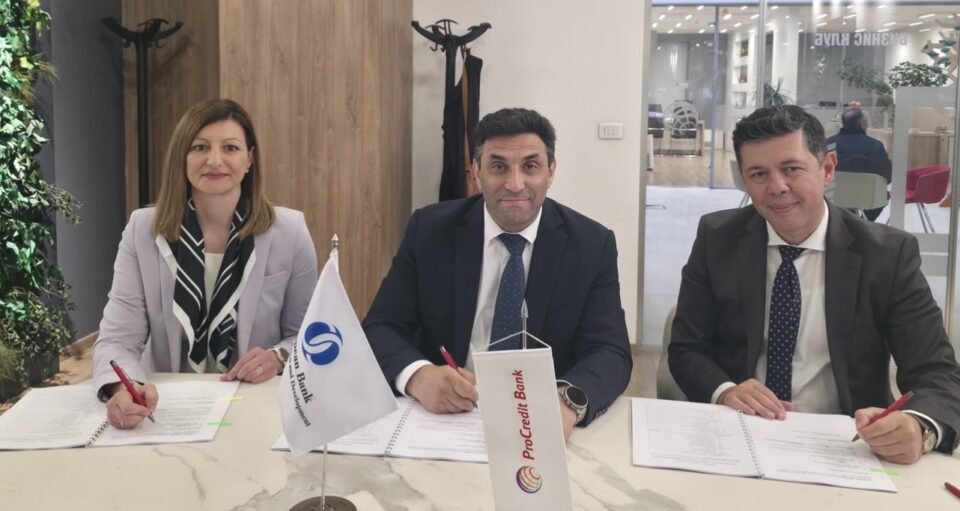
The European Bank for Reconstruction and Development (EBRD) and European Union (EU) are further strengthening their support for inclusive entrepreneurship in North Macedonia by signing €5 million of financing agreements with ProCredit Bank AD Skopje under the Women in Business (WiB) and Youth in Business (YiB) programmes.
The package consists of:
- A €2.5 million senior unsecured loan under the Western Balkans WiB Phase II programme.
- A €2.5 million senior unsecured loan under the Western Balkans YiB programme.
The EU is backing both facilities, providing technical assistance and a first-loss counter-guarantee through the European Fund for Sustainable Development Plus programme.
The loans are ProCredit Bank’s second under each programme, underlining its strong and sustained commitment to expanding access to finance for women and young entrepreneurs across North Macedonia.
The proceeds of both loans will be 100 per cent on lent to eligible women led and youth led micro, small and medium-sized enterprises (MSMEs), improving access to long term finance for groups that continue to face structural barriers in the financial sector.
The WiB loan will support women led MSMEs, contributing to the greater economic participation of women entrepreneurs while fostering business growth across the country, including outside the capital.
The YiB loan will support MSMEs owned or managed by entrepreneurs under the age of 35, helping young people develop sustainable businesses and create jobs that will strengthen national economic resilience.
Fatih Türkmenoğlu, EBRD Head of North Macedonia, said: “Supporting women and young people in business is central to building more inclusive, resilient and competitive economies. Through this €5 million package with ProCredit Bank, we are reinforcing our long term partnership and helping ensure that women and youth led enterprises across North Macedonia have access to the finance they need to invest, grow and create jobs.”
Stevce Kuzmanovski, Member of Management Board, said “We are proud to continue and further strengthen our partnership with the EBRD through the Women in Business and Youth in Business programmes. This cooperation reflects our shared commitment to fostering a more inclusive and dynamic business environment in North Macedonia. By supporting women and young entrepreneurs, we aim to enable more success stories in 2026, drive sustainable growth and contribute to the overall development of the economy. Following the strong interest in previous WiB and YiB financing cycles, we expect equally high demand, reaffirming that we are a truly entrepreneurial nation, rich in ideas and well prepared to face future business challenges.”
Michalis Rokas, Ambassador to the EU said: “Expanding access to finance for women and young entrepreneurs is key to unlocking North Macedonia’s economic potential. By supporting their businesses, we help create jobs, strengthen local communities and open up real opportunities for those who need them most. This is how we drive more inclusive growth, reduce poverty and ensure that economic progress is felt across society.”
ProCredit Bank AD Skopje is a longstanding partner of the EBRD and one of the leading lenders to MSMEs in North Macedonia, with a strong focus on responsible banking and sustainable development.
The EBRD is a major institutional investor in North Macedonia, having invested over €3 billion in more than 210 projects across the country.