
The African Development Bank Group (AfDB) and the Government of Eritrea have reaffirmed their commitment to strengthening economic cooperation following a high-level mission aimed at accelerating development investments and advancing strategic reforms across key sectors of the Eritrean economy.
The three-day mission, conducted from 15–17 April, brought senior African Development Bank officials to Eritrea for extensive consultations with government leaders, sector ministries, and international development partners focused on expanding infrastructure, renewable energy, vocational training, and economic modernisation.
Led by Alex Mubiru, the African Development Bank’s Director General for East Africa, the visit combined high-level policy discussions with field assessments of ongoing projects to evaluate progress and identify opportunities for future investment.
Officials said the mission reflected the Bank’s broader commitment to supporting Eritrea’s national development priorities while tailoring investment strategies to the country’s unique institutional and economic context.
“The discussions created space for practical dialogue on what is working, what requires patience, and how the partnership can respond to Eritrea’s long-term ambitions and national realities,” the Bank said following the mission.
Renewable Energy Expansion Takes Centre Stage
A major focus of the discussions was Eritrea’s energy sector, particularly efforts to expand access to reliable and affordable electricity through renewable energy development.
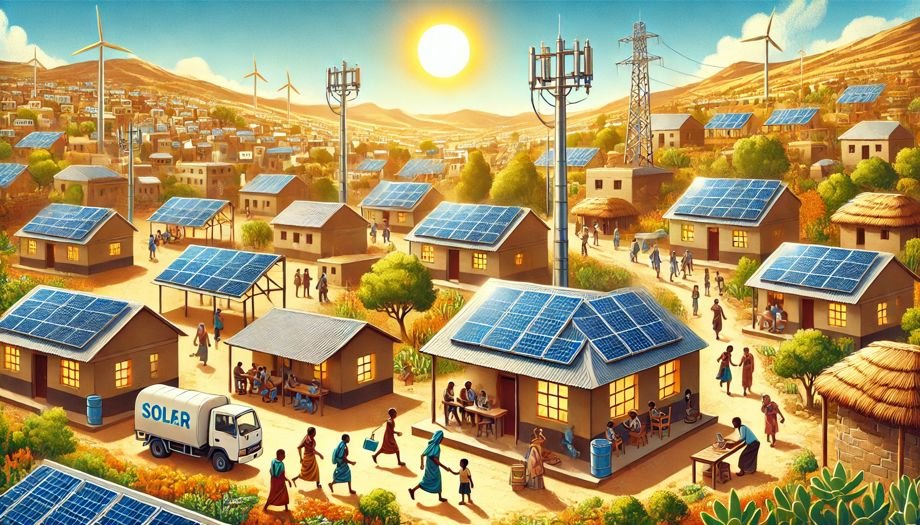
The African Development Bank and Eritrean officials reviewed plans for potential greenfield solar power projects in Tesseney, Berantu, and Kerkebet, located in the southwest Gash Barka region.
The proposed solar initiatives form part of Eritrea’s broader push to diversify its energy mix, reduce dependence on imported fossil fuels, and improve electricity access in underserved regions.
Renewable energy development has become increasingly important across Africa as governments seek to address chronic energy shortages while advancing climate resilience and sustainable development goals.
The delegation also visited the 30-megawatt Dekemhare solar power plant, one of Eritrea’s most significant renewable energy projects, which is already supplying electricity to the national grid.
Development experts say expanding solar infrastructure could play a transformative role in supporting industrial activity, improving rural electrification, and strengthening economic productivity in Eritrea.
Infrastructure and Transport Projects Reviewed
Transport infrastructure development was another key pillar of the mission.
The two sides reviewed progress on the Massawa-to-Tesseney Road and Coastal Infrastructure Development Project, which aims to improve domestic connectivity, facilitate trade flows, and strengthen regional economic integration.
Infrastructure development remains a critical challenge for Eritrea, where transport limitations continue to affect trade efficiency, market access, and economic diversification.
Improved road connectivity is expected to support commerce between inland regions and the strategically important Red Sea port city of Massawa while strengthening links with neighbouring countries.
The African Development Bank has increasingly prioritised transport and logistics investments across East Africa as part of broader continental integration efforts under the African Continental Free Trade Area (AfCFTA).
Focus on Financial Modernisation and Skills Development
In addition to infrastructure and energy, discussions also centred on financial sector modernisation and skills development initiatives aimed at strengthening Eritrea’s long-term economic resilience.
Officials explored potential collaboration on a future financial sector modernisation project designed to improve institutional capacity, financial inclusion, and economic management systems.
The delegation also assessed ongoing investments in technical and vocational education and training (TVET) institutions, which are viewed as essential for developing a skilled workforce capable of supporting economic diversification and industrial growth.
Field visits included reviews of micro-dam projects supporting agricultural production and water management — a critical area for Eritrea given recurring drought risks and climate-related challenges facing the Horn of Africa.
The African Development Bank has increasingly linked education, vocational training, and employment generation to broader economic stability and poverty reduction efforts across fragile and developing economies.
High-Level Engagement with Eritrean Leadership
During the mission, the African Development Bank delegation held bilateral meetings with several senior Eritrean officials, including Hagos Gebrehiwet, Senior Advisor to the President, and Giorgis Teklemariam, Minister of Finance and National Development.
The Bank’s delegation also included Kenneth Jerry Onyango, Chief Country Program Officer for Eritrea; Jacob Oduor, Lead Economist for East Africa; and Nathaniel Agola, Chief Country Economist.
Discussions focused on identifying realistic and phased development solutions aligned with Eritrea’s national priorities and institutional capacities.
The Bank emphasised the importance of sequencing reforms and investments in ways suited to local conditions rather than applying standardised development models.
Cooperation with United Nations Agencies
The mission also involved close coordination with United Nations agencies operating in Eritrea, reflecting growing efforts among international development partners to improve cooperation in supporting the country’s development agenda.
The African Development Bank delegation worked alongside the UN Resident Coordinator’s Office under the leadership of Nahla Valji, with additional engagement from agencies including the United Nations Development Programme (UNDP), UNICEF, and the International Fund for Agricultural Development (IFAD).
Development officials say stronger coordination between multilateral institutions is increasingly important in addressing complex challenges related to infrastructure, climate resilience, food security, and social development.
Eritrea’s Development Challenges and Opportunities
Eritrea remains one of Africa’s least-developed economies, facing longstanding challenges related to infrastructure deficits, limited industrial capacity, financial sector constraints, and vulnerability to climate shocks.
However, the country also possesses significant untapped potential in renewable energy, agriculture, mining, logistics, and maritime trade due to its strategic Red Sea location.
International financial institutions have increasingly highlighted the importance of targeted infrastructure and energy investments as key drivers of future economic transformation in Eritrea.
The African Development Bank’s engagement reflects a broader effort to support long-term resilience and sustainable growth in East Africa while addressing development gaps in countries with historically limited external financing.
At the conclusion of the mission, both the African Development Bank and the Eritrean government reaffirmed their intention to continue advancing priority projects and reforms aimed at promoting inclusive economic development and improving living standards.
Analysts say the strengthened partnership could help lay the groundwork for expanded investment and regional integration opportunities if ongoing projects deliver measurable economic benefits in the coming years.