
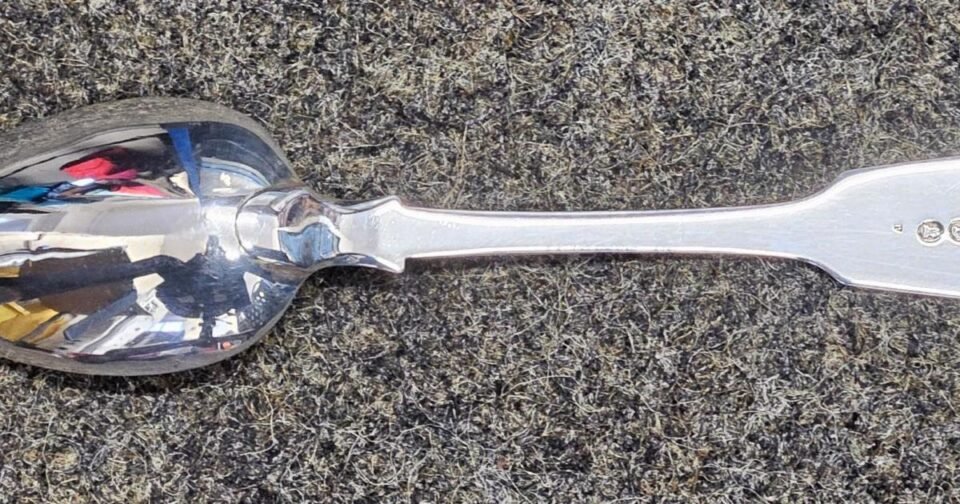
Oxfam volunteer Jane Thurnell-Read takes us behind the scenes at the charity’s general shop in Exeter, where the team is always on the lookout for hidden delights among the donations
One of the great pleasures of volunteering in an Oxfam shop is seeing the huge array of objects that get donated.
Many are clothes, shoes, handbags, jewellery and bric-a-brac which can be quickly turned into funds for Oxfam. There are others that need more attention before we can decide on their price. I was a volunteer for four years in the Oxfam books and music shop in South Street, Exeter, before moving next door to the Oxfam general shop, where I’ve volunteered for the past six years. My role is to research those items that need more attention, because they are old or potentially valuable or we are not even sure what they are!

The manager, Gwen, and some of the volunteers sort through new donations, putting aside things that need more research. Rhoma looks after homewares and will identify items for me that need further investigation. Cathy and Gwen identify clothes, handbags and shoes that need checking. I don’t do everything. Ann researches jewellery, Beth is in charge of vintage games and trading cards, and Ann and Adam investigate pictures.
Some of the things I investigate and price go into the ‘valuables’ cabinets in the shop for sale to local customers by our willing team of shop volunteers. The rest are sold via the Oxfam online shop. We list them on the site and then send them to the customer once they are sold.
I often use the internet to help with my research. I may use Google Lens to identify an object. I use eBay to get a guide on the sold price for some articles. We have sold many items for a high price. One of the most beautiful donations we’ve had recently was two sterling silver seahorse goblets by Jocelyn Burton. We sold these very quickly online for £895. We sold a beautiful French gold coin for almost £700, and we’ve sold donated bank notes and coins for over £100 each.
The internet is a wonderful source of information, but talking to other people is sometimes the most useful approach.

Sometimes I speak to specialist businesses, often ones based in Exeter. The London Camera Exchange and Mortimers Jewellers have been especially helpful when it comes to pricing my items. I asked The London Camera Exchange about a camera that had been donated; I thought it was probably worth about £250, but I wanted to be sure. They encouraged me to price it at over £600, which I did. It sold online within a couple of weeks.
The Exeter auctioneers Bearnes Hampton & Littlewood confirmed that a Mouseman ashtray was real. It sold for £165 via Oxfam online. Volunteer Adam has listed many Merivale prints online. These have sold from £40 to £820 each.
Sometimes I need to go further afield. We had a donated Frodsham pocket watch and its hallmarks told me that it was from 1896. I phoned the company and spoke to the archivist. He shared with me the entry about that watch from their original records, which sent a chill down my spine. He also suggested that I priced it at £350.
I also belong to forums, where there are always people much more knowledgeable than me. Members of numista.com have been fantastically helpful, identifying many coins; they even came good when it wasn’t a coin at all! I posted an image of what I thought was a coin, but one of their members told me it was a medallion made in 1973 by Geoffrey Clarke, a sculptor. We were able to sell that for £195.

Often dating an item is important as it determines a large part of its value. We are fortunate to have international volunteers. Joanne from Hong Kong and Julie from Japan help me when I need to identify the date on a coin from these countries.
Some items have serial numbers. Fortunately, I can often look these up online. The serial number on the base of a vintage Maelzel metronome told me it was made between 1924 and 1930, making it worth more than one made in the 1950s. I’ve learnt to read the date letter on silver items, although still not that confidently. I’ve also learnt to date antique and vintage ceramics by the changing design through time of the maker’s mark on their base.
Dating coins is also important. A coin was donated that had ‘Year 3’ on it in French. It took some research to establish it was a coin from the French Revolution, which meant it was minted between September 1794 and September 1795. That sold very quickly through the Oxfam online shop.
One of my favourite coins is the beautiful US ‘peace dollar’. These were minted from 1921-1964 and sell for around £50 each, but the 1921 one sells for £160. This is because the initial high-relief design used in 1921 was impractical for mass production. When I find a donated peace dollar, I’m always hoping it’s from 1921.

Very occasionally people donate a lifetime collection of stamps or coins. This is often done by the spouse or children after the owner’s death. This always feels like a special task, honouring the passion of that deceased person. I am particularly careful to price their donations high enough, so they aren’t bought by dealers but go directly to new owners who share that passion for stamps or coins.
We have regular customers who come into the shop to look at the coins and banknotes in the cabinet. A man comes in regularly to buy watches he can repair. It feels good to know my work is giving these collectors pleasure, as well as raising funds for Oxfam.

Of course we always have to be vigilant for fakes. Sometimes this is obvious, a poor quality Burberry bag is easily spotted as a fake, but sometimes it is more difficult. It took a while to work out that a 1776 Mexico 8 reales coin was a fake. Everything seemed right, including the diameter, but it weighed too little to be a genuine coin. Sadly, we couldn’t sell it. The Michael Spiers shop on Cathedral Green established that two of the three designer watches I showed them were false, but the Longines one was correct and we were able to sell that for almost £200.
When I touch some donations, I wonder about their history. How did that French Revolution coin get to Exeter? Sweetheart brooches from the Second World War always make me pause and think about their history. These brooches depicting the regimental or other service crest of a soldier, sailor or airman were worn by military wives or girlfriends. Did the man survive the war? Did they marry? Were they happy? Lots of questions, but sadly no answers.
When I walk into the Oxfam shop, I don’t know what new items have been donated. It could be something old, expensive or just intriguing. It may be items that can be priced and listed online immediately. It may be items that can be sold in the shop. Whatever they are, I know I can do my bit to turn these donations into much-needed funds for Oxfam’s work around the world to end poverty and inequality. This is all thanks to the generous people who bring their wonderful donations to the Oxfam general shop in Exeter. .
onlineshop.oxfam.org.uk