
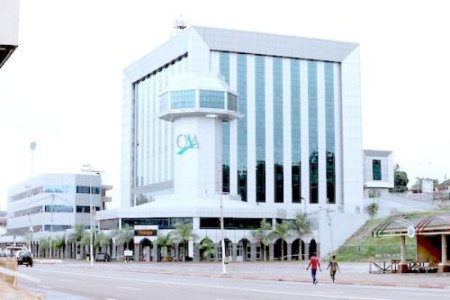
Cameroon plans to rely more heavily on borrowing over the next three years as the government seeks to meet its budget and financing objectives. According to the country’s national sinking fund (CAA), Cameroon’s financing needs could reach CFA7.689 trillion between 2026 and 2028.
For comparison, that amount equals about 87.2% of the country’s 2026 state budget, which stands at CFA8.816 trillion in both revenue and spending. It also represents nearly half of Cameroon’s total public debt stock, estimated at CFA15.416 trillion at the end of March 2026.
The CAA’s public debt report for the first quarter of 2026 indicates that CFA3.197 trillion of the total financing requirement should already be mobilized during the current fiscal year under the 2026 finance law. That means the Cameroonian government may still need to raise nearly CFA4.5 trillion in additional financing during 2027 and 2028 to fully cover projected needs.
Authorities Defend Debt Sustainability
Despite the scale of planned borrowing, the CAA maintains that Cameroon’s debt will remain sustainable. According to the institution, projected borrowing between 2026 and 2028 should “maintain Cameroon’s public debt at a sustainable level, with a moderately high risk of debt distress.” That assessment differs sharply from concerns expressed by the International Monetary Fund and the African Development Bank.
For several years, both institutions have classified Cameroon among countries facing a “very high” risk of debt distress. Those concerns reflect the rapid acceleration of public borrowing in the years following 2006, when Cameroon qualified for the Heavily Indebted Poor Countries (HIPC) initiative. The international debt relief program allowed eligible countries to receive substantial debt cancellation under specific conditions after years of severe public debt pressure.
Despite repeated warnings from the IMF and the African Development Bank, Cameroonian authorities continue to defend the country’s debt sustainability based on fiscal surveillance criteria used within the Central African Economic and Monetary Community (CEMAC), which includes Cameroon, Congo, Gabon, Equatorial Guinea, Chad, and Central African Republic.
The Debate Now Goes Beyond Debt-to-GDP Ratios
According to the CAA, Cameroon’s targets for the end of 2028 remain aligned with CEMAC’s regional convergence framework. The government aims to maintain public and publicly guaranteed debt at no more than 50% of GDP, well below the 70% ceiling allowed under CEMAC rules. Authorities also target a debt portfolio composed of 75% external debt — including 25% denominated in dollars — and 25% domestic debt.
Other objectives include limiting short-term domestic debt to 10% of the total portfolio, keeping variable-rate debt below 20% of total public debt, and maintaining an average debt maturity of at least 12 years for central government debt. The government also aims to keep the average interest rate below 3%, including five-year maturities for domestic debt.
Still, some public finance analysts argue that Cameroon’s main challenge now extends beyond simply keeping debt ratios below regional warning thresholds. Concerns increasingly focus on the growing stock of government payment arrears, which exceeded CFA1 trillion at the end of March 2026. Analysts also point to persistent difficulties in absorbing external financing, reflected in the accumulation of committed but undisbursed balances, estimated at around CFA5.044 trillion during the first quarter of 2026.
Other concerns include tighter conditions on capital markets and, above all, the government’s ability to transform rising debt into productive economic assets.
Brice R. Mbodiam