
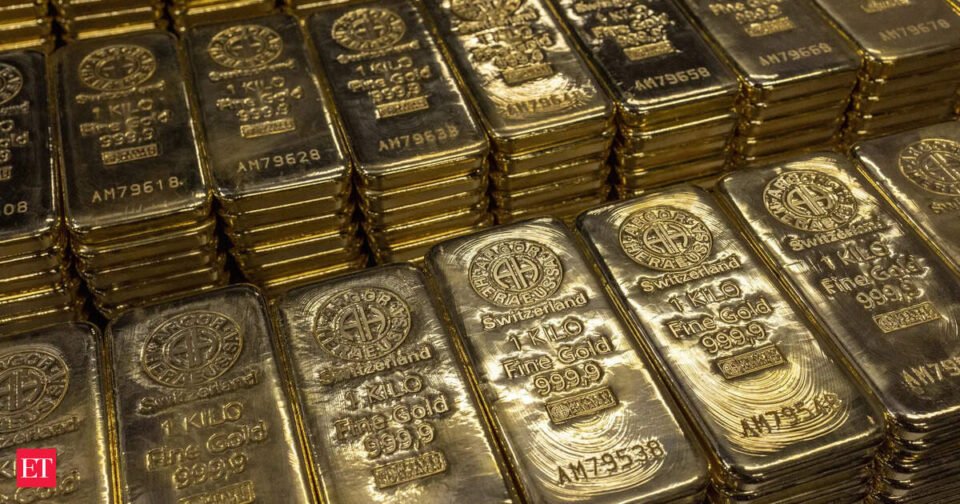
Why is gold price down today, and will precious metals continue to drop or rise again?
Gold prices fell on Monday as markets reacted to growing inflation concerns linked to the conflict between Iran and the United States. Spot gold dropped 1% to $4,489.34 per ounce by 1:50 p.m. EDT after reaching a two-week high on Friday. At the same time, U.S. gold futures settled 1.9% lower at $4,506.30 per ounce.
The decline came despite geopolitical tensions that would normally support demand for safe-haven assets such as gold. Instead, investors focused on the possibility that inflation could remain elevated, leading central banks to keep interest rates higher for a longer period.
Why is gold price down today?
Several factors contributed to the decline in gold prices. One of the biggest reasons was the strengthening of the U.S. dollar. Since gold is priced in dollars, a stronger dollar makes gold more expensive for buyers using other currencies. This can reduce demand and put pressure on prices. Another factor was the growing expectation that interest rates could remain high or even move higher. According to CME Group’s FedWatch tool, traders have priced in roughly a 54% chance of at least one U.S. interest rate hike before the end of the year.
Market analyst Jim Wyckoff of American Gold Exchange said expectations for higher interest rates are likely to keep pressure on gold unless bond yields stop rising and rates begin to stabilize or move lower. Gold does not generate income or yield. When interest rates rise, investors often move money into assets that offer returns, making gold less attractive.

Middle East developments influence market sentiment
The latest market reaction was also linked to events in the Middle East. Iran announced that it had attacked a U.S. air base after U.S. strikes targeted Iranian military facilities during the weekend. The developments raised concerns about the possibility of wider regional instability. At the same time, U.S. President Donald Trump stated that discussions with Iran were continuing at a rapid pace.
Markets responded by pushing oil prices higher. Rising oil prices can increase inflation because energy costs affect transportation, manufacturing, and consumer prices. As inflation concerns grow, central banks may choose to maintain restrictive monetary policies or raise rates further to control price pressures. This expectation weighed on gold prices despite geopolitical uncertainty.
Will precious metals continue to drop or rise again?
The future direction of precious metals will largely depend on inflation trends, interest rate decisions, economic data, and geopolitical developments. Analysts believe that if inflation remains elevated and interest rates stay high, gold could continue facing pressure in the near term.
However, some experts see support for the long-term outlook. Ole Hansen, an analyst at Saxo Bank, said investors may return their focus to the broader factors that have supported the gold bull market once geopolitical tensions ease and the energy-related inflation shock begins to fade.
These factors include central bank buying, economic uncertainty, and long-term demand for safe-haven assets. According to Hansen, central banks are expected to remain net buyers of gold over the next year. Continued purchases by central banks can help support prices even during periods of market volatility. As a result, while short-term fluctuations may continue, some analysts believe the longer-term trend for gold remains supported.
Analysts insights and market outlook
Analysts are paying close attention to several events scheduled this week. A series of U.S. employment reports is expected to provide fresh information about the strength of the labor market and the broader economy. Strong jobs data could reinforce expectations that interest rates will remain elevated. Weak data could increase hopes that policymakers may eventually reduce rates.
Investors are also waiting for comments from Federal Reserve officials. Any indication regarding future interest rate decisions could significantly influence the gold market. The relationship between inflation, employment, and interest rates remains a major driver of precious metals prices. If bond yields continue rising, gold could face additional selling pressure. On the other hand, signs of slowing inflation or lower interest rates could improve sentiment toward bullion.
Other precious metals show mixed performance
While gold moved lower, other precious metals recorded mixed results. Spot silver remained unchanged at $75.26 per ounce. Platinum increased 0.7% to $1,929.60 per ounce. Palladium rose 0.9% to $1,366.44 per ounce.
Morgan Stanley noted that palladium is moving toward a more balanced market situation. According to the bank, supply constraints are being offset by weaker demand from the automotive sector. This balance between supply and demand is helping shape price movements in the palladium market. The performance of silver, platinum, and palladium demonstrates that different precious metals can react differently depending on industrial demand, supply conditions, and broader economic trends.
What should investors do now?
Investors are facing a market influenced by several competing factors. Inflation concerns, interest rate expectations, geopolitical developments, oil prices, and economic data are all affecting precious metals. Many analysts suggest that investors monitor upcoming U.S. jobs reports and Federal Reserve commentary closely. These events could provide important signals about future market direction.
Long-term investors may continue watching central bank buying trends and economic conditions, while short-term traders may focus on interest rate expectations and daily market developments. As uncertainty remains, precious metals are likely to continue responding to changes in inflation expectations, monetary policy, and global events.
FAQs
Q1. Why did gold prices fall even though geopolitical tensions increased?
Gold prices fell because investors focused on inflation risks and expectations of higher interest rates. Rising rates increase the appeal of yield-generating assets and can reduce demand for gold.
Q2. Can precious metals rise again later this year?
Precious metals may recover if inflation slows, interest rates stabilize, or economic uncertainty increases. Continued gold purchases by central banks could also provide support for future prices.