
This time, it’s Shanghai.
According to Bloomberg, the Shanghai office of the Public Investment Fund (PIF) of Saudi Arabia completed its registration in 2025 and officially started operations this year.
Managing over $1 trillion, PIF is the world’s fifth-largest sovereign wealth fund, well-known in the investment community. In recent years, this Middle Eastern powerhouse has been increasingly active in China. It not only heavily invests in Chinese assets but also has increased its mainland offices to three – previously, it already had offices in Hong Kong and Beijing.
This is undoubtedly an indicator. Last night (June 3), CCTV’s “News Broadcast” reported that “long – term foreign capital is optimistic about China and continuously increasing investment in hard technology.” The revaluation of Chinese assets is underway.
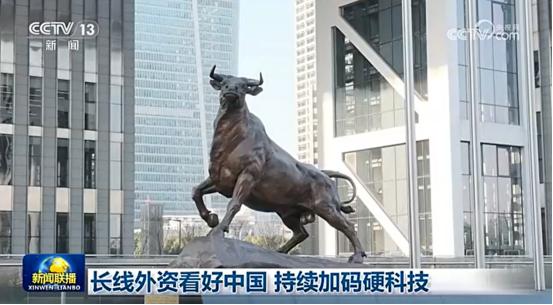
The Saudi powerhouse with trillions under management has gone to Shanghai
This is one of the world’s largest sovereign funds.
Going back to 1971, PIF was officially established in accordance with Saudi Royal Decree No. M/24 and is affiliated with the Saudi Ministry of Finance. Born during the period of soaring petrodollars in the 1970s, PIF’s early investments were mainly concentrated in Saudi Arabia, supporting the development of key domestic industries, infrastructure, and state – owned leading enterprises. To the outside world, this super fund is full of mystery.
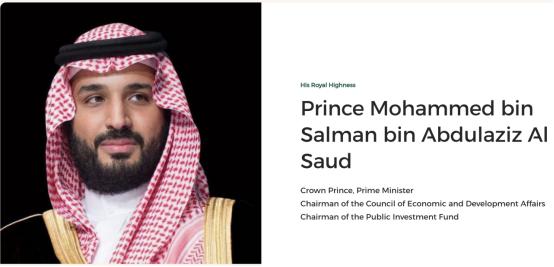
The turning point was in 2015 when the regulatory power of PIF was transferred from the Ministry of Finance to the Council of Economic and Development Affairs (CEDA). His Royal Highness Prince Mohammed bin Salman, the Crown Prince of Saudi Arabia, became the chairman and officially took charge of PIF, fully overseeing the fund’s reform. At that time, PIF’s management scale was only about $150 billion.
Soon, Mohammed bin Salman launched the “Saudi Vision 2030,” one of whose core goals is to transform PIF into a global investment force. Since then, PIF’s functions have been completely reshaped. This also became an important watershed in its development history.
In the following few years, the PIF team expanded rapidly, recruiting professional talents from Wall Street and European and American sovereign funds globally, and establishing full – service departments for equity investment, venture capital, real estate, infrastructure, and overseas mergers and acquisitions.
To date, the asset management scale of the Saudi Public Investment Fund has exceeded $1 trillion. Not long ago, PIF announced its 2026 – 2030 strategy, aiming to build six domestic ecosystems: tourism, travel, and entertainment; urban development and livability; advanced manufacturing and innovation; industry and logistics; clean energy, water, and renewable energy infrastructure; and the NEOM Future City.
“China is an important strategic market for PIF and is one of the keys to PIF’s broader investment strategy. PIF hopes to both invest in China and raise funds from China.” Previously, Abdulmajeed Alhagbani, the head of PIF’s Middle East and North Africa equity investment, said in a media interview.
Therefore, we can see that PIF has successively made investments in China. For example, its wholly – owned subsidiary, Alat, provided Lenovo Group with a $2 billion interest – free convertible bond investment; its mother fund invested in Chinese funds such as Yida Capital; and it cooperated with Futian, Shenzhen, to establish a private equity investment fund with a scale of over $1 billion.
Currently, PIF’s investment in China has exceeded $22 billion. These funds are focused on areas such as sustainable development, technology, automobiles, and healthcare, covering both equity investment in the primary market and asset allocation in the secondary market.
China has become the country where PIF has set up the most overseas offices. In February 2022, PIF established its first office in China in Hong Kong. In 2025, the Beijing office was officially launched. Just one year later, the Shanghai office began operation, under the leadership of the Beijing investment team led by Lily Cong, the former chief representative of Fidelity International.
So far, PIF’s business map in China has expanded from the Guangdong – Hong Kong – Macao Greater Bay Area and the Beijing – Tianjin – Hebei region to the core economic area of the Yangtze River Delta.
“China is one of the important engines of the global economy. For global investors, investing in China is essential. For sovereign wealth funds, China is a top – notch investment market.” As Abdulmajeed Alhagbani implied, there are still plenty of opportunities here.
Over 4 trillion: Foreign capital is snapping up A – shares
Looking around, the foreign capital camp is collectively looking east.
According to the CCTV “News Broadcast” on June 3, various overseas investors hold A – share floating market value of more than 4 trillion yuan, and have become important participants in the Chinese capital market.
This figure has increased by nearly 1 trillion yuan compared with 3.07 trillion yuan at the end of June 2025. In April this year, foreign capital flowed into A – shares by about $29 billion, setting the highest monthly scale since the beginning of the year and kicking off the accelerated return of foreign capital.
During this period, Middle Eastern investors have been particularly active. Gulf countries are promoting economic transformation, and the allocation goals of Middle Eastern capital increasingly emphasize serving their domestic industrial upgrading and development strategies – new energy, artificial intelligence, medical technology, and the infrastructure required for future industries. And in these emerging fields, China is brewing huge opportunities.
In the latest “News Broadcast,” the head of international distribution at Saudi National Bank Capital said, “Diversify the investment portfolio by allocating more Chinese assets.”
Since the beginning of this year, Middle Eastern “big buyers” have been snapping up Chinese assets. According to Wind data statistics, as of the end of the first quarter of 2026, the Abu Dhabi Investment Authority (ADIA) and the Kuwait Investment Authority have appeared in the top ten floating – shareholding records of 77 A – shares, with a total market value of holdings reaching 21.8 billion yuan.
The funds are mainly invested in China’s hard technology. Industries such as hardware equipment, non – ferrous metals, machinery, and chemicals have become the focus of this wave of allocation. Leading high – end manufacturing companies such as Zijin Mining, Luxshare Precision, Wanhua Chemical, BOE Technology Group Co., Ltd., and Sany Heavy Industry have been included in the heavy – holding lists.
Middle Eastern funds are also flowing into Hong Kong.
Wind data shows that the proportion of cornerstone investments by Middle Eastern sovereign funds in Hong Kong IPOs has increased from 18% in 2024 to 39.2% at the beginning of this year. The Qatar Investment Authority (QIA) appeared on the cornerstone list of the Hong Kong IPO of Dongpeng Beverage; the Abu Dhabi Investment Authority became the cornerstone investor in the Hong Kong IPOs of MiniMax and Jingfeng Medical; and Mubadala made a cornerstone investment in the IPO of Richard Li’s FWD Group, etc.
The great explosion of Chinese assets
All these are just a microcosm of the great explosion of Chinese assets.
At this moment, from large models to embodied intelligence, from autonomous driving to AI chips, Chinese technology companies are shining on the global stage. Especially in this new wave of AI that emphasizes application scenarios and business closed – loops, China’s huge consumer market and complete manufacturing system provide an unparalleled testing ground and a fertile soil for large – scale development.
As Goldman Sachs said not long ago: China’s AI is forming an independent investment theme separate from global technology stocks, and its potential economic benefits are seriously underestimated. Allocating Chinese AI assets has become a necessary means to hedge against risks in traditional industries.
Coincidentally, the global macro and asset allocation team of KKR visited China in April this year, including Beijing and Hong Kong, and visited companies in multiple industries such as automobiles, robotics, and consumer services. “We witnessed the rapid spread of artificial intelligence and automation in multiple industries,” said Henry H. McVey, a partner at KKR, after the visit.
Meanwhile, Renminbi assets are also being re – priced by global investors. KKR recently pointed out that the strengthening of the Renminbi is not accidental but reflects the increasing interest of global allocation funds in Renminbi assets. It also shows that the outside world is increasingly recognizing that China’s competitiveness is not based on a weak currency but on a more solid foundation.
A new opportunity window is opening, and foreign institutions are flocking here: Morgan Stanley has just obtained its fourth Qualified Foreign Institutional Investor license in China; Goldman Sachs Futures has also been officially established, becoming the fourth wholly – foreign – owned futures company in China. They have all raised their growth forecasts for China’s economy in 2026. Many institutions said that the core competitiveness of China’s scientific and technological innovation on the global stage is their greatest confidence in firmly investing in China.
This scene has far – reaching implications because historical experience shows that the flow of global wealth will define the power structure of the new world. Maybe this is just the beginning.
This article is from the WeChat official account “Investment Community” (ID: pedaily2012), written by Zhou Jiali and published by 36Kr with authorization.