
Value capture to fund transit is a solution hiding in plain sight.
The state budget provisions for funding New York City’s ambitious transit projects contain references to financing models that may sound exotic, like “value capture” and a “land tax.” But the underlying concept is remarkably simple: When a city builds a new subway line, property values go up. So why not ask the adjacent private landowners to help pay for the projects that are creating so much wealth?
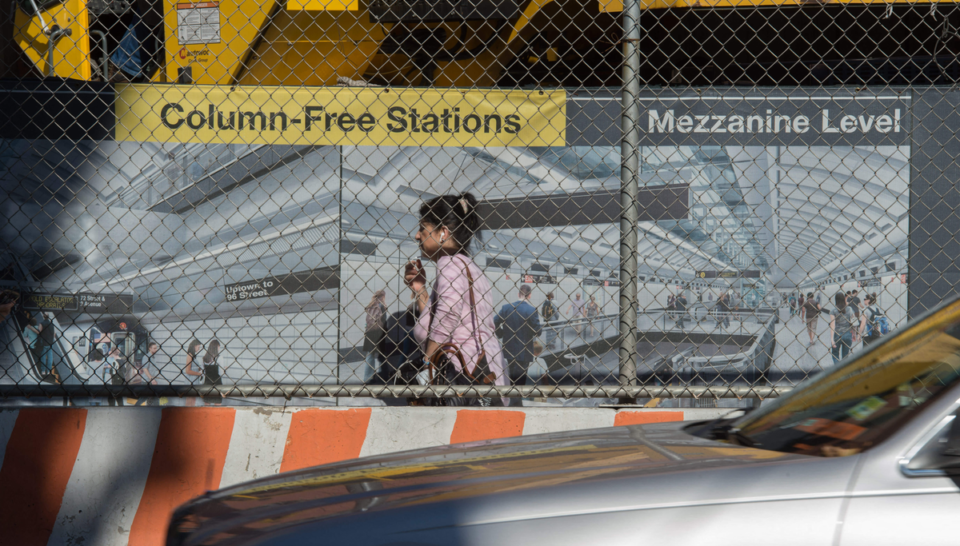
The idea of value capture — the recovery of a portion of increased private property values that are generated by public investments — has been around for centuries, and is widely in use in Europe, Asia and Latin America. It is getting fresh consideration after it was revealed earlier this month that New York State’s FY 2027 budget included proposals to use alternative funding mechanisms to build two new transit projects: the next stage of the Second Avenue subway along Manhattan’s Upper East Side (estimated cost: $7 billion), and the Interborough Express or IBX (estimated cost: $5.5 billion), running from Brooklyn to Queens, which would be the city’s first new end-to-end rapid transit line in almost a century.
With federal funding in doubt, government agencies have been empowered to “capture” the added value that the IBX and the Second Avenue subway extension will create. The mechanisms that would be used, according to an analysis by The Niskanen Center, include new taxes that the City can impose on property owners along the new transit lines, especially at the stations: special transit assessments — a kind of real estate surcharge in designated zones along a transit corridor — and a version of the land value tax, which takes into account the positive impact that public investments have on the value of privately owned urban land. Essentially, property on land near the new transit line will automatically be assessed at a higher rate. The stepped-up tax revenue would go directly to pay for the rail lines themselves, potentially representing billions in funding not otherwise available.
Acknowledging the true interplay between infrastructure and real estate is the fiscal equivalent of saying the quiet part out loud. For the most part, landowners over time have enjoyed a free ride as they benefit from the government’s provision of streets, water and sewer, railroads and highways. With land value capture (generally a one-time charge on new development to pay for a specific project) or the land tax (a more permanent system of assessing land, whether it’s developed or not), the private sector pays a modest portion of that public investment. It’s an honest and transparent recognition of what actually happens once the tunnels are bored and the turnstiles are spinning.
There are few certainties in life, but the essential premise of value capture — that transportation infrastructure will enhance property values for adjacent landowners — is about as close to a sure thing as it gets. Extensive empirical evidence underscores what is understood intuitively. The increase in value is known as the land value increment, and it can be measured.
In the 2020 study “Take the Q Train,” originally published as a working paper by our institute, economists Arpit Gupta, Stijn Van Nieuwerburgh and Constantine Kontokosta found that property values jumped 8% in the initial phase of the Second Avenue subway extension — a higher increase than in other parts of the Upper East Side without direct access to transit. The grand total was $5.5 billion in “uplift,” an apt term for the prosperity that public investment brings. That would be enough to pay for the $4.5 billion two-mile extension from 63rd to 96th Street — with $1 billion left over.
The Q train project is just the latest demonstration of how increases in property value can be recovered. At the Lincoln Institute, we’ve been studying value capture and the land tax for decades. These financing tools have been successfully implemented all around the world to pay for major transportation projects:
- United Kingdom. The city of London established a series of property tax and development surcharges to help pay for the $20 billion Crossrail (Elizabeth Line) — a cross-cutting and inter-connecting transit service similar to the proposed IBX in New York City — on the premise that increased mobility was an economic boost for not only adjacent commercial and residential development but virtually all businesses across the city.
- Asia. Widely used in Japan, Hong Kong and elsewhere and known as the Rail plus Property model, land value capture has been providing billions for transportation projects throughout Asia and Australia. Hong Kong’s transit agency, the MTR Corporation (MTRC) acquires development rights for land above and around transit stations, builds mixed-use transit-oriented development projects itself, and thus captures the surge in land value prompted by new railway lines.
- Latin America. In Brazil, São Paulo auctions building rights to developers and the proceeds are used to fund transit and other amenities; in Bogotá, Colombia and the southern Brazilian city of Curitiba, special fees called betterment levies, applied to landowners and developers in upzoned areas around stations, have helped pay for Bus Rapid Transit systems.
In the U.S., the adoption of these financial instruments has been a little slower, but nonetheless some version of value capture (and to a lesser extent the land tax, most recently proposed in Detroit) has been instituted with great success. The extension of the No. 7 subway line in Manhattan, including new stations, was partially funded through a kind of pre-payment of property taxes by the developers of Hudson Yards on Manhattan’s West Side waterfront. In Massachusetts, developers have made agreements to help build station facilities along the Green Line extension through Somerville and at a redeveloped industrial site called Assembly Square along the Orange Line; the New Balance shoe company financed a commuter rail station in Allston-Brighton.
In the early 20th century in the U.S., the connection between transportation and land use was so obvious, landowners and developers financed their own trolley lines to bring people and businesses to the new frontier of “streetcar suburbs.” Though the private companies rushed to hand the operation of the new routes back over to government to run, they well understood the essential value capture proposition: Building transit lines is what makes development so lucrative. Governments and public authorities do all the building these days, boring tunnels and laying down tracks, often in challenging conditions in the existing urban landscape. In value capture, the public sector simply asks the private sector to chip in.
Value capture has been used in other circumstances besides funding transit. Private landowners reap financial benefits when a new public park is built, for example. At a basic level, when local government approves a major zoning change, that itself instantly increases land and property values. A number of financing mechanisms are based on the premise that public investments and actions are inextricably linked with private profit, including direct charges for building rights, density bonuses, betterment contributions, exactions and impact fees and Business Improvement Districts.
Far from a newfangled public finance strategy, value capture has a long and interesting history through centuries of city-building, beginning with the construction of aqueducts in ancient Rome, and continuing with Baron Georges-Eugène Haussmann’s redevelopment of Paris, where a portion of real estate profits helped fund monuments and public squares. The concept is also inherent in the writing of political economist Henry George, who argued that the staggering wealth being accrued by landowners was “unearned” profits — not due to anything they did, but rather directly attributed to the government actions and public investments that created value for their property.
In today’s tumultuous public finance environment, the value capture-land value tax approach is worth a look by state and local governments searching for ways to fund transit, including in those places where other methods of raising revenue have not been popular — a rejected gas and payroll tax in Oregon, for example, or the “car tab” surcharge on private automobiles in Washington state. And while voters have been willing to agree to small increases in the sales tax to fund transit, most notably in Denver but also in California and many other jurisdictions, hikes in a tax that all consumers pay regardless of whether they use the transit systems cannot likely go on indefinitely.
In embracing this simple and elegant funding mechanism, New York will be in good company — joining cities around the world that recognize the virtuous cycle of bold public investments in transportation infrastructure and sustained economic success.