
Shinhan Investment & Securities is collaborating with Kaia Investment Partners (KIP), an investment firm operating under the Kaia blockchain mainnet, to develop tokenized real-world asset (RWA) products, according to a report from Dailian. The partnership marks one of the first concrete efforts by a major South Korean securities firm to enter the RWA tokenization space.
Yield5: A Tokenized Product Targeting Stable Returns
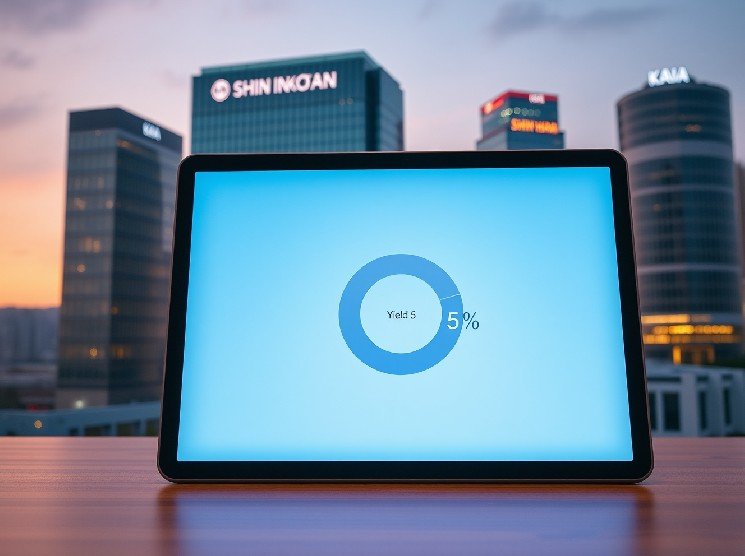
KIP is reportedly developing a tokenized product tentatively named Yield5, which aims to deliver an annual return of approximately 5%. The product’s portfolio is expected to include bonds held by Shinhan Investment & Securities as a core asset. This structure blends traditional fixed-income instruments with blockchain-based tokenization, offering investors a digitally native way to access institutional-grade debt.
The move reflects a broader trend among South Korean financial institutions exploring how distributed ledger technology can improve liquidity, transparency, and accessibility in conventional asset classes. Shinhan’s involvement lends credibility to the project, given its position as one of the country’s leading securities firms.
What This Means for the RWA Market
Tokenized real-world assets represent a growing segment of the digital asset ecosystem, where physical or financial assets—such as bonds, real estate, or commodities—are represented as digital tokens on a blockchain. The market for RWAs has attracted attention from both traditional finance and crypto-native firms seeking to bridge the gap between off-chain value and on-chain programmability.
If Yield5 proceeds as described, it could serve as a test case for how regulated securities firms in South Korea integrate tokenization into their product offerings. The 5% target yield is modest compared to some crypto-native yield products, but its backing by conventional bonds may appeal to risk-averse investors looking for blockchain-based exposure without excessive volatility.
Regulatory and Market Implications
South Korea has maintained a cautious but evolving stance on digital assets. The involvement of a major securities firm like Shinhan suggests growing institutional comfort with tokenization, provided it operates within existing regulatory frameworks. The product will likely require compliance with the country’s Financial Investment Services and Capital Markets Act, which governs securities offerings.
For investors, the key question will be how the tokenized product handles custody, redemption, and secondary trading. If KIP and Shinhan can address these operational details transparently, the project could pave the way for similar offerings from other financial institutions in the region.
Conclusion
The collaboration between Shinhan Investment & Securities and Kaia Investment Partners to develop the Yield5 tokenized RWA product represents a meaningful step in the convergence of traditional finance and blockchain technology. By targeting a 5% annual return backed by bonds, the initiative aims to offer a familiar risk-return profile in a new digital format. As the project develops, its structure, regulatory compliance, and investor adoption will be closely watched by both the Korean financial industry and the global RWA market.
FAQs
Q1: What is a tokenized real-world asset (RWA)?
A tokenized real-world asset is a digital token on a blockchain that represents ownership or rights to a physical or financial asset, such as bonds, real estate, or commodities. It allows for fractional ownership, easier transfer, and increased transparency compared to traditional asset holding.
Q2: What is the Yield5 product being developed by Kaia Investment Partners?
Yield5 is a tokenized product reportedly targeting an annual return of around 5%. Its portfolio is expected to include bonds held by Shinhan Investment & Securities, combining traditional fixed-income assets with blockchain tokenization.
Q3: Why is Shinhan Investment & Securities involved in this project?
Shinhan Investment & Securities is a major South Korean securities firm. Its involvement brings regulatory credibility, asset management expertise, and access to institutional-grade bonds, which are essential for backing the Yield5 product and ensuring investor confidence.