
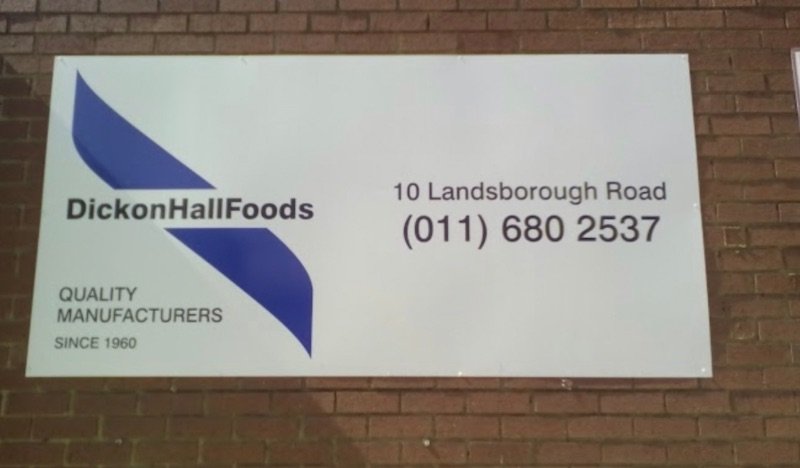
The closure of Dickon Hall Foods in Johannesburg should send shockwaves through every level of government. It is far more than the loss of a manufacturing plant.
It is a stark warning that the City of Johannesburg is becoming an increasingly unreliable destination for investment, manufacturing and industrial growth.
When businesses begin abandoning South Africa’s economic powerhouse because they can no longer rely on basic municipal services such as water, we are no longer dealing with isolated service delivery failures. We are witnessing the direct economic consequences of years of political neglect, administrative incompetence and collapsing infrastructure.
As American economist Milton Friedman once observed: “The most important single central fact about a free market is that no exchange takes place unless both parties benefit.” Businesses invest where governments provide certainty, stability and functioning infrastructure. Once that social contract is broken, investment simply moves elsewhere.
That is precisely what appears to have happened in the case of Dickon Hall Foods. Public information from Libstar Holdings indicates that the company had been raising concerns about unreliable municipal water supply as early as the 2023/24 financial year. These were not minor operational inconveniences. They represented an escalating business risk that threatened the viability of an entire manufacturing operation.
Manufacturing is unlike many other sectors of the economy. Production lines cannot simply continue when water supply becomes unpredictable. Food manufacturers depend on uninterrupted access to clean water for production, sanitation, food safety and regulatory compliance. Every hour without water translates directly into lost production, higher operating costs, disrupted supply chains and diminished investor confidence.
Reports indicate that by late 2024 and into early 2025, Dickon Hall Foods experienced repeated and prolonged water outages at its Southdale facility. The company reportedly endured as many as 25 production shifts without municipal water and was forced to truck in water at considerable expense simply to maintain limited operations.
These extraordinary measures reportedly contributed to operational losses averaging around R17 million. No responsible investor can be expected to absorb such losses indefinitely.
What makes this situation particularly alarming is that the decision to relocate appears not to have been driven by labour costs, taxation or market demand. It appears to have been driven by a complete loss of confidence that the City of Johannesburg could guarantee something as fundamental as a reliable water supply.
Businesses understand that infrastructure occasionally fails. What they cannot accept is a municipality that cannot demonstrate a credible plan to restore reliability, maintain essential services or provide certainty for future investment.
By the end of 2025 and into 2026, the closure of the Johannesburg operation was announced, production shifted to the Western Cape, and employees faced retrenchment or relocation.
While the human cost of those job losses is devastating, they are the consequence of a deeper problem. Investment had already made its decision. Once confidence in municipal governance disappears, capital follows certainty elsewhere, and employment inevitably follows.
Municipal infrastructure is economic infrastructure. Reliable water, stable electricity, well-maintained roads, functioning wastewater systems and responsive municipal administration are the foundation upon which investment decisions are made.
Investors do not leave Johannesburg because they no longer believe in its economic potential. They leave because they no longer believe the city can provide the certainty required to protect long-term investment.
Investment is built on confidence. Confidence is built on competence. And reputations, once lost, are exceptionally difficult to rebuild.
Economic growth cannot be legislated into existence. Investment cannot be secured through speeches or political slogans. Investors commit capital where governments consistently deliver certainty, reliability and competent administration.
The failure to maintain infrastructure is ultimately a failure to protect investment. Once investors conclude that municipal risk outweighs commercial opportunity, they deploy their capital elsewhere. The loss of jobs is not the cause of the crisis; it is its inevitable consequence.
ActionSA believes that restoring investor confidence begins with restoring municipal competence. That means prioritising preventative infrastructure maintenance, strengthening water and electricity reliability, improving project management, enforcing accountability throughout the municipal administration and creating an environment where investors have confidence that the City will honour its most basic responsibilities.
The Dickon Hall Foods story should not become another forgotten headline. It should become the moment Johannesburg acknowledges that infrastructure failure is no longer simply an engineering problem. It has become an economic emergency.
The choice before us is simple: restore competent municipal governance and rebuild investor confidence, or continue watching capital, investment and productive industry migrate elsewhere. Johannesburg cannot compete for investment while failing to provide the basic infrastructure that modern economies require.
If we fail to act, Dickon Hall Foods will not be remembered as an isolated incident. It will be remembered as the warning we ignored.