
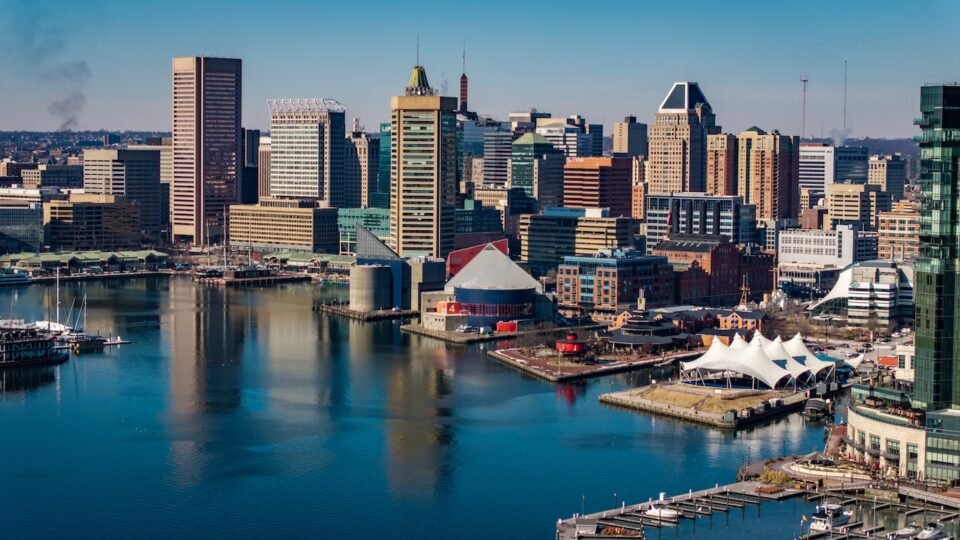
Every few weeks, a board of architects is supposed to review major development projects under consideration in Baltimore.
They review renderings for big shiny towers. They critique landscaping. They suggest tweaks to layouts of parking lots and question shadows that tall buildings might cast.
Lately, this city panel has had a pretty easy job: There’s not much to review.
The Baltimore Urban Design and Architecture Advisory Panel’s newfound free time follows a deeper shift in the region’s real estate market.
The board’s hearings are scheduled by the city’s Department of Planning, which has tried to streamline its processes recently by having fewer public review hearings — lessening costs for developers and speeding up their timelines.
Department of Planning officials declined to speak on the record, but they said there are many new developments underway in Baltimore. Development is cyclical, they said, and the schedule of its architectural review panel does not reflect projects currently being built or in the very early stages of planning.
Industry insiders said there’s another reason for the panel’s idleness: a decline in new development proposals throughout the Baltimore metro area. This slowdown tracks with national trends. Markets across the country are seeing a post-pandemic slowdown for new apartment buildings, warehouses, and retail space, they said, driven by a combination of high interest rates, expensive construction costs and economic uncertainty.
For the Baltimore architectural review panel, scheduled to meet at least once a month, that’s meant a lot of doing nothing.
In January, the architects reviewed plans for Sojourner at the Falls, a proposed 117-unit affordable-housing development just east of downtown that would primarily serve people leaving homelessness.
The group canceled its next six meetings and didn’t hold another until late last month. On Thursday, they canceled again.
There are big projects on the horizon for Baltimore, such as the redevelopment of Harborplace and the “campus town” project of the University of Maryland, Baltimore. Large residential developments are underway elsewhere around the city, including at Cross Keys, Roland Park and Canton. But other projects have slowed or diminished in scope; the less ambitious they become, the less there is for the board of architects to consider.
While a community of townhomes and apartments called Locke Landing is nearing completion in South Baltimore, the nearby Baltimore Peninsula development has stalled after completing a fraction of its original ambition. A six-story apartment tower is rising in Remington, but plans for residential and commercial towers next to Penn Station are now on pause.
What’s happening in Baltimore is not unique to the city or even the region, said Melina Duggal, a senior director of market analytics at CoStar, a real estate data company. Apart from some exceptions, there has been a nationwide slowdown for developing new commercial real estate projects, Duggal said.
During the pandemic, when interest rates were low, developers started lots of new projects, especially industrial spaces and multifamily housing. Think: warehouses and apartment complexes. Some markets overheated, she said, meaning that some metro areas are still trying to find tenants for all that new space.
The Baltimore region saw a similar bump in construction, Duggal said, but nowhere near what happened to markets in the Sun Belt. To some of these areas, like Charlotte, North Carolina, the slowdown in development might feel like slamming on the brakes. But in Baltimore, she said, it’s more like a light tap.
In the Baltimore region, there were more than 6,000 multifamily units under construction at the beginning of 2023, according to CoStar. That was double the amount under construction two years prior, but less than a fifth of what was being built in Charlotte’s metro area.
By 2026, that Baltimore figure had slipped to just over 3,000.
To the people who already own warehouses or condo buildings in Baltimore, this development slowdown might be a good thing, said Matt Lenihan an executive vice president at St. John Properties, one of Maryland’s biggest commercial real estate firms. The Baltimore-based company develops and owns a variety of projects across the state. Much is light industrial space, multifamily housing and some office space, Lenihan said, but St. John Properties is also behind Greenleigh, a large planned community in eastern Baltimore County.
Less development means less competition among property owners for tenants, meaning higher occupancy rates and higher property values, he said. This could benefit existing owners in the short term, he said, but it could create a lopsided real estate market over time.
For everyone in the industry to be successful — for tenants to find affordable space, for brokers to close deals, and for builders, electricians, engineers and architects to find work ― developers need a steady stream of new projects, Lenihan said. And in parts of the metro area, he said a lack of developable space and regulatory pushback are making many commercial real estate projects unfeasible.
Some Maryland counties, like Anne Arundel, have rules known as “adequate public facilities ordinances,” which restrict new development based on the availability of public services, like schools, utilities and more. Earlier this year, Anne Arundel County issued a monthslong moratorium on new development in a large swath of the county because of problems with sewer capacity.
“Anne Arundel County is essentially closing the door on development,” Lenihan said.
When it comes to developing new projects, he said, St. John Properties is increasingly looking outside Maryland. States like Texas, the Carolinas, Tennessee, Florida and Utah have cheaper land, less red tape and growing populations, he said.
“As much as we love Maryland — and we’re a Maryland company at heart — the opportunities are too good to pass up in some of these other markets,” Lenihan said.
And St. John Properties is far from the only Maryland-based firm looking outside the state.
In December, the Baltimore firm Greenberg Gibbons broke ground on a planned 46-acre, $500 million mixed-use project in Richmond, Virginia. The next month, Greenbelt’s Bozzuto announced its expansion into Texas, starting with a luxury senior living complex in Dallas.
“There’s been a migration by choice,” said Owen Rouse Jr., a senior vice president at MacKenzie Commercial Real Estate, a Baltimore brokerage firm.
Buildings are selling, and tenants are leasing space, Rouse said, but when he’s got a property that needs to be redeveloped, he can’t find anyone. The older developers that have existing relationships with lenders only want to handle one project at a time, Rouse said, and while the younger developers have creativity and energy, they struggle to get financing.
“We just don’t seem to have as many team members on the development side as we used to,” he said.
One of those team members is Doug Schmidt, founding principal of Workshop Development in Baltimore. Schmidt was a broker before becoming a developer, and he’s played a role in several projects throughout Baltimore. But lately, he said, Workshop Development has put a few plans back on the shelf because they’re not economically viable at the moment.
Developers don’t spur economic growth, he said; they respond to it. Rising rents and increased job growth are what prompt developers to build new housing and new retail space, he said — not the other way around.
“Real estate doesn’t lead,” he said. “It follows.”