
BETHEL – A stone mason’s plan to knock down a barn in the back of his property and construct contractors’ units is the latest investment for an industrial corridor south of the downtown that has been in the headlines.
“They’re going to remove the barn and construct a new large building towards the back for storage for equipment and materials … and some office space on the second floor,” said Jeremy DeCarli, Bethel’s interim town planner, during a Planning and Zoning Commission meeting. “It is a site plan use. It is not a special permit. So it does not require a hearing.”
DeCarli is referring to a half-acre property across the Metro-North train tracks from Ring’s End on Taylor Avenue, where investors have made headlines in recent years with plans to revitalize old industrial properties.
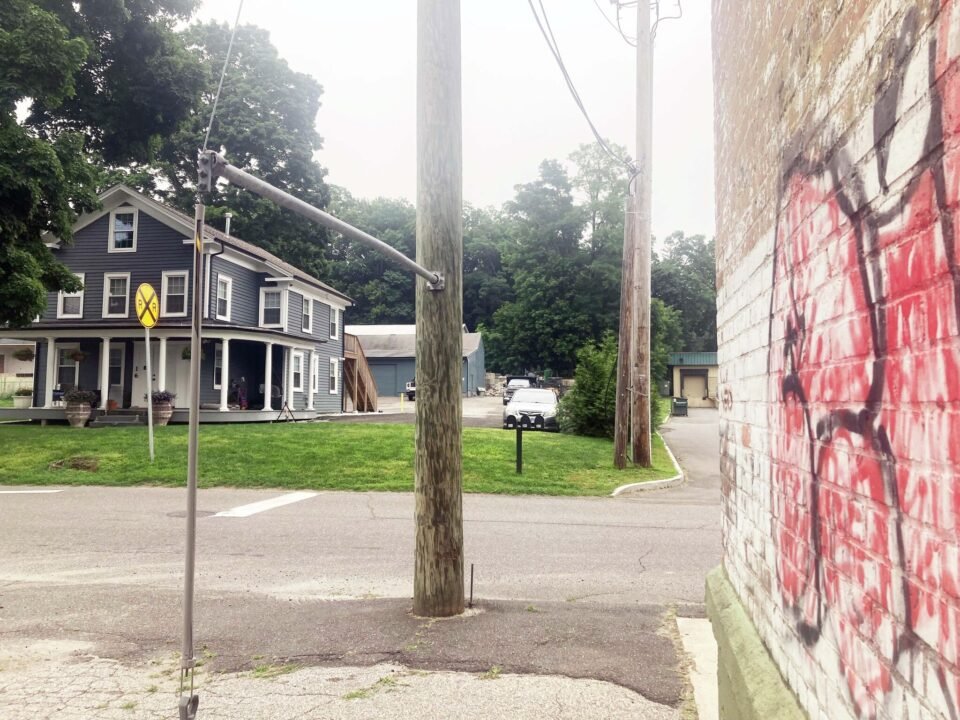
“If you look at it from the street it looks like a residential building.,” DeCarli told the Planning and Zoning Commission during a July 14 meeting about the property at 16 Taylor Ave. “I think their office is in an old house. There’s a wood frame barn behind it.”
The commission could vote on the plan as soon at its July 28 meeting, once department heads and other town staff make recommendations.
“It is proposed to raze the existing building located in the northeast corner of the property and construct a new building of approximately 3,150 square feet to be used as industrial condos,” reads an engineering report for property owner Anthony Manca Jr. “The existing office building located adjacent to Taylor Avenue will remain.”
The section of Taylor Avenue in question forms the northern part of an industrial district that stretches on both sides of the railroad tracks from South Street to Turkey Plain Road.
Further south on Taylor Avenue where the road takes a sharp 90-degree turn, the neighborhood becomes residential.
That residential portion of Taylor Avenue was in the headlines in 2025 when a deadlocked Planning and Zoning Commission that denied a controversial plan to replace a single-family home with 20 apartments changed its mind and approved it. The key factor in the commission’s reversal was that the proposal was protected against routine denials by a state law that incentivizes projects with affordable housing units.
For months the Taylor Avenue neighborhood had objected to the apartment project, arguing that the street was already subject to cut-through truck traffic from the industrial zone to the north.