This shift also reflects a broader reassessment of value. With gold recently reaching record highs on global markets, the precious material now carries a dual weight – emotional and financial, sitting between adornment and asset, where heritage forms are reinterpreted not only as symbols of taste but as part of a wider investment logic. In that context, familiar silhouettes take on new relevance, worn as much for stability as for style.

At Buccellati, yellow gold is treated less as material and more as manuscript. A recent collaboration with the TEFAF Maastricht art fair placed focus on the Mosaico collection, where emeralds, diamonds and tourmalines are set within intricate gold frameworks that feel almost architectural in their precision. The Lace Bangle Bracelet, with its openwork engraving, captures the house’s fascination with surface and texture – gold rendered as fabric, structured yet fluid.
Renaissance-inspired techniques such as rigato and ornato deepen this approach, turning cuffs and bracelets into studies of light and shadow. The original Lace Bangle Bracelet was a 1960s Gianmaria Buccellati design – it’s now reworked, cast in yellow gold and set with amethyst cabochons, embodying this balance. Gold here is actively shaped, given form and meaning.
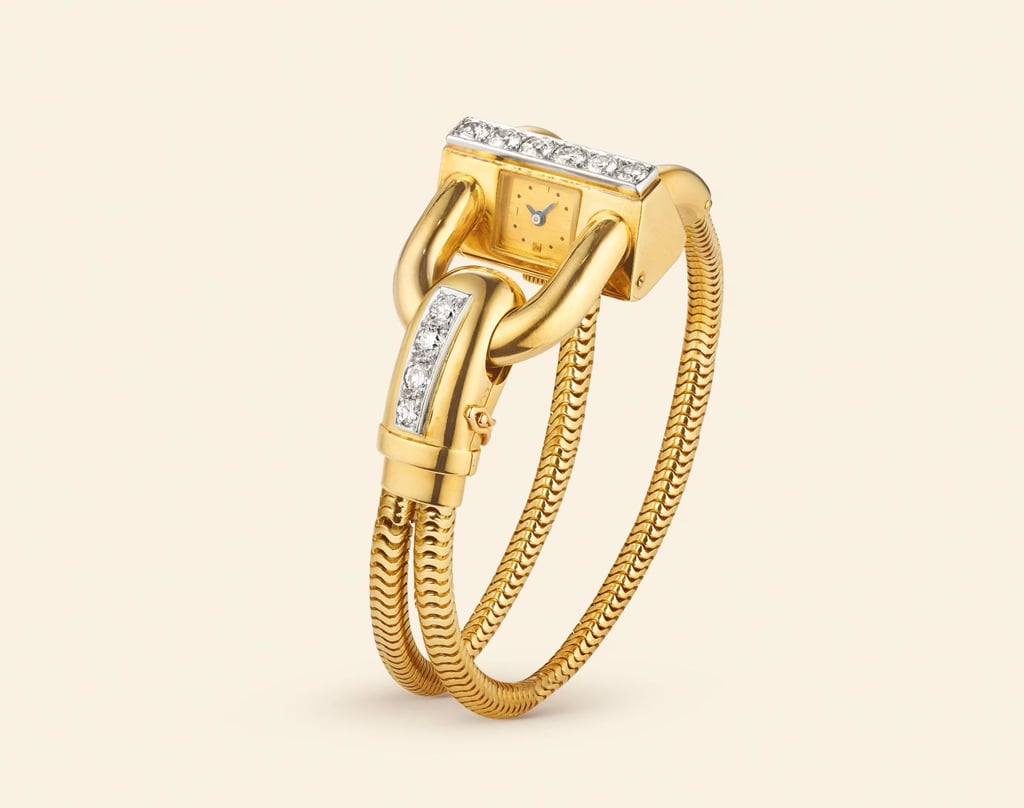
Van Cleef & Arpels takes a more poetic approach to gold. The exhibition “Welcome to Van Cleef & Arpels’ World” revisited decades of design innovation, where jewellery often blurred the boundary between object and mechanism.
One of the most striking examples on display was the 1944 Cadenas wristwatch in yellow gold and platinum, pavé-set with diamonds. Designed to be worn with the dial turned inward, it transforms utility into intimacy. Functional, decorative yet private, in this reversal, gold operates conceptually as much as materially, exploring elegance through concealment.