
US President Donald Trump delayed a military campaign against Iran due to a combination of operational considerations, strategic constraints and political risks. From a timing perspective, weather conditions are now suitable for an air campaign. At the same time, there is a limit to how long the United States can sustain an expanded military deployment in the Middle East.
However, other constraints remain, including the need to conserve air defense interceptors — a factor that could increase American casualties if a conflict breaks out. Another major consideration is the economic cost of war and its political consequences. Iran’s leadership appears prepared to absorb significant damage, including to economic infrastructure, as long as it retains enough revenue to continue funding its supporters and maintaining domestic control.
The Trump administration considered launching a campaign against Iran but ultimately postponed it. As the current crisis continues, it creates a negative perception of the United States: a superpower struggling to impose its will on a regional power such as Iran. Yet that image could have suffered even greater damage if another military campaign failed to produce a meaningful change in the situation.
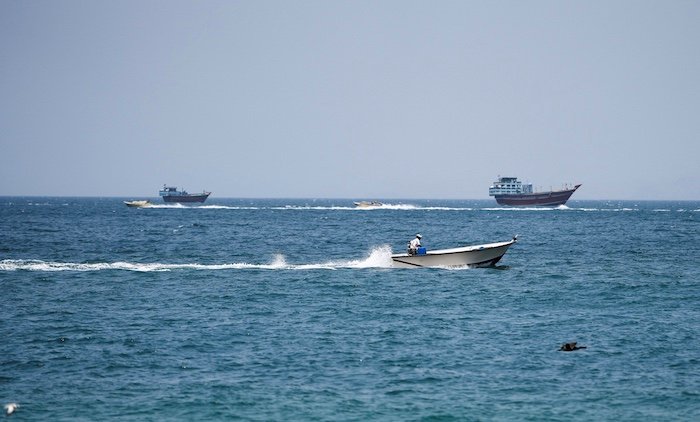
Iran has been applying economic pressure through the Strait of Hormuz, but at the same time its economy — already in severe decline before the war — continues to deteriorate. From Washington’s perspective, this creates an opportunity to wait and assess how long Tehran can sustain the pressure. The United States has the ability to inflict significant economic damage on Iran, but the Iranian regime — particularly its more dominant radical factions — appears willing to endure the consequences. As long as it maintains more than $1 billion in monthly revenues, the leadership can continue financing the networks that suppress internal opposition.
At present, weather conditions in Iran are favorable for conducting an air campaign. But there is also a limit to how long the United States can maintain its extensive military presence in the region, including various aircraft, aerial refueling capabilities and a large naval deployment featuring two carrier strike groups — the USS Abraham Lincoln and USS George H.W. Bush. A crisis elsewhere in the world could require one or even both carriers to redeploy. Eventually, the carriers would also need to be rotated due to maintenance requirements, crew changes and operational demands. For now, however, Washington still has the option of waiting.
The United States is also facing shortages of missiles, including air defense interceptors, and must preserve supplies for more strategically important missions. From Washington’s perspective, Iran is a secondary adversary, while China represents the primary long-term challenge. Therefore, during any campaign against Iran, the United States would likely have to adopt a policy of ammunition conservation, including in air defense, creating difficult choices about protecting various assets across the Middle East. Measures such as reinforcing targets and reducing personnel exposure could help, but they would not eliminate the risks.
Iran has gradually improved its ability to defend itself and conduct retaliatory strikes, while receiving assistance and lessons from powers such as Russia and China. As a result, even a single Iranian strike could potentially cause a significant number of American casualties.
If Iran were attacked with substantial force, it would likely retaliate against U.S. allies in the Arab world. These countries could suffer heavy damage, partly because the United States — due to its need to conserve missile stocks — may face limitations in defending them. Anger and frustration in countries such as Saudi Arabia could strain relations with Washington and threaten economic agreements worth hundreds of billions of dollars signed with the Trump administration.
Extensive and prolonged damage to Gulf energy infrastructure could trigger a global energy crisis, with negative consequences for the United States as well.
Average gasoline prices in the United States have already surpassed $4 per gallon, while diesel prices have risen above $5 per gallon. Fertilizer prices have also increased, partly due to tensions surrounding Iran. These costs could rise further if another military campaign begins, especially a large-scale one.
Within American public opinion, the administration and Congress — including members of the Republican Party — there is concern and even opposition to another prolonged conflict, particularly one that could become complicated, expensive and costly in American lives. Congressional elections are scheduled for early November. While foreign policy may not be the central issue for voters, the negative economic consequences of a war with Iran could become politically significant.
To reduce economic risks, the United States could choose to focus primarily on Iran’s nuclear infrastructure, assuming that Tehran’s response would avoid targeting Gulf energy facilities. However, there is no guarantee that such an assumption would hold.
Iran could also pressure its regional proxies to expand the conflict as retaliation and as a way to divide and threaten U.S. forces. Pro-Iranian militias in Iraq, while also fighting to preserve their domestic influence against government efforts to restrict them, could launch various operations. The Houthis have already opened a campaign against Saudi Arabia, which is seeking to build a broader coalition against them.
In summary, the United States weighed a range of constraints and risks — military, economic and political — that ultimately pushed Washington to postpone a military campaign against Iran.