
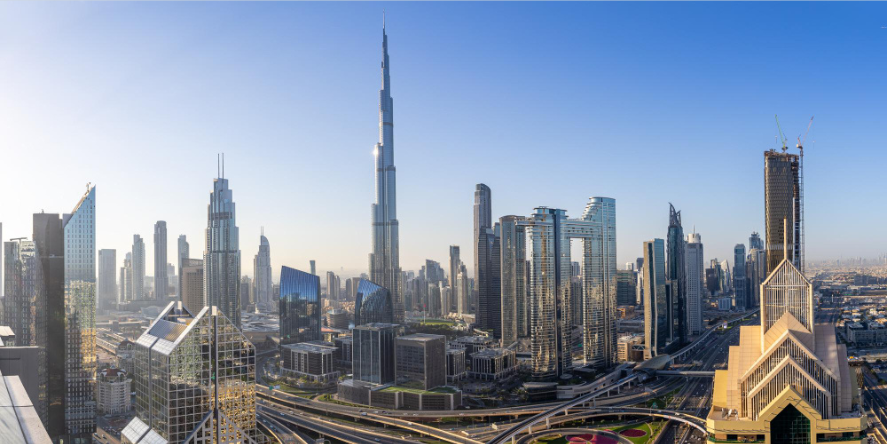
Tokenized real estate splits ownership of a property into digital shares recorded on a blockchain, cutting entry tickets to a few thousand dirhams instead of a full purchase price. Dubai has taken this furthest, running a regulated pilot with an active secondary market since February 2026.
How it works
A licensed platform, a regulator, and a land registry act together to keep the token tied to the physical asset. A property is independently valued, then divided into tokens. Investors subscribe through the platform, the registry records the tokenized title alongside its conventional one, rental income is distributed proportionally, and exit happens via the secondary market or sale of the whole asset.
Dubai Land Department launched the region’s first tokenized project in May 2025 through the Prypco Mint platform, with the Virtual Assets Regulatory Authority, the Central Bank of the UAE, and the Dubai Future Foundation involved.

What’s happened so far
The first offering, with a AED 2,000 minimum, sold out within a day: 224 investors from 44 nationalities, averaging AED 10,714 each. Seventy percent were first-time Dubai property buyers. Phase II opened resale activity in February 2026, covering roughly 7.8 million tokens.
That 70% figure matters most. Tokenization mainly attracted people who’d never bought Dubai property before, not existing investors buying smaller lots. Dubai Land Department projects tokenized assets could reach AED 60 billion by 2033, about 7% of the emirate’s real estate market.
Does it deliver liquidity?
Only where a regulated secondary market exists and has real depth. A market existing isn’t the same as one being liquid; early venues can show wide spreads and thin volume, especially under stress. Liquidity depends on three things: a regulated venue, active counterparties, and transparent pricing. Missing any one, treat the holding as illiquid.
Hexagone Group, an advisory firm working with high-net-worth clients, advises sizing any tokenized allocation as though no secondary market existed, treating any liquidity that appears as a bonus rather than an assumption.
The real limitations
Knight Frank’s 2026 Wealth Report sets out four structural limitations. The core problem is the gap between a digital ledger and a physical building: blockchain tracks digital assets well but handles tangible ones less naturally, and an external body still has to confirm the ledger matches reality on the ground.
From that gap follow four issues: parallel record-keeping, since registries still run alongside the blockchain; limited trust, with blockchain often seen as too opaque; weak governance, since token holders rarely control refurbishment, sale timing, or tenant decisions; and regulatory fragmentation, since a framework valid in one jurisdiction doesn’t transfer to another.
Oxford’s Andrew Baum put it plainly: blockchain will likely be transformative long-term, but hasn’t been yet. A well-regulated pilot can succeed while the underlying technology stays immature.

How to approach it as an investor
Apply the same diligence as any direct property purchase, plus a few extra checks: verify which regulator licenses the platform; confirm whether the token conveys ownership, a beneficial interest, or a contractual right; check registry integration; read the exit terms, including venue, lock-up, and resale fees; and assess the underlying asset, since location, tenant, yield, and service charges still drive returns.
Two points get overlooked: who holds custody and what happens if the platform fails, since that risk is separate from the property’s own; and the tax treatment in your home country, which several jurisdictions still haven’t settled for tokenized income.
Where it fits in a portfolio
At the edge, not the core. It’s an access mechanism, not a new asset class. McKinsey’s January 2026 outlook groups tokenization with stablecoins and digital settlement networks as a distribution innovation, not a source of return. Hexagone Group recommends counting any tokenized holding within your total property allocation rather than as a separate, diversifying bucket.
For investors with limited capital seeking first exposure to a market, the appeal is real. For those already holding direct property, the case is weaker.

Conclusion
Tokenized real estate has moved from concept to regulated reality, most visibly in Dubai. The pilot data shows genuine demand, especially from first-time investors drawn by a low entry ticket. The limitations are just as real: parallel registries, limited governance, fragmented regulation, and a secondary market still being tested. Judge each opportunity on the building first and the technology second. The token is a wrapper; the asset inside it is what you’re actually buying.
Sources: Dubai Land Department (May 2025, Feb 2026); Knight Frank, The Wealth Report 2026; McKinsey & Company, January 2026.
Article received on email.