
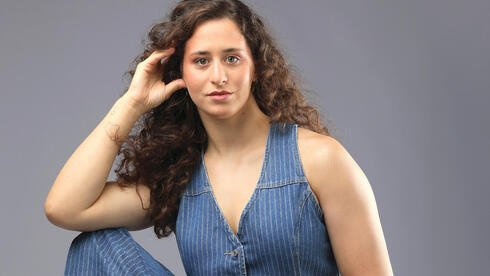
The most effective warning Inbar Lanir received about life after an Olympic medal came from the German rival she had thrown for an ippon only minutes earlier. “She won bronze at the Tokyo Olympics, and as soon as we stepped off the mat and finished the team weigh-in, she told me, ‘Be prepared for what comes afterward, because it’s a serious drop, and it’s going to come,’” Lanir recalled.
It came sooner than the Israeli world champion and Paris 2024 silver medalist expected.
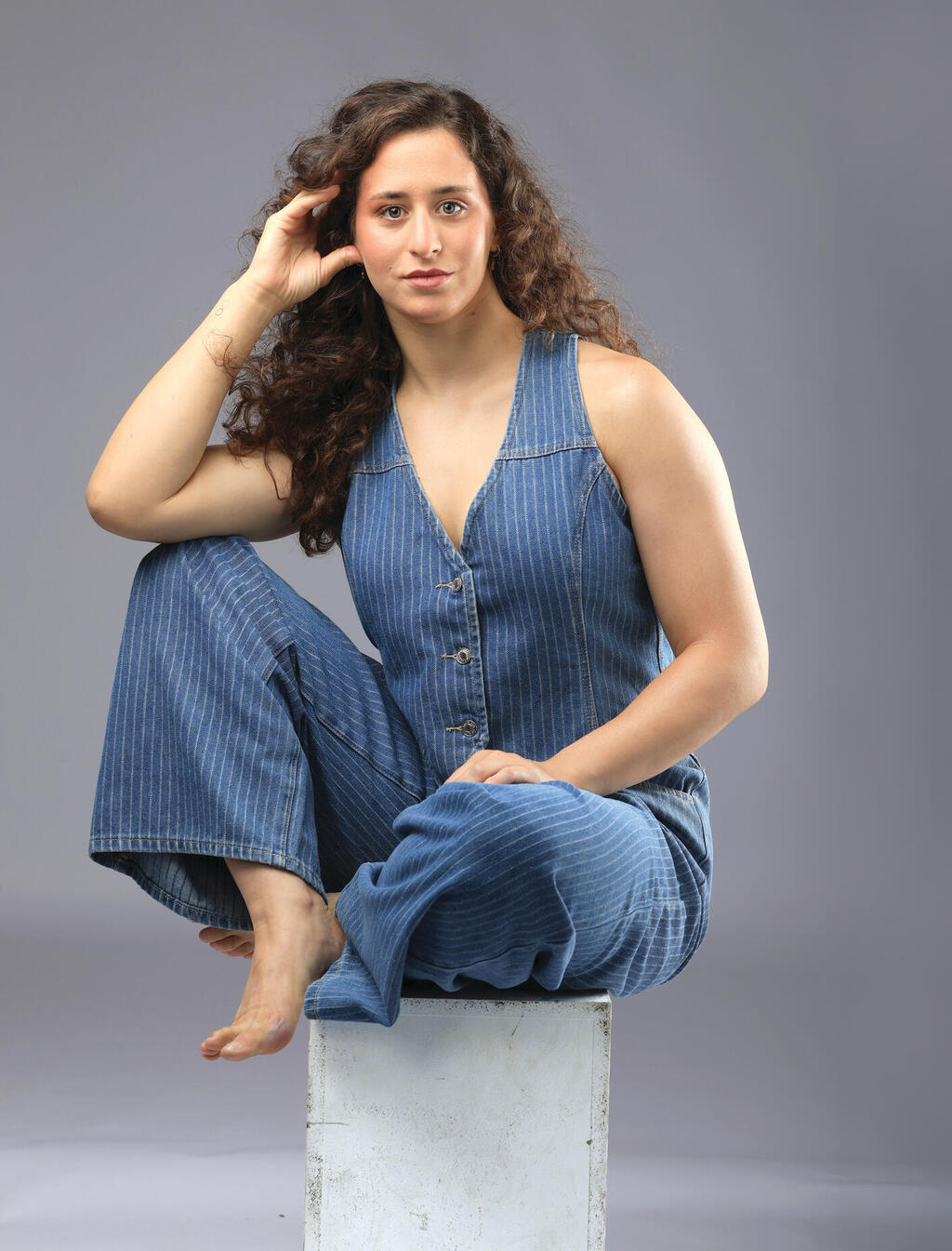
Inbar Lanir
(Photo: Avigail Uzi)
“I have been recording myself on video since I was 20, and speaking to the camera is a kind of therapeutic tool for me,” she said. “About a week after the Olympics, I am sitting in the living room of my apartment and saying something like, ‘I’m sitting here, I don’t have the energy to shower, I picked at my entire face and it is covered in pimples because an article about me is coming out tomorrow and that is very stressful. My house is a mess, my refrigerator is empty, I don’t have the strength to go shopping and I don’t want to order food because I’m already disgusted by it.’
“And I don’t want to talk to anyone or burden them with my feelings, because everyone has been dealing with me and the medal for a month. I don’t want to come to them with my sadness and have them think, ‘Why are you complaining now? You won an Olympic medal. You’re on top of the world.’”
What happened to you?
“There was a mental crisis that later also manifested physically,” Lanir said. “I was frightened that my fuel did not feel the same. I thought something was wrong.
“Then I sat down with Shany Hershko, my coach, and he told me, ‘It is like when you fell in love with a boy in fourth grade and it felt like the craziest thing in the world. At 26, you fall in love with someone and it does not feel the same.’”
Is it because you had already reached the top, and the climb back would never feel quite as thrilling?
“I was very frightened, you could say,” she said. “On the way to Paris, I felt a very strong sense of purpose. I felt as though some incredible energy was wrapping itself around me and pulling me into it.
“After the Olympics, I realized that I needed to create a new energy within myself, something beyond the medal. I had already won a medal and I had seen what it offered and how exciting it was. To put myself in that position again and be all in, I need something beyond a medal.
“I need to understand what I want to leave behind, in judo and beyond. That is what will give me the fuel to win another medal and make it mean something different. I do not want it to be another medal won by the same super-perfectionist who shut out everything around her, lost parts of herself, lost friends and pursued every detail with absolute precision.”
“I know I can do it again and win another medal. In a way, that is the easy part, as strange as it sounds. The real challenge is creating something new, examining every part of myself and asking whether it is ready to commit to this journey again. To win another Olympic medal, I need to recruit every cell in my body.”
To understand what Lanir means by recruiting every cell, one must hear how she prepared for the greatest victory of her career, from the 10 hours before she stepped onto the Olympic mat to the decade of daily training that brought her there.
Lanir, 26, became one of the most prominent names in Israeli and international judo while insisting on doing things her own way, including allowing herself to cry, even during a fight, when that was what her body demanded.
“Before Paris, I did a lot of guided imagery,” she said. “I imagined myself winning the Olympics, down to the physical sensations. I remember imagining myself stepping onto the mat, hearing the crowd, tightening the belt around my judogi, throwing my opponent, the referee raising his hand for ippon and my parents crying with excitement at home.
“I was taught that the brain does not distinguish between reality and imagination. As far as the brain is concerned, it had already won the Olympics. When I arrived at the Olympic venue that morning, after running it through my mind several times, my body felt safe because, mentally, I had already been there.”
Lanir withdrew into what she described as a bubble. She stopped following the news, ignored the mounting public debate over whether she would win a medal and disconnected from social media.
“Everything about my food was precise, and I had so many strange sleep routines,” she said. “I slept with a weighted blanket, at a fixed temperature, took a hot shower before bed and a cold shower when I woke up, and exposed myself to sunlight in measured amounts. “I believe in the small details, and I enjoyed the self-control.”
How do you do it a second time, knowing what it demands?
“The second time, you remember that you have already stood on the most important stage in the world and delivered,” she said. “That is a kind of reassurance that no exact air-conditioning temperature can give you.”
But Lanir was not always certain she wanted to pursue another Olympic medal. For her, doing things on her own terms also means speaking openly about what she is really feeling, even when such vulnerability remains rare in elite sports.
“When I watch athletes being interviewed, the answers often sound very formulaic,” she said. “‘I want to win more than anything. I will do whatever it takes. I went through difficulties, I was injured, and I overcame it.’”
“I understand why, because exposing yourself is terrifying. Everything in sports feels so fragile, and saying something out loud can feel as though it might destabilize you mentally. But no one ever taught me what comes after success.
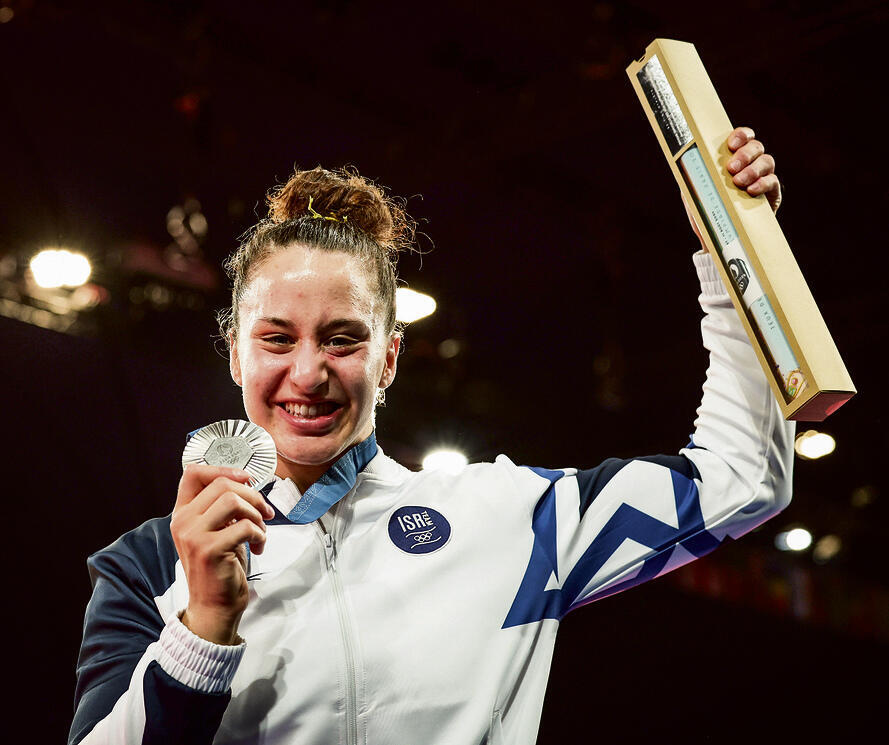
‘No one taught me what to do after succeeding.’ Lanir on the podium
(Photo: Oz Moalem)
Did you feel you were not allowed to show vulnerability?
“I cry easily, over almost anything,” Lanir said. “I had to learn to keep a composed exterior, regardless of what I was feeling. Even a single tear could give my rivals an edge, because they interpreted it as weakness.”
Lanir describes herself as a highly sensitive person, a term she encountered in a book that helped her understand why competitions and training camps affected her so intensely. “When I read it, I identified with everything,” she said. “Suddenly I understood why, after a competition, I needed to sit in a dark room and could not speak to anyone.
“I understood why, during a training camp in Tokyo, we went into a store with too many sounds and lights, and by the end of the day I could not function. And I understood why I cry so much and feel things so strongly. Suddenly there was a name for it, ‘a highly sensitive person,’ and that gave me a kind of validation.”
When did you first allow yourself to cry in training, or at least stop hiding it?
“I was initially afraid to open up about my sensitivity,” she said. “But I came to realize that having the courage to be that vulnerable only made me stronger. It showed the people close to me who I really was, and it could be even more unsettling for my rivals. But it took time for that to sink in.”
“I consulted with Yarden almost every month, and it gave me confidence that she had done it and that it was possible.”
Gerbi also helped Lanir learn how to communicate with her coach Hershko. “At first, he did not know how to handle me, and I did not know how to handle him,” Lanir said. “I was the first athlete who cried in front of him instead of going to the bathroom and hiding it.
“I cried mainly out of frustration when things were not going well. He could not restrain it, and neither could I. I would tell myself, ‘Inbar, be tough for a moment,’ but I could not. It also came from the way I was raised, with the message, ‘Be yourself.’ Every time he told me to stop crying, it only made me cry more.
“Eventually, he learned how to talk to me and how to use my emotions to motivate me. He learned that I cry to release energy and avoid storing it inside. I cry, but I do not whine. I used to tell him, ‘Don’t get excited. Just imagine I’m sweating through my eyes.’”
Did you feel that the people around you understood?
“There is a certain mold for how a female athlete is supposed to behave, and crying is not really part of it,” Lanir said. “Yarden, for example, hardly ever cried, and she succeeded. So how was I supposed to explain to my coach, and to myself, that crying did not mean I would fail? That it did not mean I was weak?
“One moment I could be crying, and the next I could throw someone for ippon at a training camp. I felt that I opened a door for the athletes who came after me, so people could still recognize their potential beyond the tears and sensitivity, and learn how to speak to them in a way that suited them.
“I taught Shany to tell me ‘well done’ in the middle of a fight, no matter how badly it was going. I pick up on him, and if I sense uncertainty from him, it only brings me down further. So lift me up even when I am behind, because I can still win in the final 10 seconds. Today, I also know that this sensitivity has advantages.”
Such as?
“I realized that I absorb much more nonverbal information from my surroundings,” she said. “I can sense when something shifts in my opponents’ energy and what they think about me. Then I can subtly change something in my body language and what I project to change something in theirs.”
“That happened when I won the 2023 World Championships. Before a fight, after the judogi check, there is a stage when you and your opponent stand together and wait for several minutes. I remember sensing something from my French opponent, a kind of energy that said, ‘I’m the craziest one here, and you should be afraid of me.’
“She never said it, but I felt that this was what she was relying on, the psychological game of making me think, ‘You have no idea what is waiting for you,’ so I would shrink. Then I had a realization that my own body language needed to say, ‘You don’t affect me. I’m not afraid of you. I’m crazier than you.’
“I do not even remember exactly what I did, but I showed her that she did not intimidate me. She was holding on to that persona so tightly that when someone came along and was completely unfazed by it, it shook her. I got into her head before the fight even began, and I beat her.”
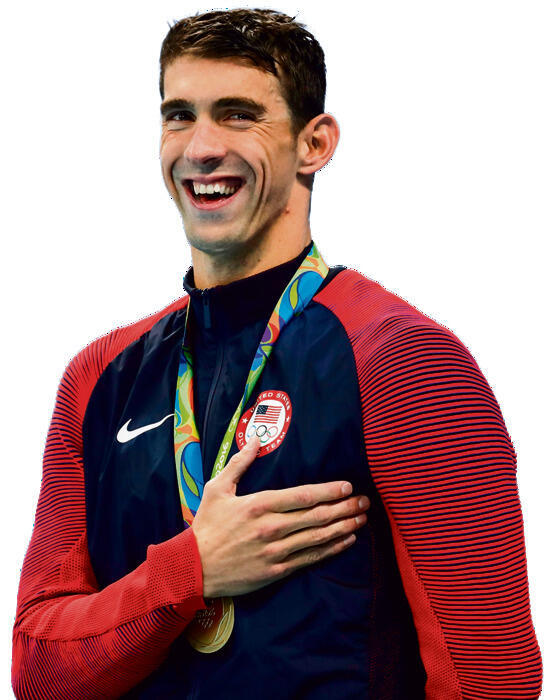
Inspiration: Michael Phelps
(Photo: Focus Pix, Shutterstock)
Lanir is no longer the young woman who entered the previous Olympic cycle with room in her life for little beyond judo and the pursuit of a medal. She now lives in Givatayim with her partner, Yonatan, and their dog, is studying human resources management and hopes to pass on to teenage girls what she has learned about perseverance and building self-confidence as strong as physical strength.
The couple have been together for a year and a half. Yonatan, a musician, first noticed Lanir on television during the Olympics. “He watched the Olympics, saw me and said, ‘That is the one I want,’” she said.
After the competition, Lanir received messages from both men and women. Yonatan replied to one of her Instagram photos with a heart. “I was intrigued because he was a drummer and very handsome,” she said. “We met about four months later, and the first date was incredible. We clicked immediately. We went for pizza but drank only soda, four bottles between us, because I had just returned from my long trip and needed to start managing my weight again for competition.”
Despite being so attuned to your emotions throughout the journey, do you feel you still suppressed the toll of pursuing the medal?
“Absolutely. There are many things I do not remember, and that alone shows there was a price. Considering what an Olympic athlete must endure to win a medal, I feel I was in the healthiest mental state I could have been, and every decision I made was conscious.
“But after the medal, I took a month-long solo trip through Europe. I was staying at a hostel in Portugal with time on my hands when I suddenly realized I could not remember what I even liked doing. Somewhere around 2020, I left behind a certain version of Inbar. When I came back to find her at the end of 2024, she was no longer the same. Many parts of her had disappeared.
“Not long after the World Championships, my boyfriend at the time broke up with me. I decided I did not want another relationship and stopped dating. As far as I was concerned, I was already in a relationship with the Olympics. I put my life on hold at 23.”
Looking back, was that a fully conscious decision, or was it what people around you expected?
“I think the greatest act of courage was sitting down with myself after I returned and asking whether I was truly ready to continue. I could not do it just to satisfy everyone else, or simply because I was young, already a world champion and still capable of competing in one or even two more Olympics. There was an expectation that I would preserve that success, but I realized I was carrying that expectation for other people.
“I decided I would not continue simply for the sake of continuing. There had to be a purpose, and I needed to sit with myself and ask all the difficult questions.”
What came up in that conversation with yourself?
“First, I thought about the drawbacks. I would be choosing to put my life on hold for another four years. I know now that when I eventually step into life beyond judo, I can be good at whatever I choose. At 24, I did not know that as clearly as I do today. Judo was my entire life, so part of me wondered why I should not go and discover what else I might be good at. On the other hand, I can still do that in a few years.
“Another major concern was the physical toll of repeatedly cutting weight. Over the course of a year, the total amount I lose is roughly equal to my entire body weight. I am always slightly above my weight category and need to maintain as little fat and as much muscle as possible. It takes a toll on the body, and over time, you feel it.”
Does that also affect body image?
“At some point, after so many weight cuts and everything they demand, you stop tying your sense of self to how your body looks because it changes so constantly. I can be extremely thin on weigh-in day, then a week later feel swollen, with my stomach bloated and my whole body returning to its normal state. It is like an accordion.
“So I do not become attached to any one version of my body. I love it as it is, and I love what it is capable of. But yes, I envy people whose weight always stays the same. Every judoka will tell you that.”
How do you rekindle that excitement and motivation?
“After the Paris Olympics, I knew there was still something inside me that wanted to do it again. It just needed a new source of fuel.
“I realized I wanted to return to the mat because I love being an athlete, but I cannot be only an athlete. I need other pillars in my life to lean on. That gives me freedom, because everything no longer depends on Inbar the athlete. Whether she succeeds or fails, Inbar herself is not lost. There is more to me than that.
“I started studying, I am in a relationship, I have friends, interests and things I want to say to the world. That is an important message, because athletes are often told they must train 365 days a year, think only about their sport and dream only about it, and that if they are not completely consumed by it, they will not succeed.
“I want people to hear that this is simply not true. I feel I am in the best mental state I have ever been in, both before the medal and after it.”
Lanir, who is represented by the talent agency, grew up in Yehud and was enrolled in sports activities from the age of 3. She ultimately excelled in judo and joined Israel’s national team at 13.
“Suddenly, I became the main topic at every family or social gathering,” she said. “My grandmother became a celebrity at the mall, and my parents were constantly being asked questions. The Olympic medal changed all of our lives.”
Did the relationships you had to put aside while focusing on the Olympics return to your life?
“At the height of it, during the Olympics, everyone around me was completely focused on supporting me,” she said. “For a while, those relationships became one-sided.
“When I came home, I found myself painting a close friend’s apartment about two weeks after the Olympics because she needed help, and I enjoyed it so much. I had been waiting for that.
“You become acutely aware of how much everyone has given you, and giving is one of the ways I express love. I am not someone who knows how to simply receive. I would pick up a friend from the airport and then rush straight to an interview about the medal. After every minute of my life had revolved around me, those small acts of giving felt important.”
Last April, as Lanir was regaining momentum after deciding she was fully committed to another Olympic campaign, she suffered a serious shoulder injury at the European Championships. Her opponent attacked her right leg, and as Lanir pulled with her left arm to avoid falling, her shoulder dislocated.
“The adrenaline kept me from realizing how badly I had been hurt,” she said. “What frightened me most in that moment was knowing my mother was watching, and that my opponent could see what had happened.
“When my shoulder came out and slipped back into place, I understood that something was wrong and stopped the fight. I kept my face completely expressionless. It was important to me to pull myself together in that moment.
“Doctors later determined that I needed surgery. I had the operation last month, and it went well. Olympic qualification has already begun, so I have two months of rehabilitation ahead of me, and then I will have to come back at full speed.”
After years of war, there is less public attention and funding available for sports than ever. How strongly is that felt within the national team?
“I completely understand the priorities. Rehabilitating those harmed by the war is the most important thing. We are a country in survival mode, and sport can seem like a luxury. But in a way, the opposite is also true. Sport and culture are among the things that lift a country up.
“I remember what it felt like to leave for the Olympics knowing the country was in flames. We were training for the most important event of our lives while Israel was still living through the aftermath of October 7.
“I was the first Israeli to win a medal in Paris, and I felt what that first spark of good news after nearly a year did to people. Most of those who approached me in the street were not really celebrating the sporting achievement itself, but the sweet moment they had shared with their families at home, when they finally allowed themselves to feel happy. In a sense, I had given them that moment.
“Every medal during that period was uplifting. It gave people a reason to feel joy without the emotional burden, without the blow to the stomach we had grown accustomed to. There are very few things left that can unite almost everyone. Sport, especially Olympic sport, is one of them.”
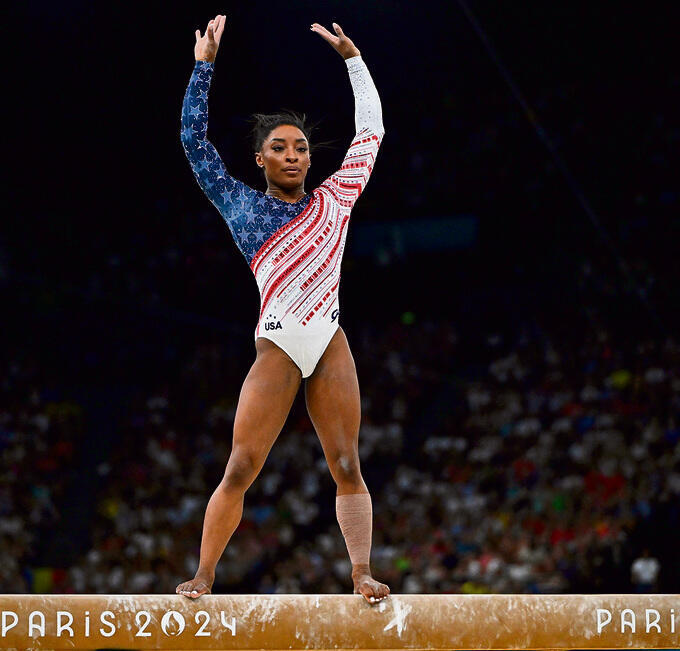
‘Vulnerable.’ Simone Biles
(Photo: A.RICARDO, Shutterstock)
Do athletes today need a stronger public profile to attract sponsors?
“Do you realize that Olympic athletes practically have to appear on reality TV shows just so people will know who they are? They tell me, ‘Post more stories, and then maybe we will pay attention to you.’
“Today, athletes receive almost no coverage. People do not see us, and competitions are barely broadcast. There are athletes here who have devoted their lives to their sport since they were 6, yet no one knows who they are. But everyone knows who was just evicted from the Israeli version of ‘Big Brother.’
“The war has set sports funding back years, and extraordinary talent is being wasted during athletes’ prime because they have to work in security, wait tables or take whatever temporary jobs they can find to support this lifestyle.
“For me to win an Olympic medal, my entire family had to rally around me because I had no time to work. I was fortunate to have companies that believed in me and supported my career” (Lanir’s sponsors include Daniel Motors, Eisenberg Eliash, Armis, Altman, Direct Insurance and Dimri).
“At the beginning, I survived on a very small stipend for young athletes from Israel’s Olympic Committee, my military salary and help from my parents. I lived at the Wingate Institute at no cost, traveled by bus for free and bought food at the military base store or chose the cheapest products at the supermarket. An athlete who is even slightly less fortunate than I was has to fight for every available hour of work.”
Sports commentators often repeat that judo is the discipline that has brought Israel its greatest international success, while arguing that it has declined in recent years.
“Then stand behind the sport throughout the entire journey, not only during the six months before the Olympics. Support the athletes and follow them through the process.
“Do not show up only to celebrate their successes or criticize their failures at the end of an Olympics or a world championship. If you stay with us throughout the journey, you will understand what athletes in every discipline go through to get there.”